































Wood, by Eunice Lee
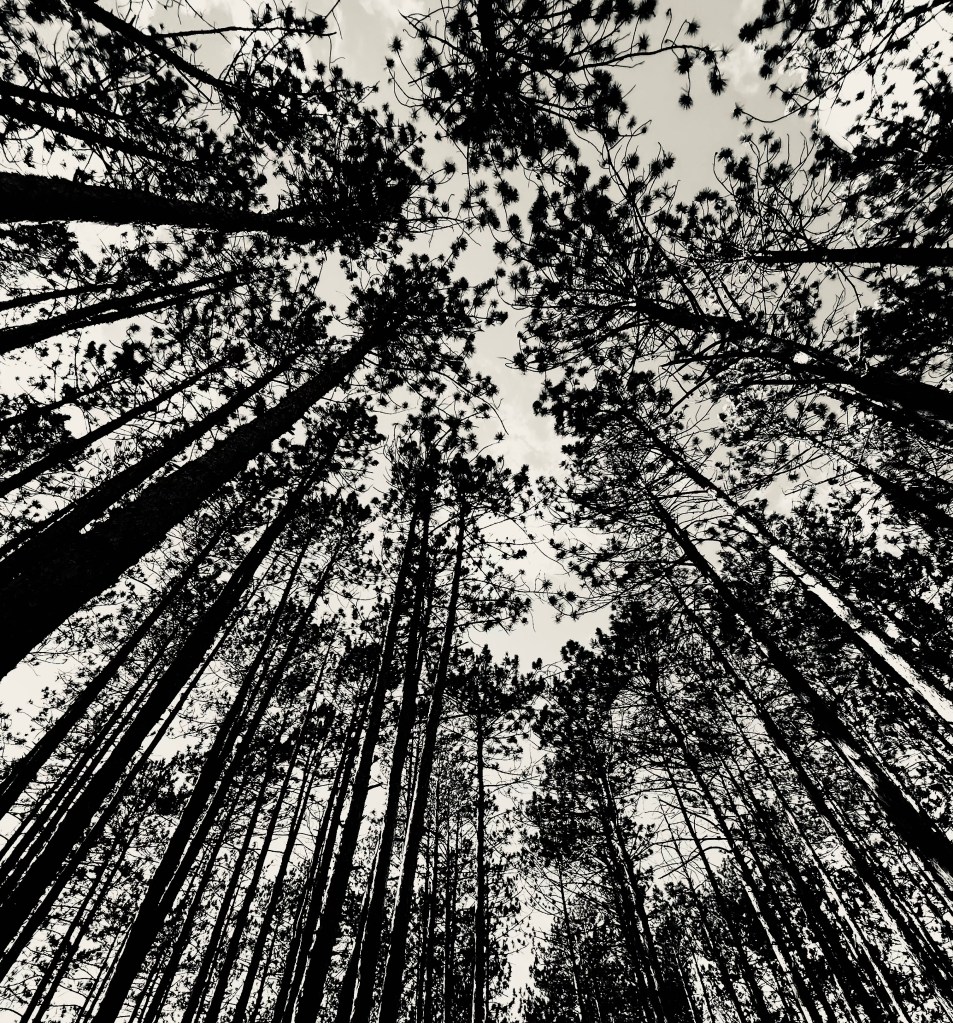
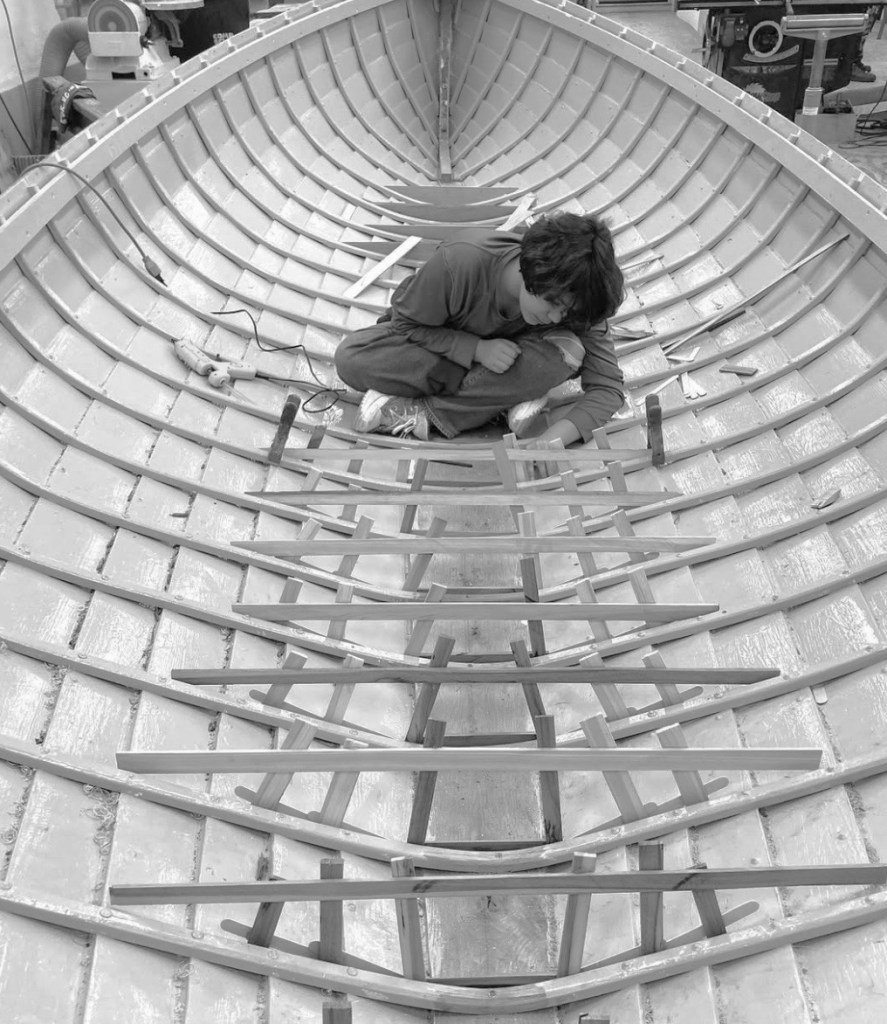
An interesting landscape architecture cycle, Maya Lin’s Ghost Forest. A temporary wood installation, it eventually became a multistage sculpture that survives its nominal exhibition in Madison Square Manhattan 2021. Lin’s work with aquifers and climate change made her aware of rising saltwater killing off parts of the New Jersey Pinelands. Taking a copse of trees slated to be removed by conservationists, she relocated it to an urban park during spring and summer months to alter the light, sightlines, and spatial proportions of the area, alerting to climate shifts’ effects on plantlife. After the exhibition the trees were sawn in the park to lumber before being transported to a Bronx youth organization. There they were used to construct rowboats the youth group uses in teaching boating and other waterbased skills at Hunts Point on the East River.
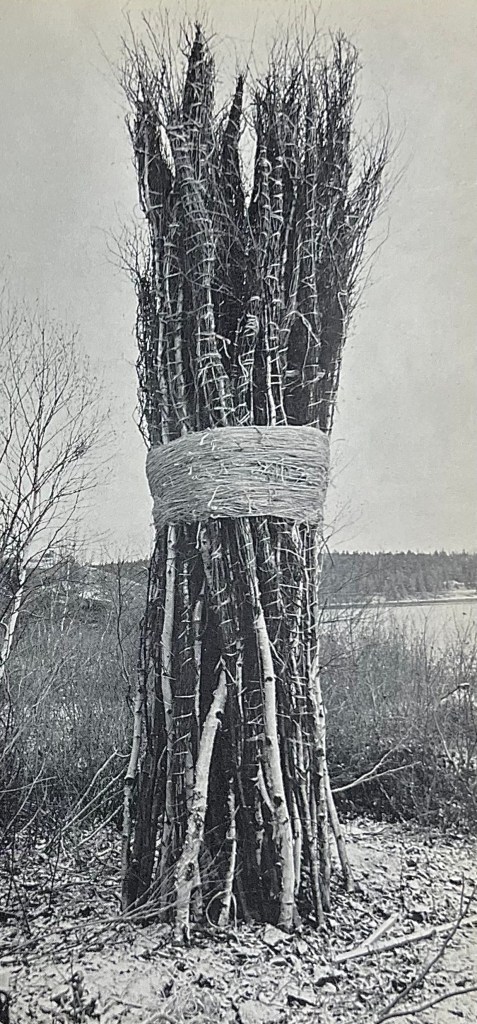
50 years earlier a sculpture involving distressed trees was made by Jackie Winsor during a weeklong artist residency at Nova Scotia College of Art & Design. The saplings she harvested were bundled with her signature wrap construction, singly, then together in a cluster that was bound to a nonharvested tree for vertical display. Her material investigation, in this case within a process art context, was temporary. It was produced before her first Cooper Gallery solo in 1973 and so until 2016 was documented only in photos. A recreation was commissioned by Hauser & Wirth for a Los Angeles exhibition that year, albeit not lashed to a living tree but displayed in an institutional setting.
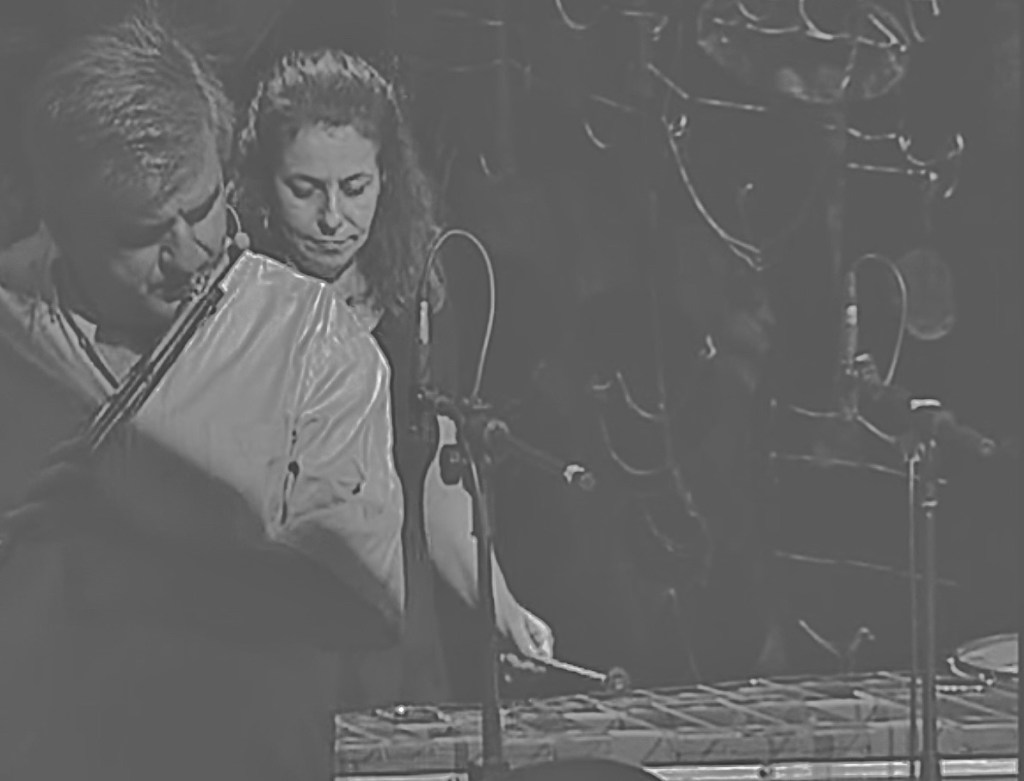
Just as wood’s source trees can be setting-off points for sculpture, the wood itself becomes material for a number of arts ranging from pulp pages in literature to edifice components in architecture. Carefully honed planks comprise the marimba. Its composers include, on the conceptual end of the spectrum, Swiss Zimoun. Using mechanized components in series, he enables soundscapes to accompany the sculpture’s visual composition in ways approaching pulse music’s blurring of nonhuman thrum with organic rhythms like respiration.
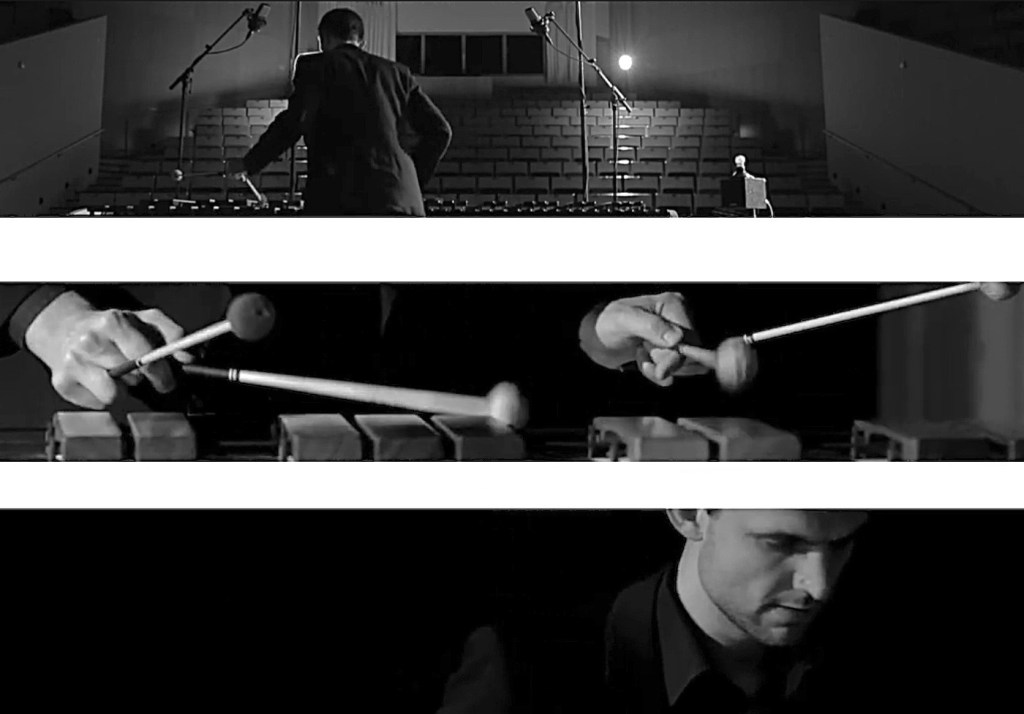
Jacob Druckman New York employed intentional composing. When commissioned by percussionist William Moersch for a 1986 piece, Druckman drew inspiration from Debussy to compose Reflections On the Nature of Water. A work in six movements, it has become prominent in the marimba literature. A performance by Netherlander Niek KleinJan has been filmed with animation by Robin Coops Netherlands.
More abstract composing comes from New York based Andy Akiho: Seven Pillars is a multipercussion work written for a quartet in alternating group and solo movements commissioned in 2019, recording released in 2021 with Sandbox Percussion. Among the range of orchestral instruments including marimba are found objects such as woodblocks.
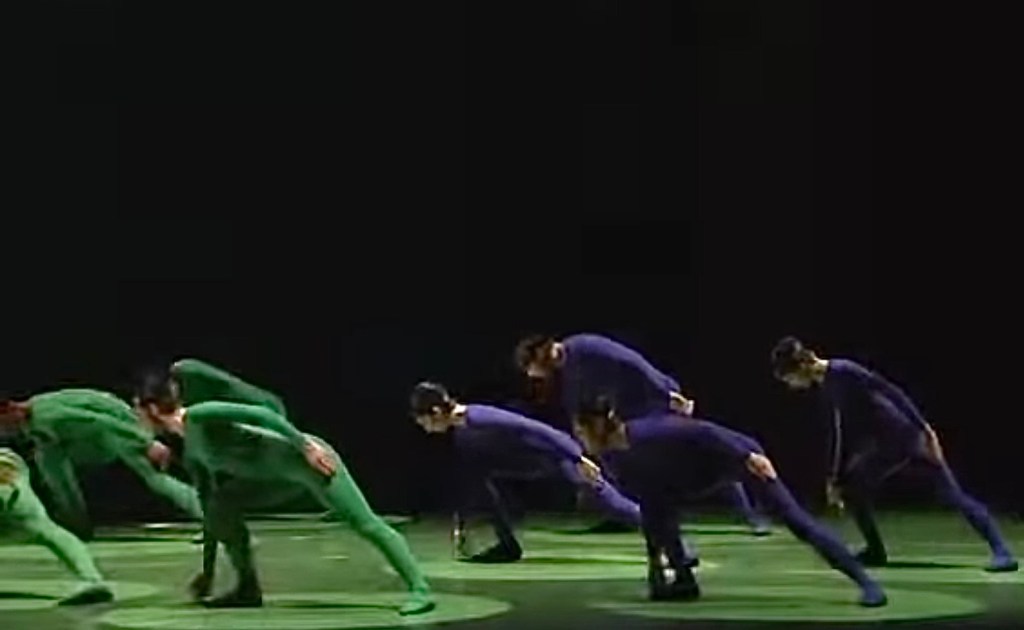
Choreographer Rodrigo Pederneiras Brazil, worked with the wood instrumentation of frequent collaborators Uakti, also of Brazil, on Águas da Amazônia. The score by Phillip Glass presented several movements named for rivers of Brazil including Rio Negro illustrated by the performers Grupo Corvo.
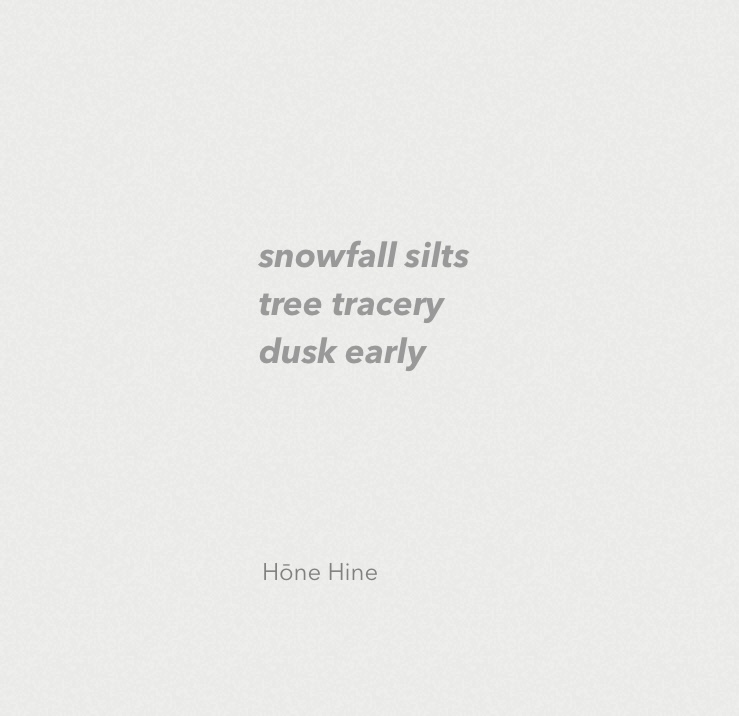
Other choreographed wood works include tableaux vivants from Ned Kelly and Maria Bonita Australia as well as Cynthia Schwertsik and Dave Laslett Australia. A similar type of bittersweet humor is mined in some of this issue’s haiku amidst pensive verse.
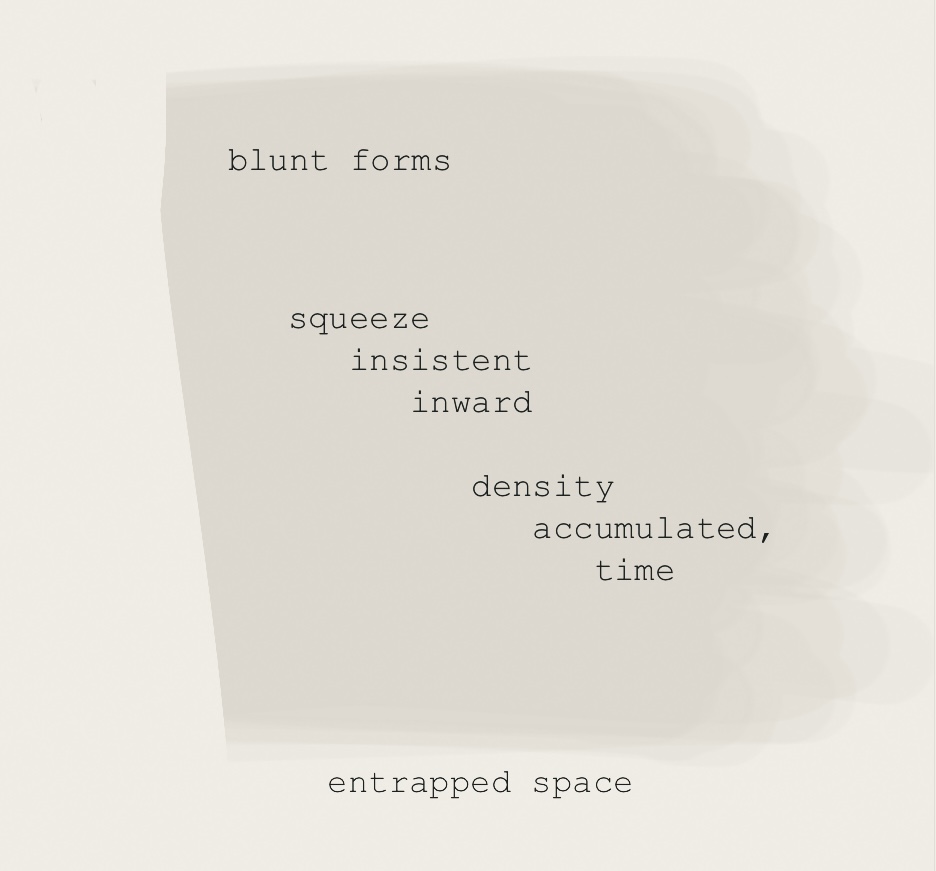
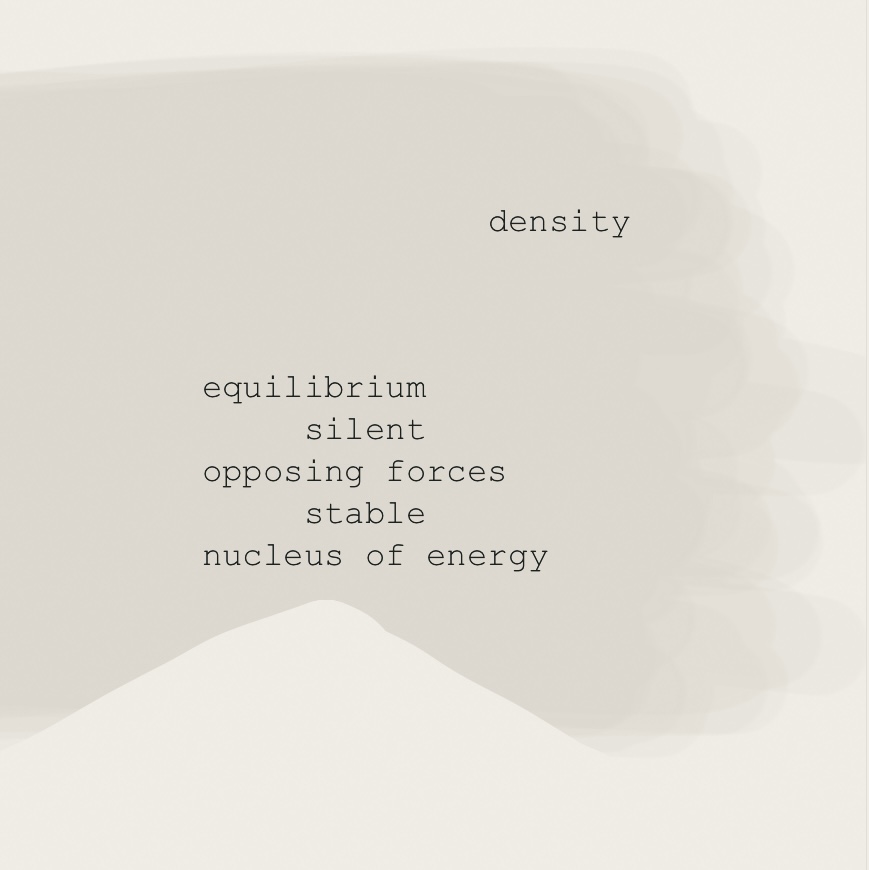
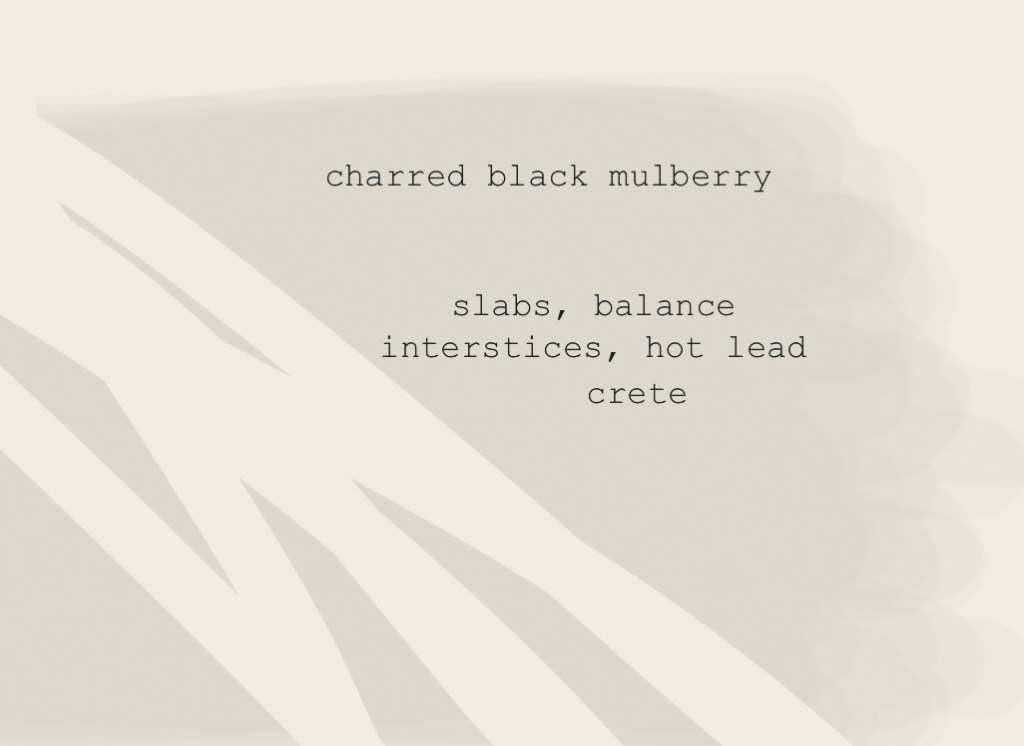
Wood artists inspired Te Manaaki, Guam to distill centos from art critiques. The artists include Winsor in Canada, (Blunt and Density both after Ellen Johnson noticing the physics, the proprioception involved with Winsor’s sculptures). Jack Whitten in Crete (Nkisi N’kondi after Aleesa Alexander discussing heritage, Charred after Karli Wurzelbacher discussing process). Juana Muller of Chile (Impasse Ronsin after Sabrina Dubbeld, refers to Muller’s tenure in Brancusi’s Paris studio). Ellsworth Kelly New York (Waves after Brenda Richardson describing the artist’s camouflagist observations of grain waves).
Cultural weight is subject matter for the 1953 film Statues Also Die. Filmmakers Chris Marker and Alain Resnais of France ponder cultural specificity and universality in such humanities as sculpture that have survived eras of invasion, usurpation, colonialism. Both the film and the centos touch on transcultural, inherently human perception processes such as pareidolia, decoding, abstracting. These perceptual processes intertwine for our spotlit sculptors.
*
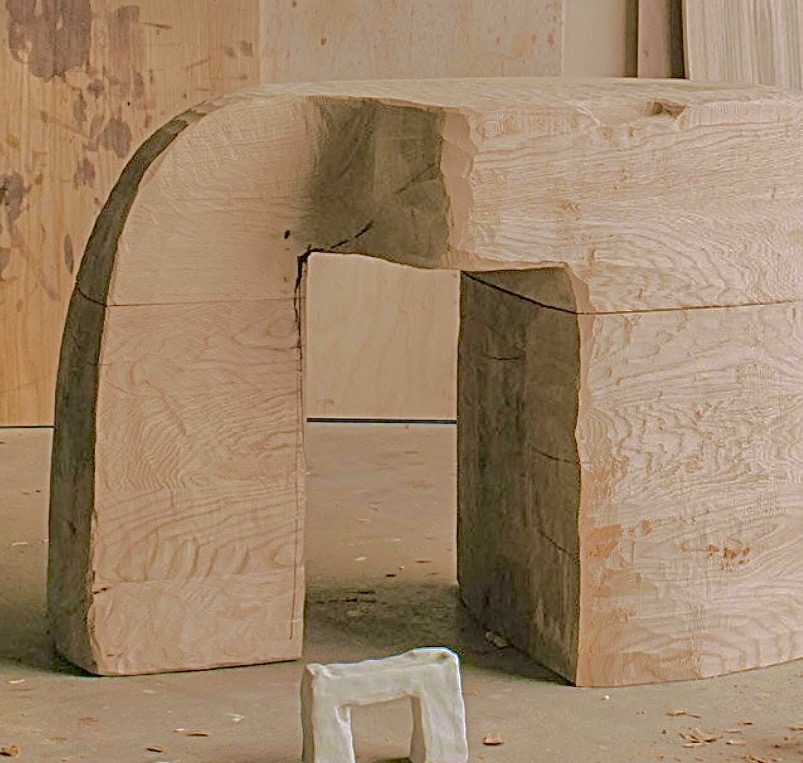
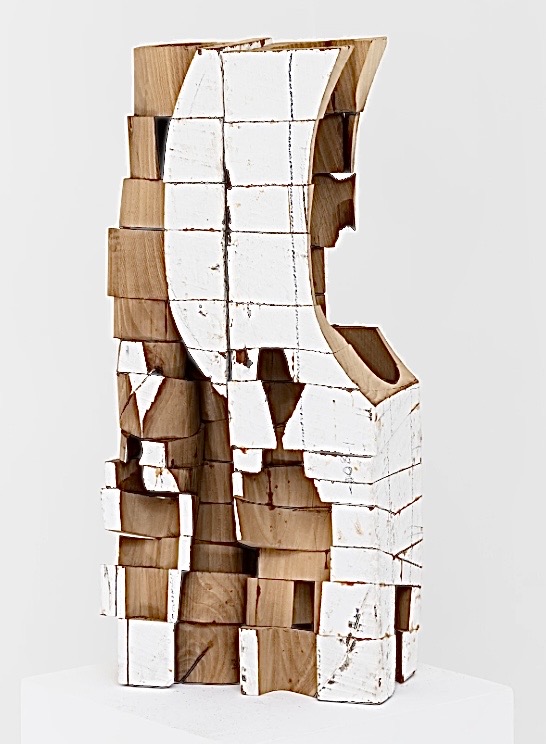
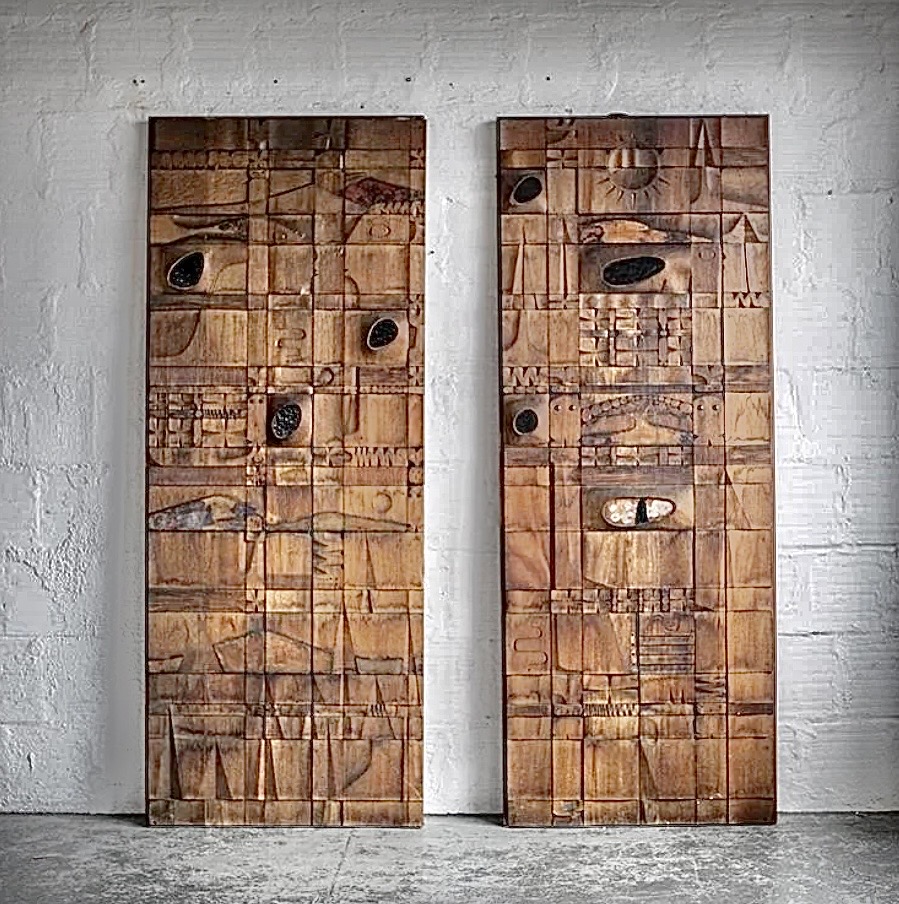
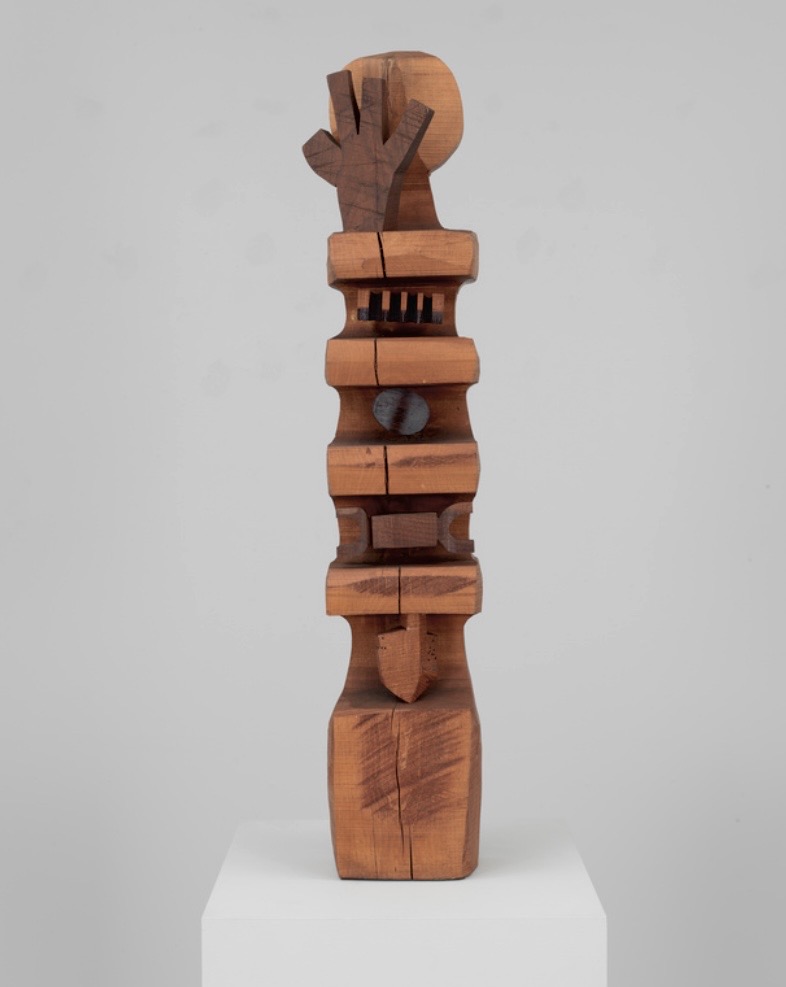
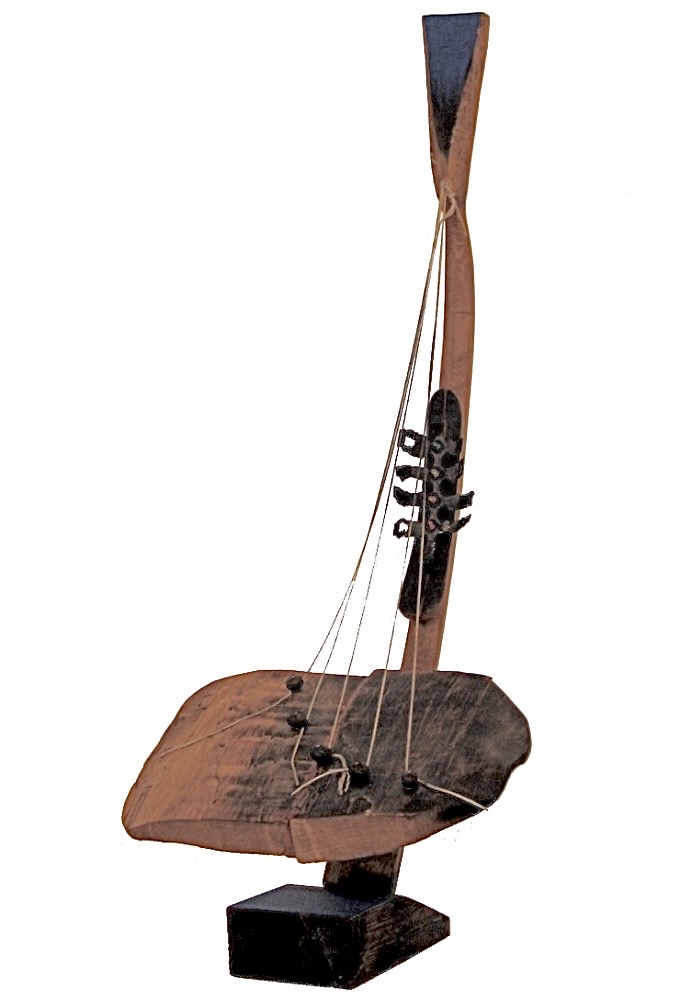
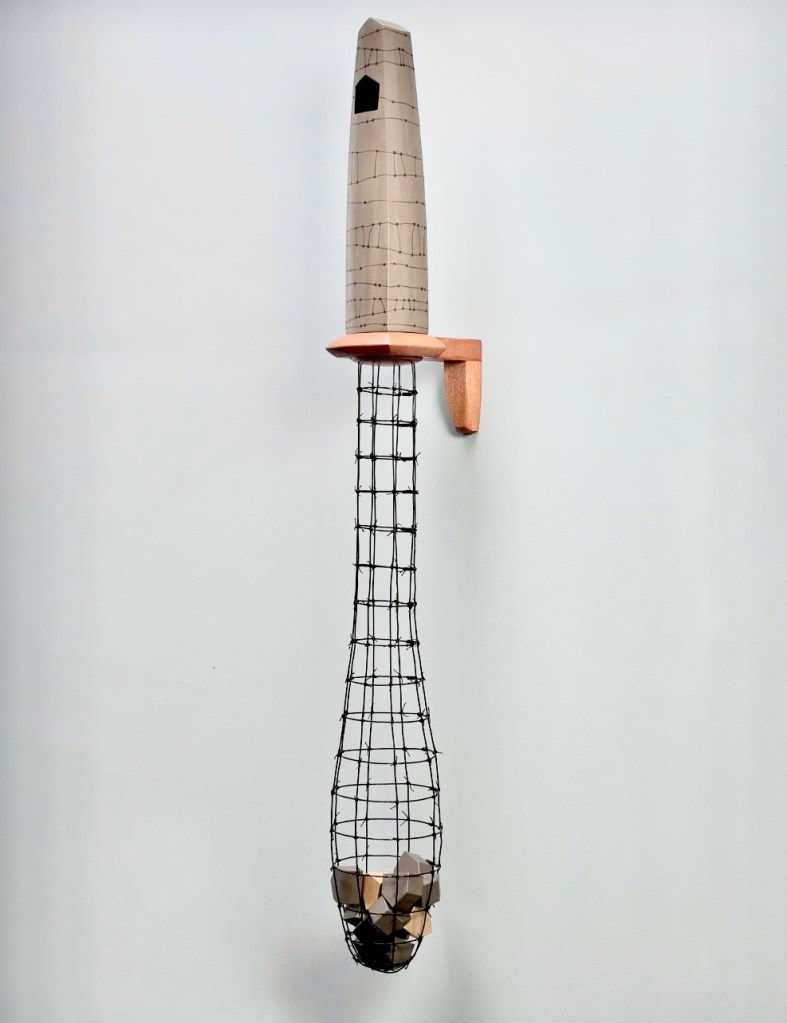
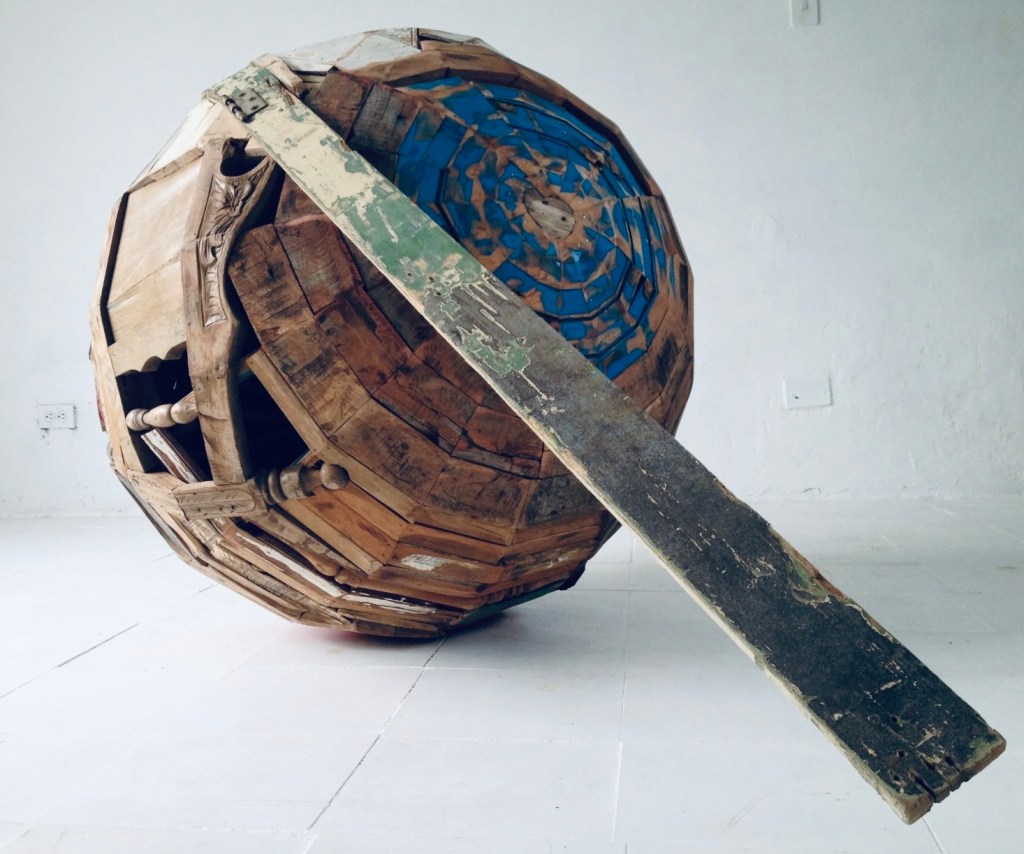
Thaddeus Mosley Pennsylvania continues, at age 98, to create vertical works as well as visit exhibitions that have in recent years “rediscovered” his committed sculpting practice. In Zambia, Flinto Chandia has worked with heritage specific to his setting while venturing occassionally into abstracted compositions. Faye Toogood UK composes with furniture shapes. Yoella Razili Israel contrasts wood with other natural materials in humanmade patterns such as lattice, while Katie Grove New York makes the textural contrasts in a log. Works by Mel Kendrick New York and Leroy Setziol Oregon demonstrate wall-barrier concepts. Nacho Carbonell Spain juxtaposes human inclination for enclosure with wood growth physics. The haptics are spiny. Robyn Horn Arkansas, also has an eye on natural growth with abstractions of tree rings, vectors of living processes.
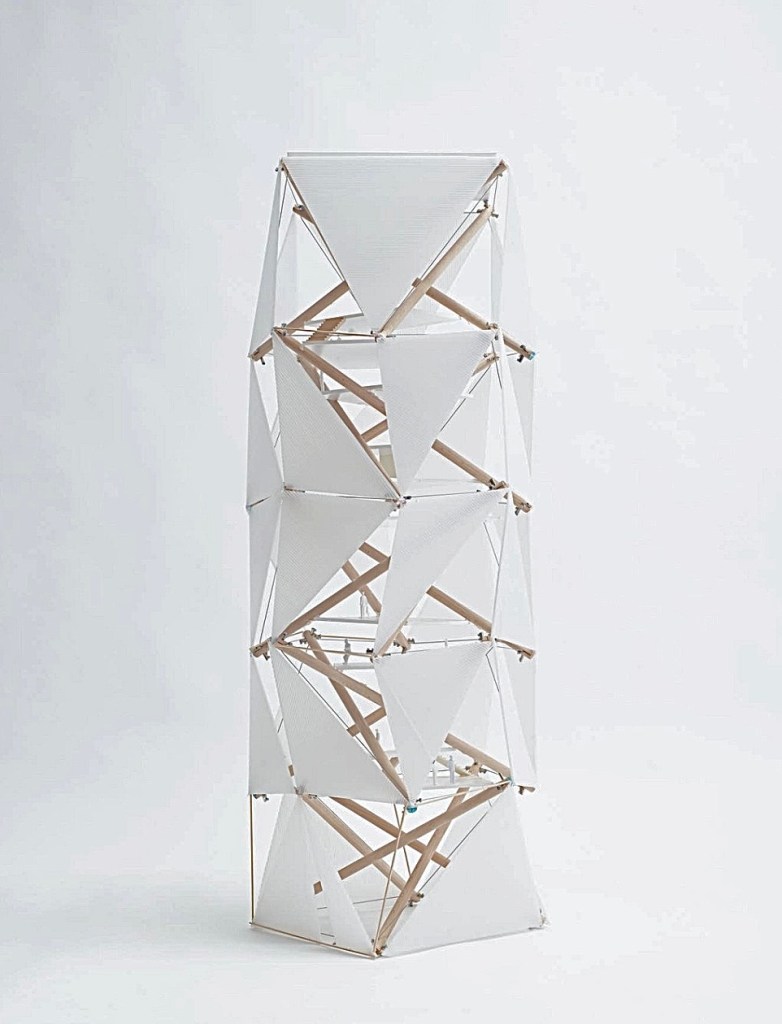
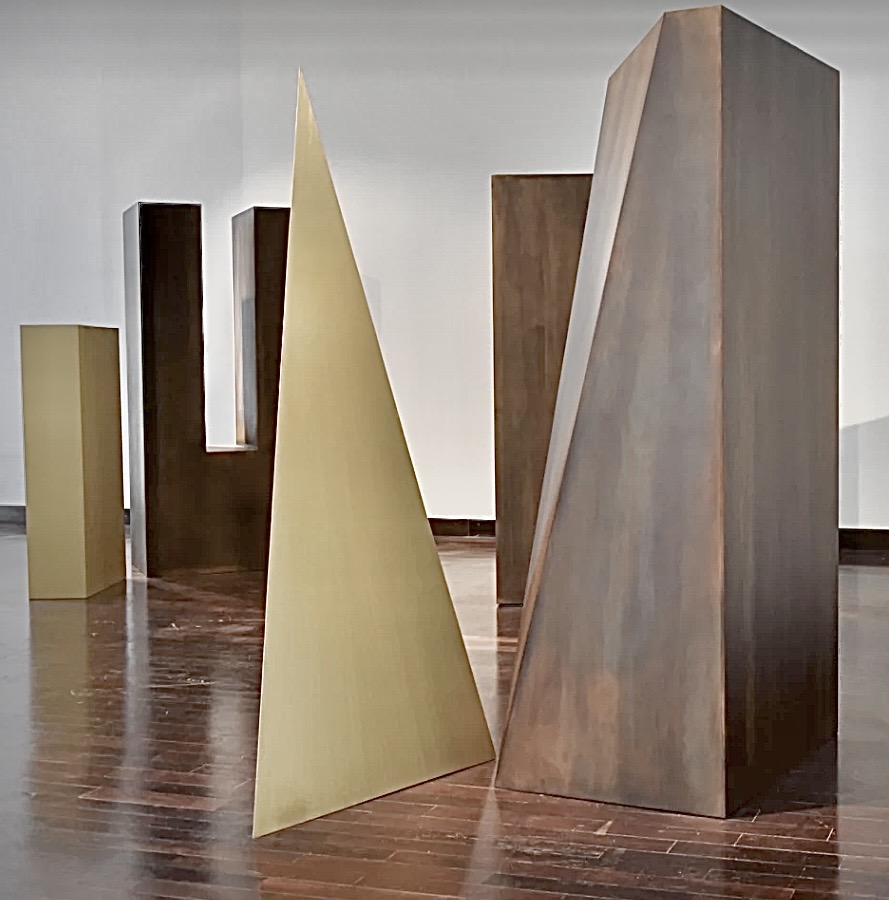
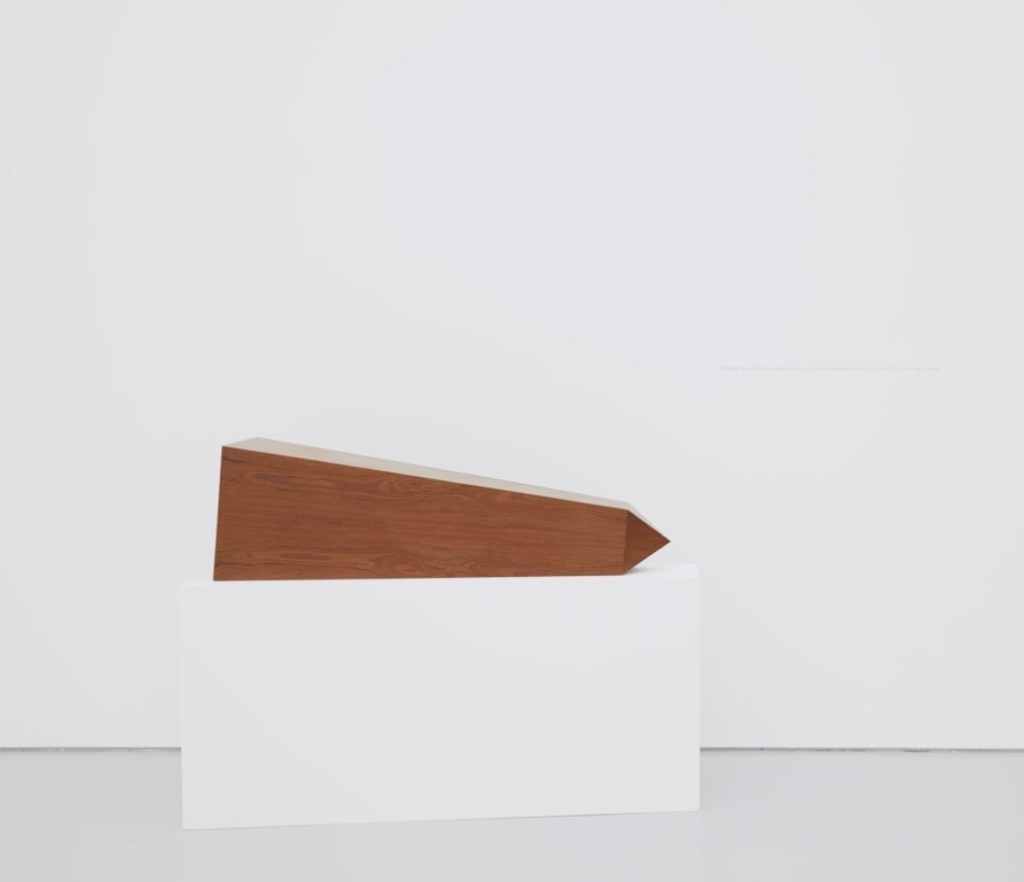
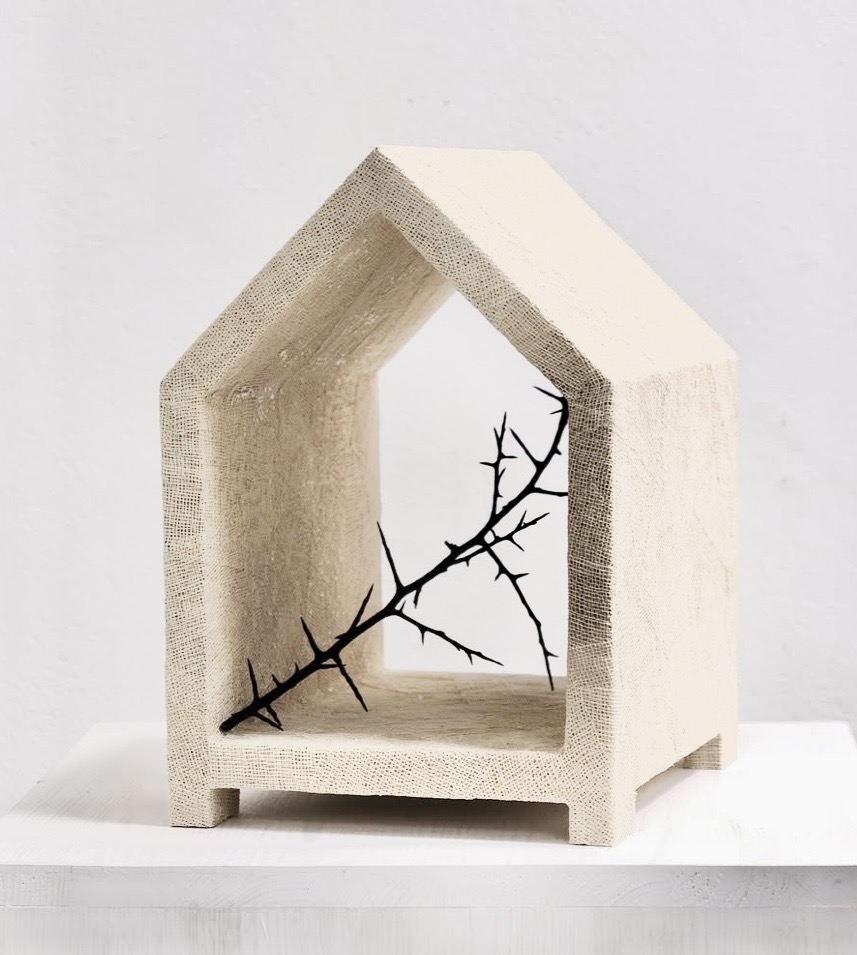
Forests provide shelter associations for humans, as well as architectural applications for building. These concepts capture the imagination of Regine Leibinger and Frank Barkow Germany in actual architectural models. The concepts are also present in the fine arts work of Megan McGlynn Finland where synapses are seen as towers; M’Barek Bouhchichi Morocco where obelisks become forest; Iman Issa Egypt where obelisk comments on history; Abigail Booth UK juxtaposing dwelling to origin; Fo Wilson Pennsylvania where a reconstructed slave cabin is repository for found objects.
Specific concepts associated with trees include verticality, whether at a scale of trunk, limb, or twig. Verticality has played in work by Hugh Townley Rhode Island, Tapfuma Gutsa Zimbabwe, Kimberly Winkle Tennessee. Domicile concepts have been engaged by Stephen Talasnik New York in various outdoor installations exploring weather; his drawings share textural and negative space considerations with his sculptures.
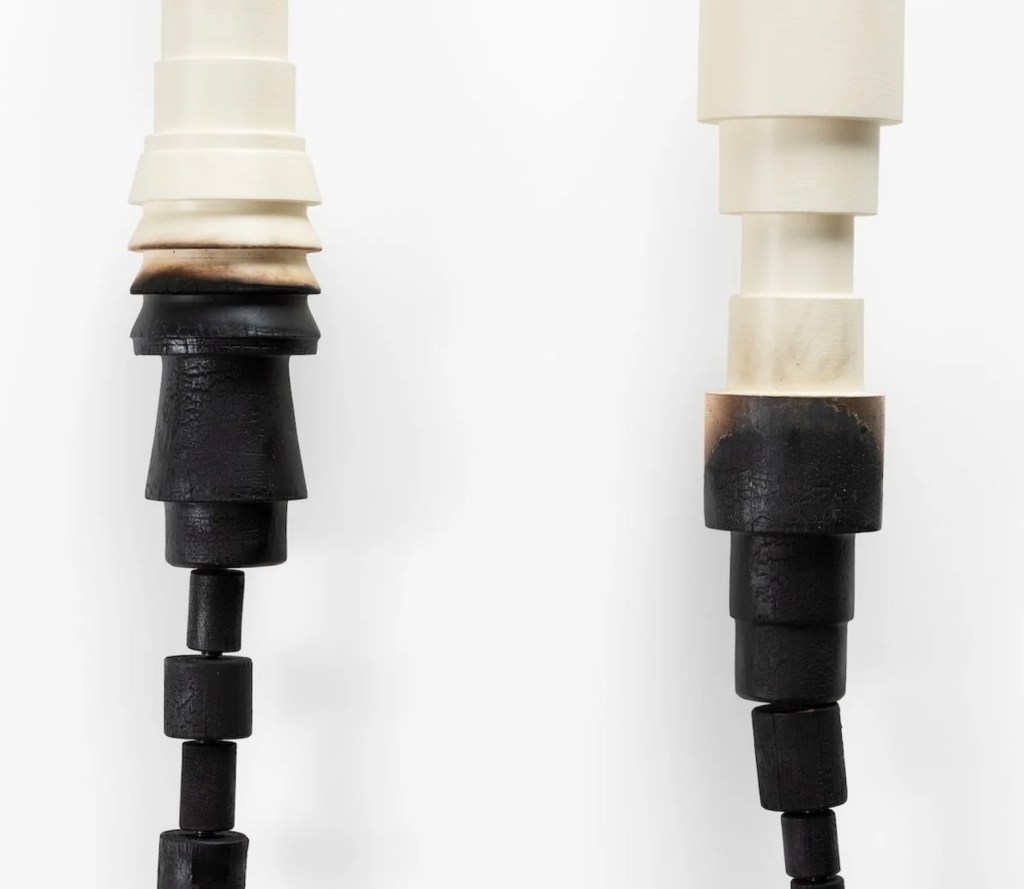
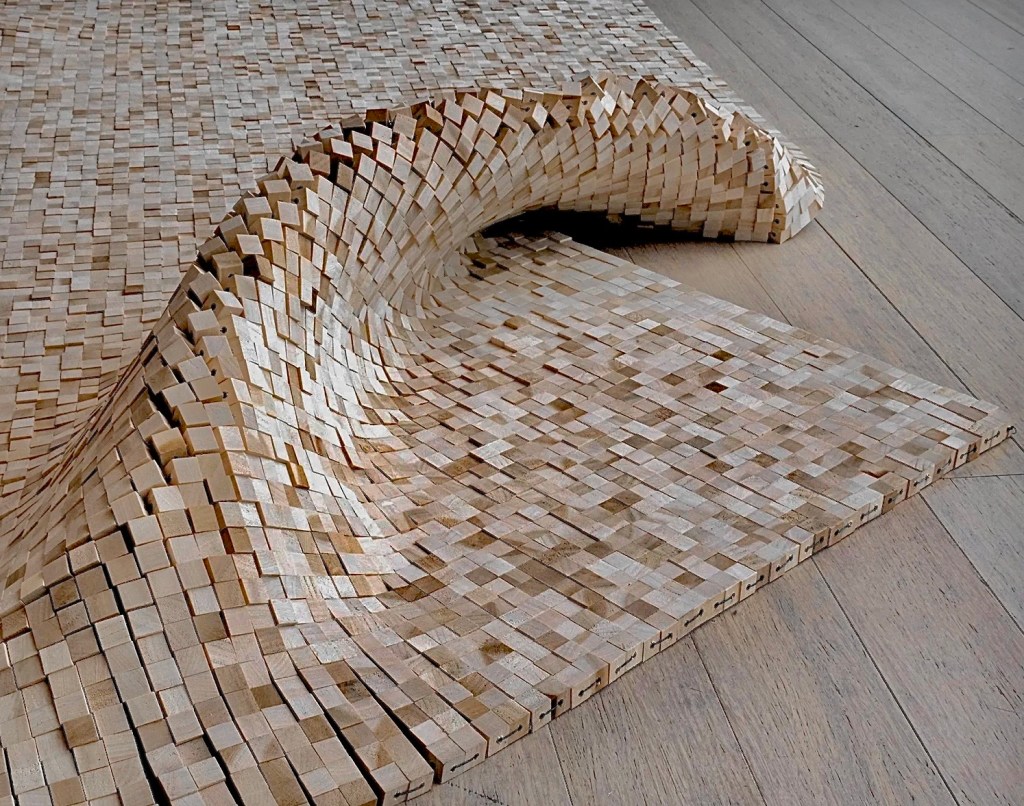
Material investigations lead sculptors to various processes beyond fastening. Steaming, for Michaela Crie Stone Maine. Torsion for Alejandro Tobón Columbia, Sanding for Adrien Segal California. Grainwork for Syd Carpenter Pennsylvania. Turning for George Tsutakawa Washington. Charring for Morgan Hill Arkansas.
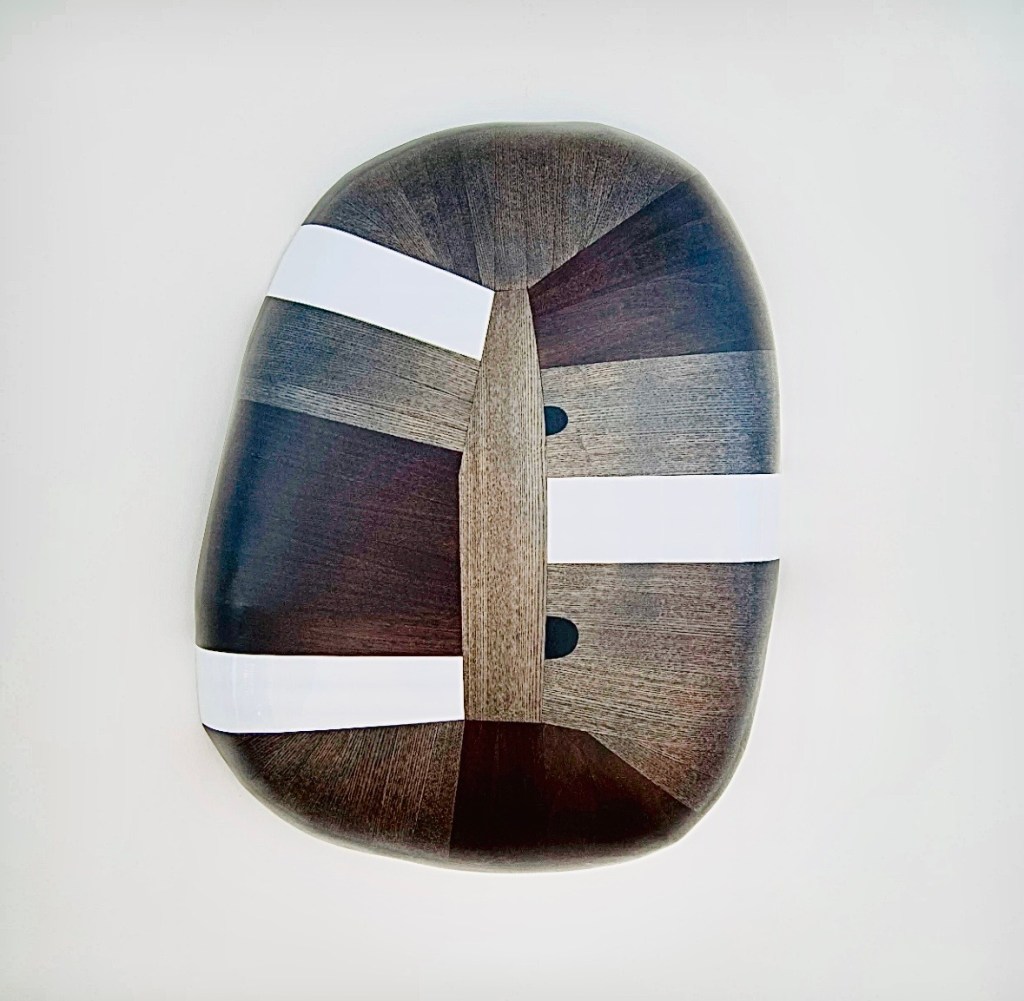
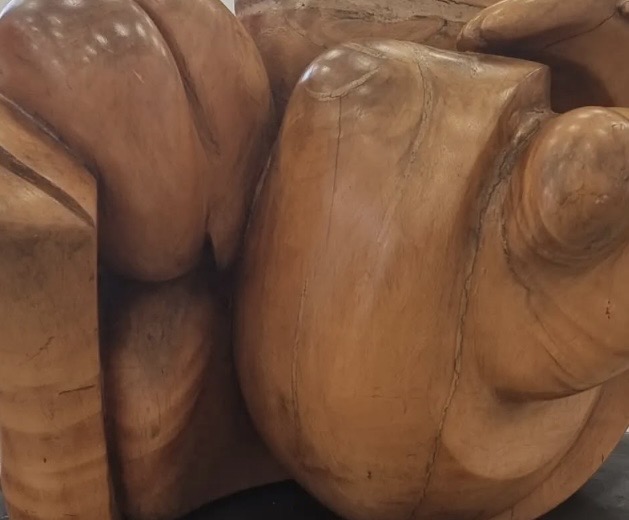
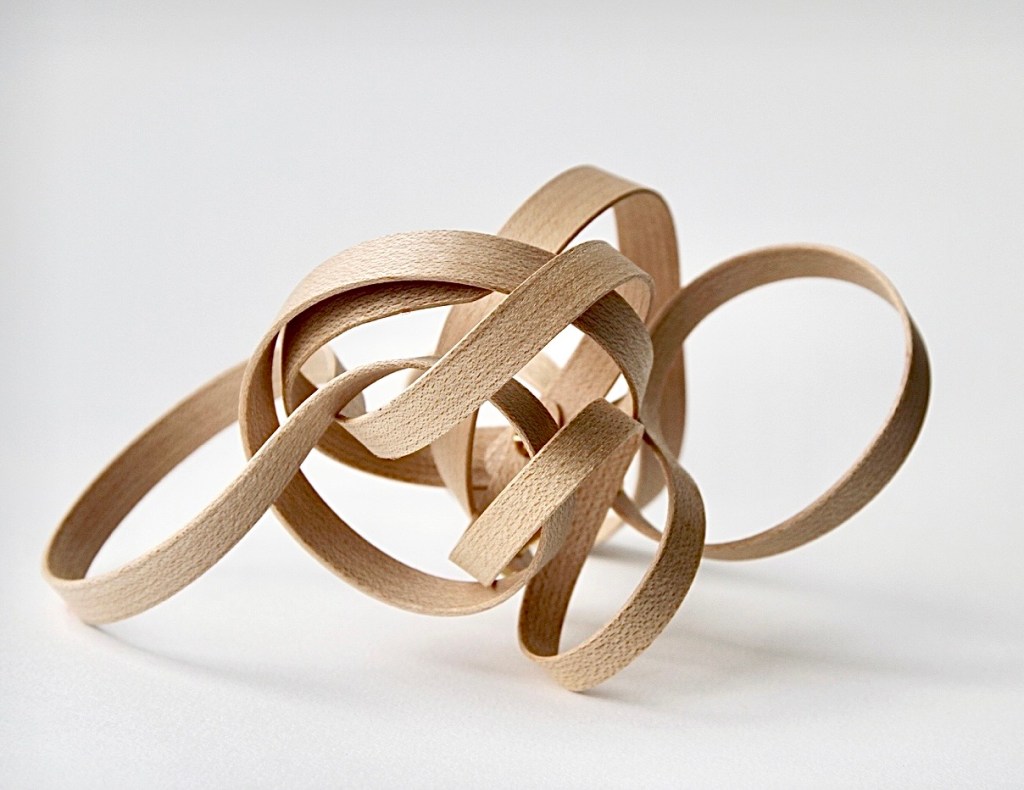
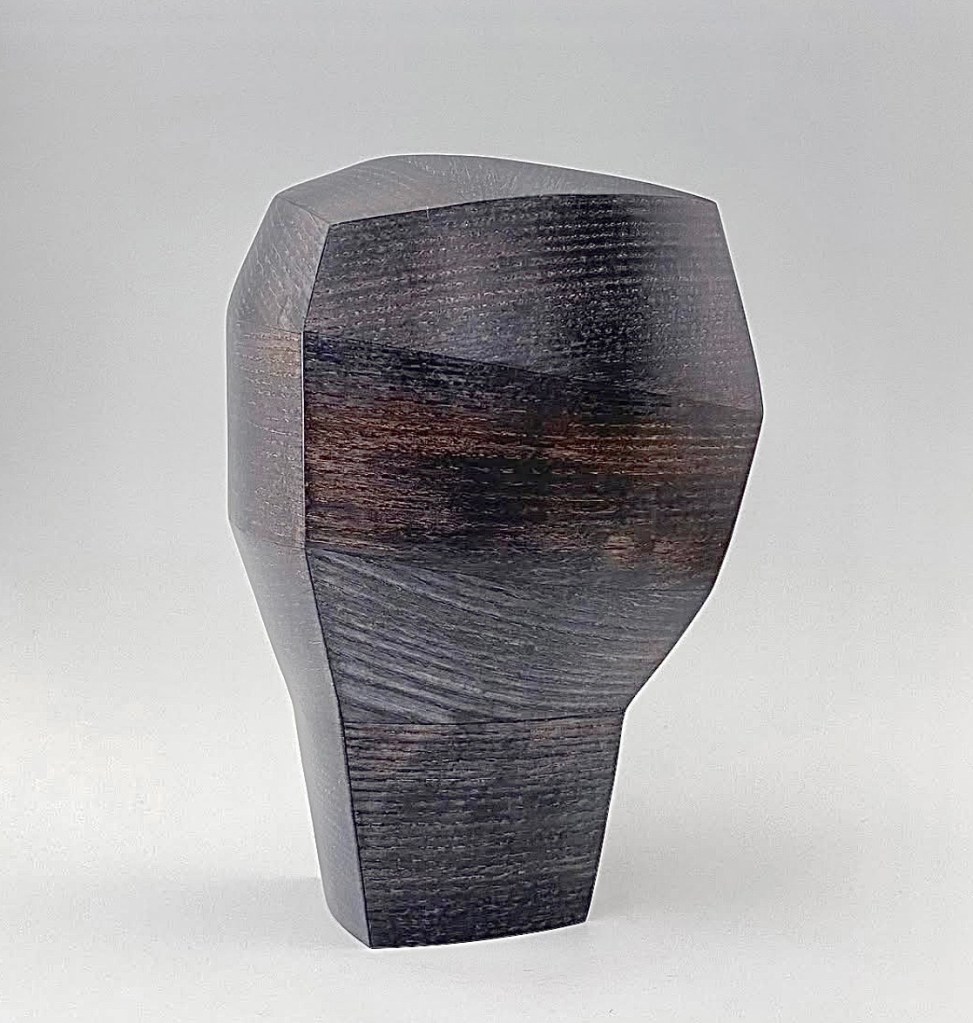
Humanity becomes content for some sculptors. Haptic humor is a component in looking for the homosapien in wood: Raul De Lara Mexico, Vivian Chiu Hong Kong, Rebecca Kolodziejczak Pennsylvania. Haptic seriousness is evident in the sensuous sleekness achieved by Christian Burchard Oregon, who has explored knots’ natural drying vectors in planes and by Steve Bartlett Maine whose wood skins conform silkily to formalist plans.
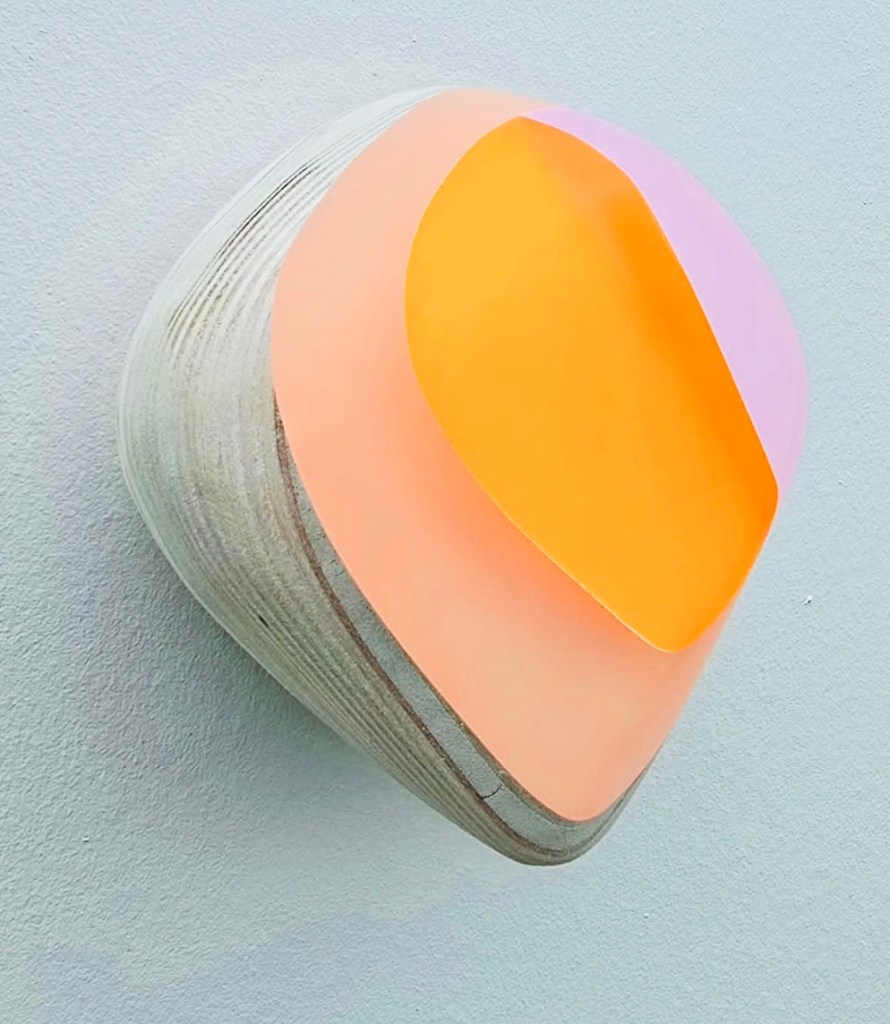
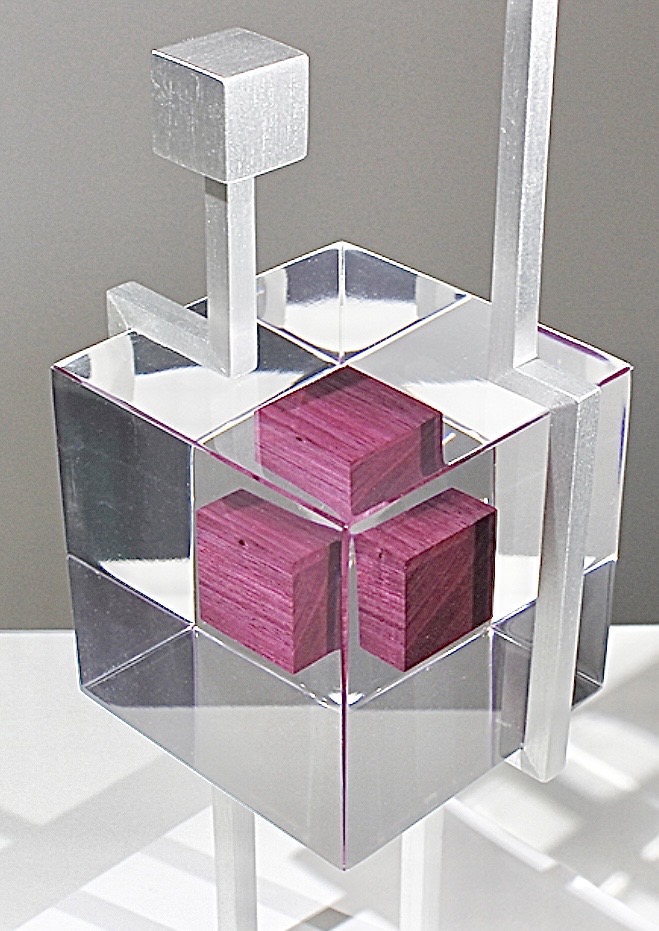
More inspiration from wood growth habits: crosssectional joining combines with the nonnatural chemistry of plexi, specifically bulletproof retail shields, in the unique constructions of Michelle Benoit Rhode Island. Pennsylvanian Kathleen Studebaker protects wood color from oxidation and light fading with the resin portion of her sculptures. Emerged-root patterns inform the relief of Olive Gill-Hille Australia and Connie Mississippi, Mississippi. Burls can be read in the reductive compositions of Sérgio Camargo Brazil. Underground-aboveground networks emerge from the grouping by Gérald Dederen Belgium.
Wood and woods photographers from university and self-taught sources in this quarter’s issue: Denzil Little from Bridgeport as well as Liisa Pekka, scholar originally from Faroe Islands. Also, Anahi Chapaco, Taraji Bolivian; Karine Coty, Hamilton native studing at Binghamton University; JG Kehoe, also at Binghamton.
Cover image: Steve Bartlett
 Travertine