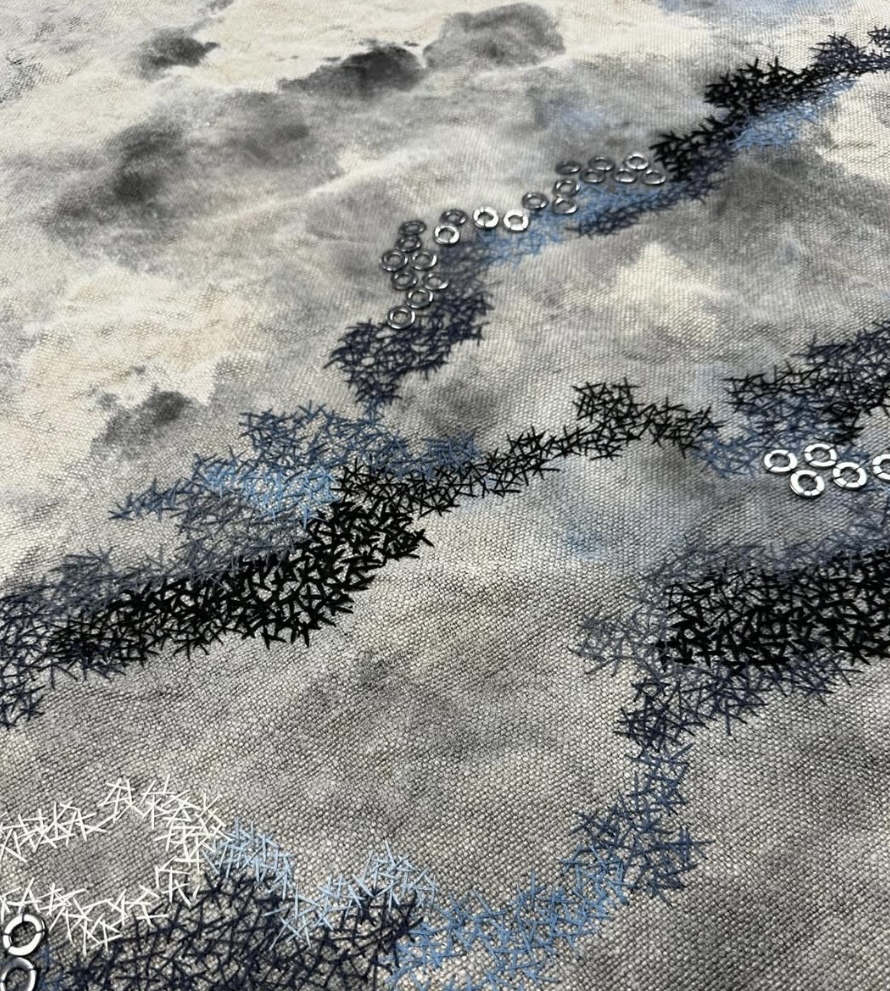
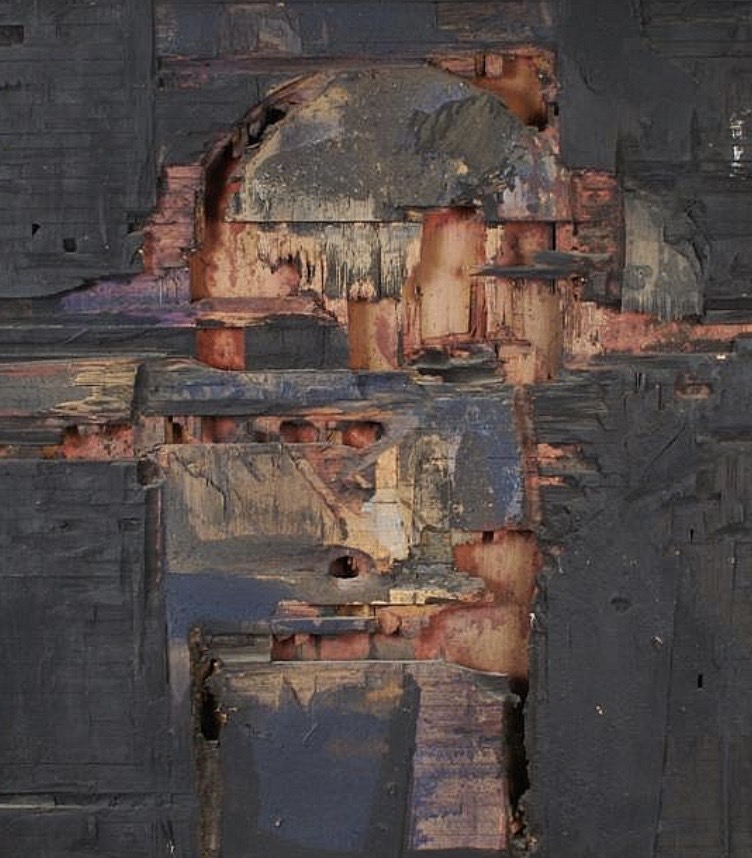
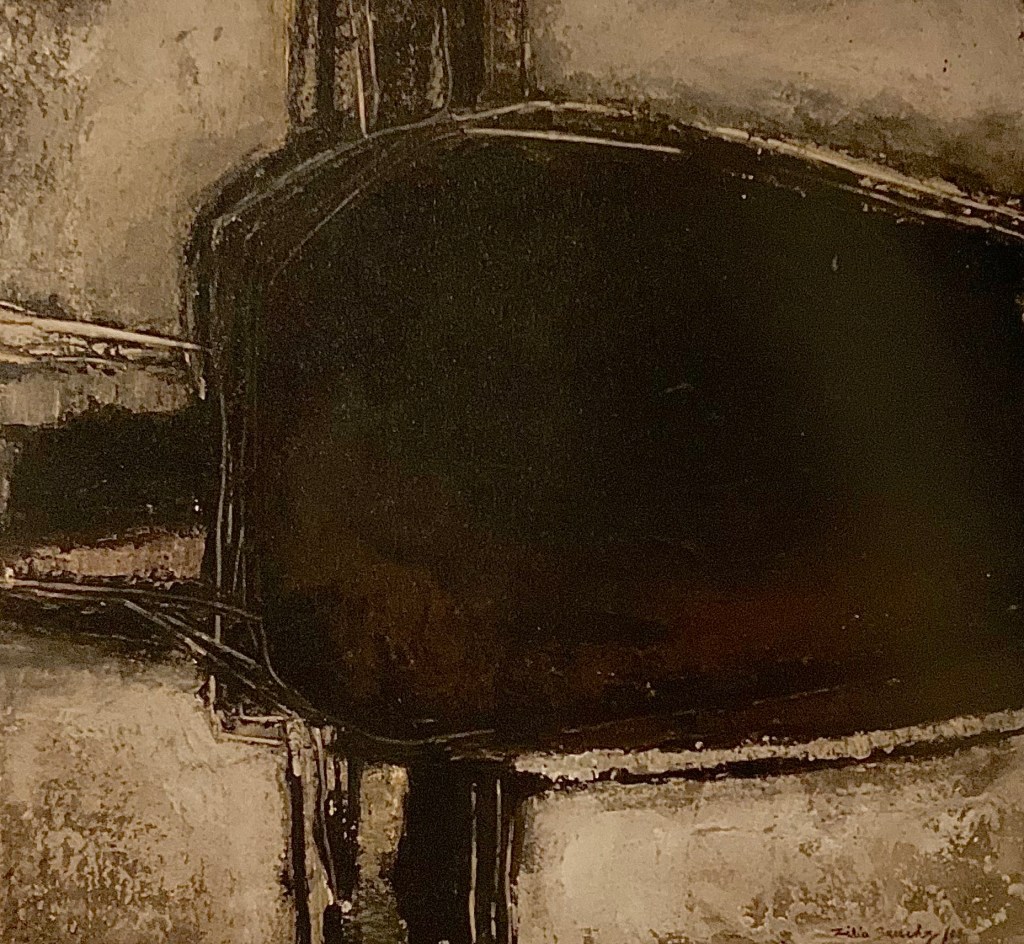
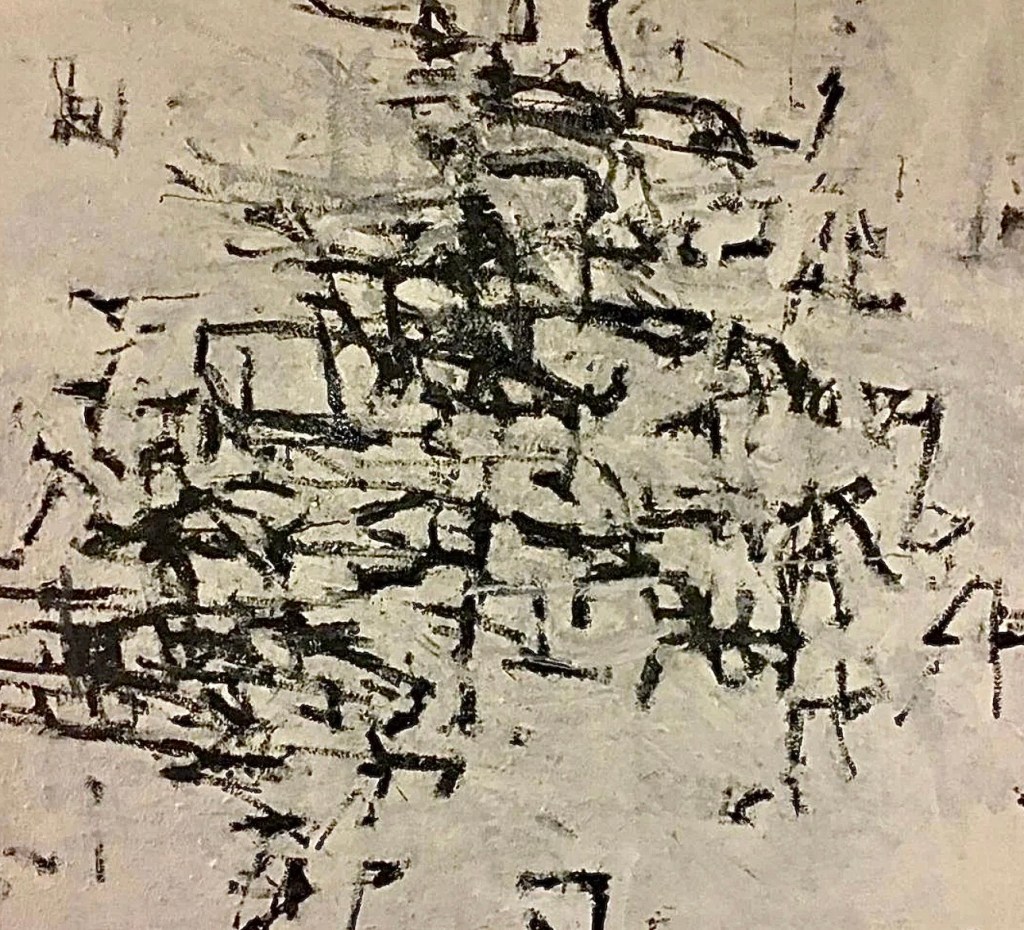
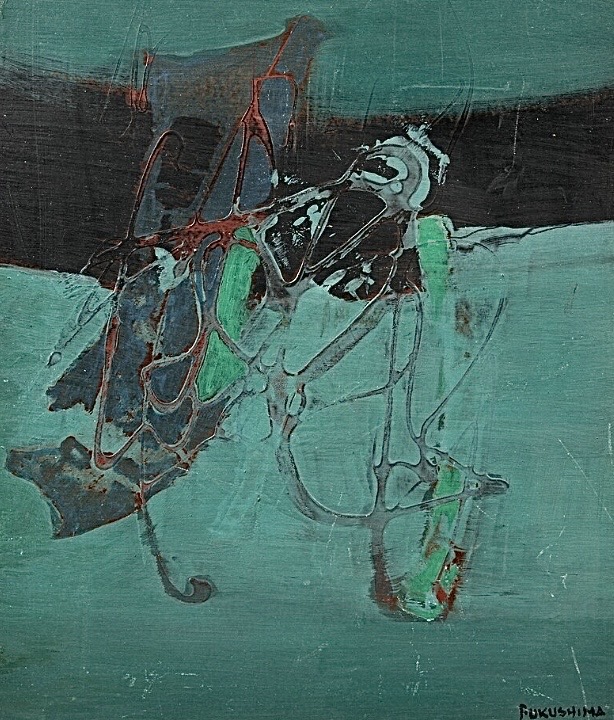
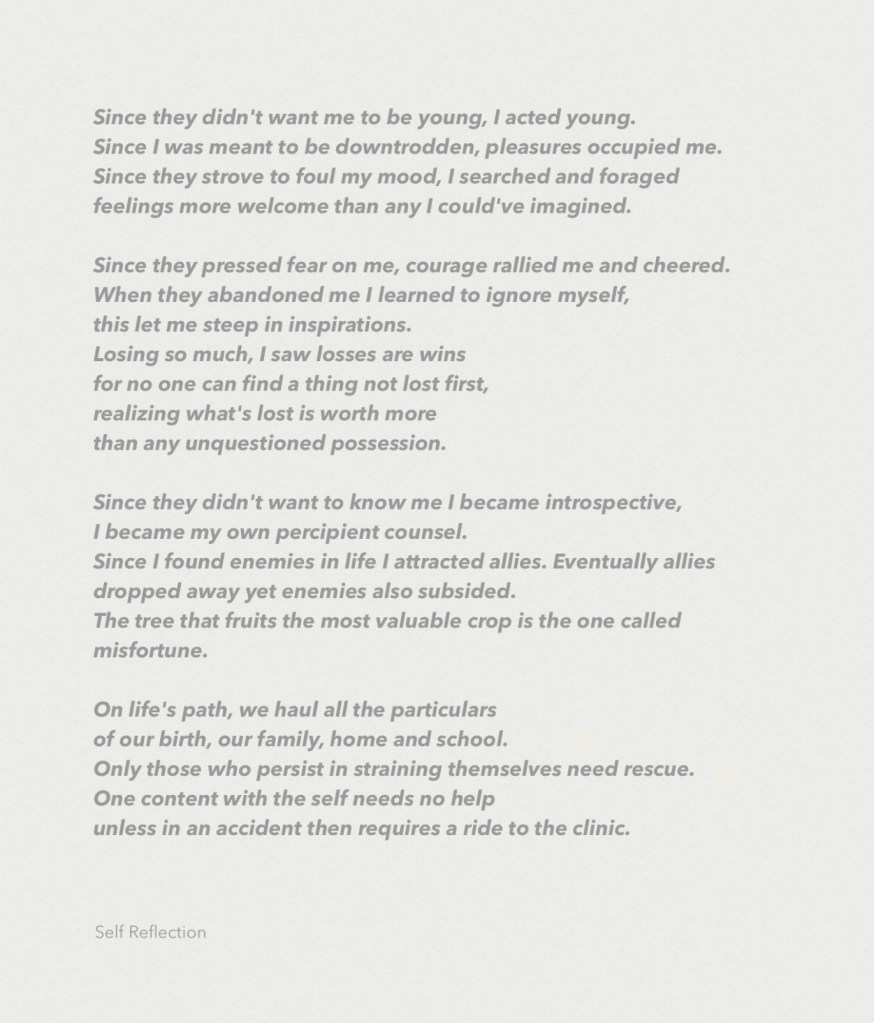
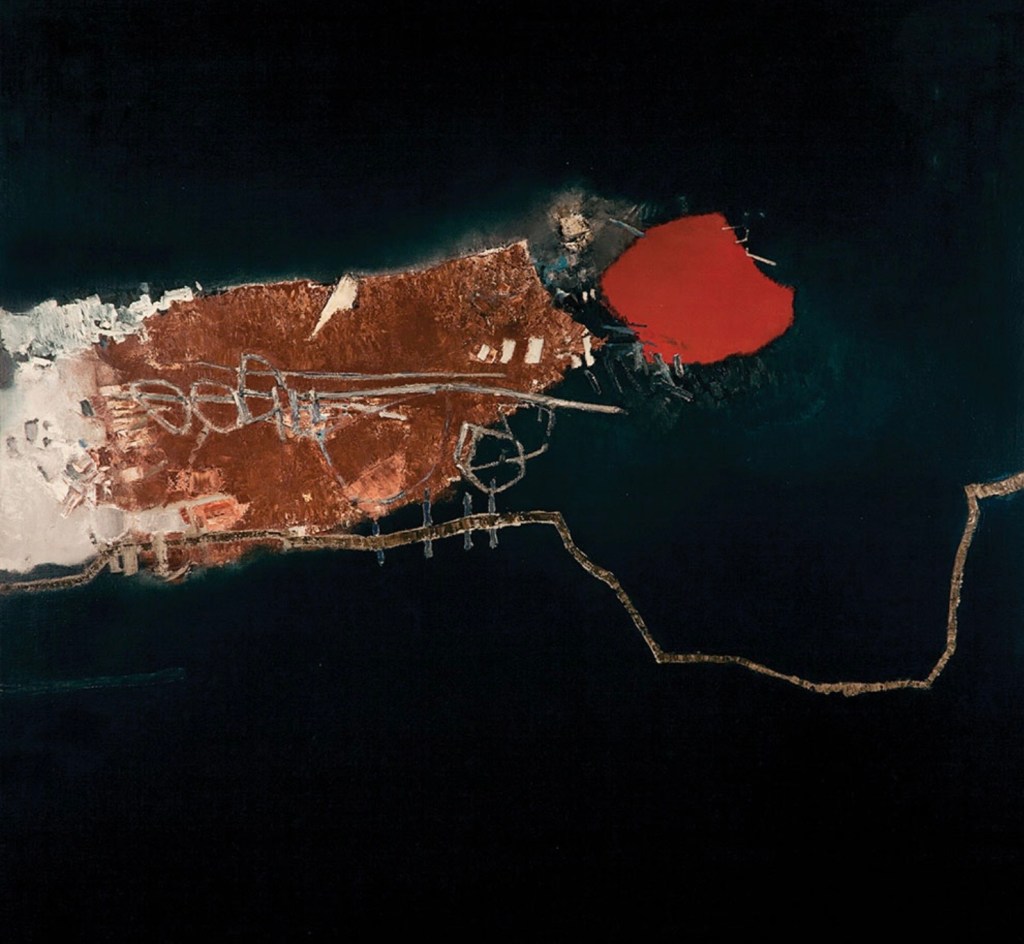
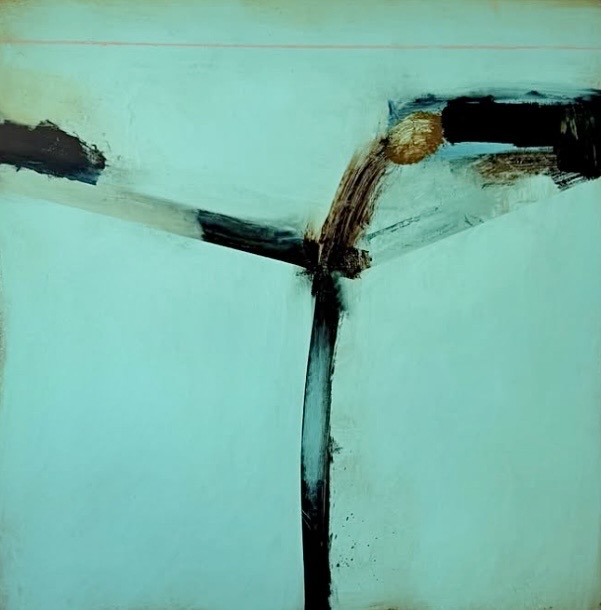
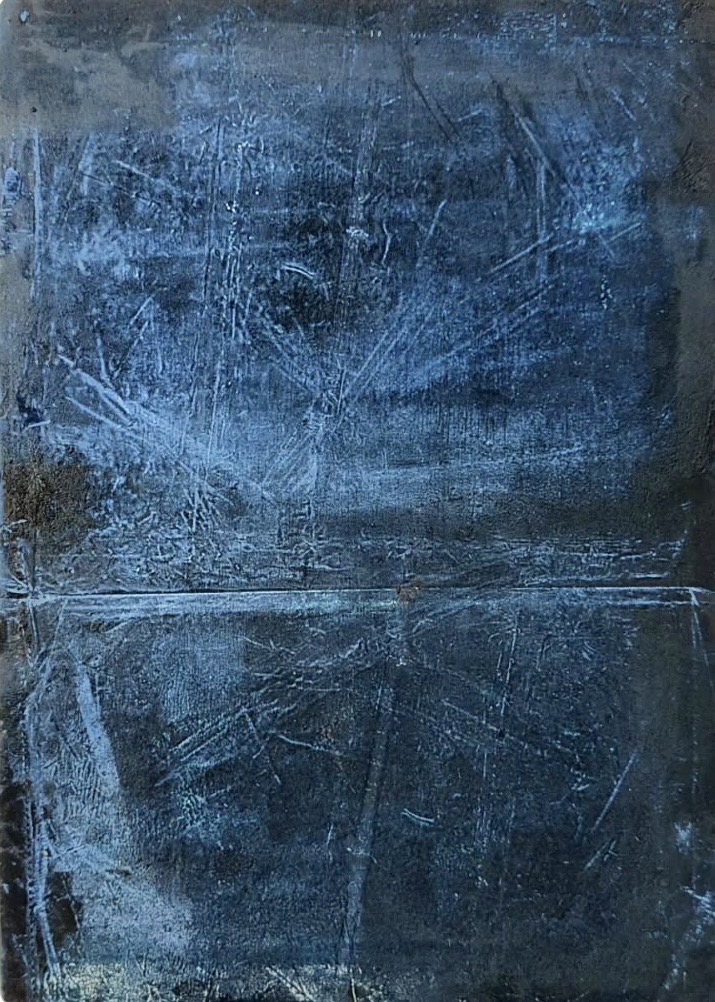
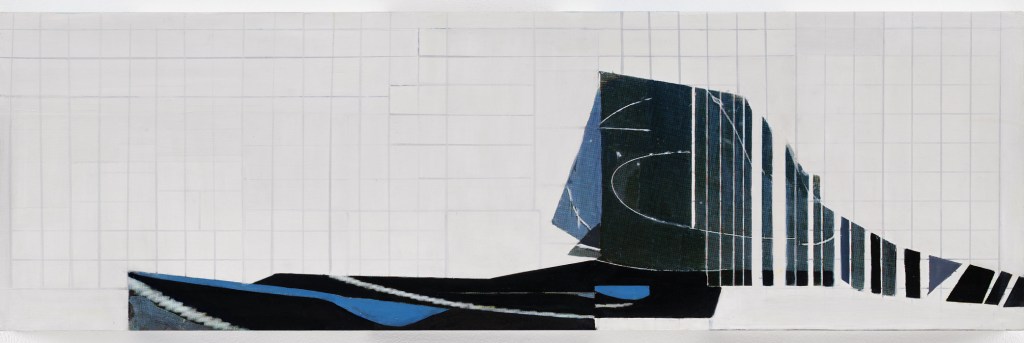
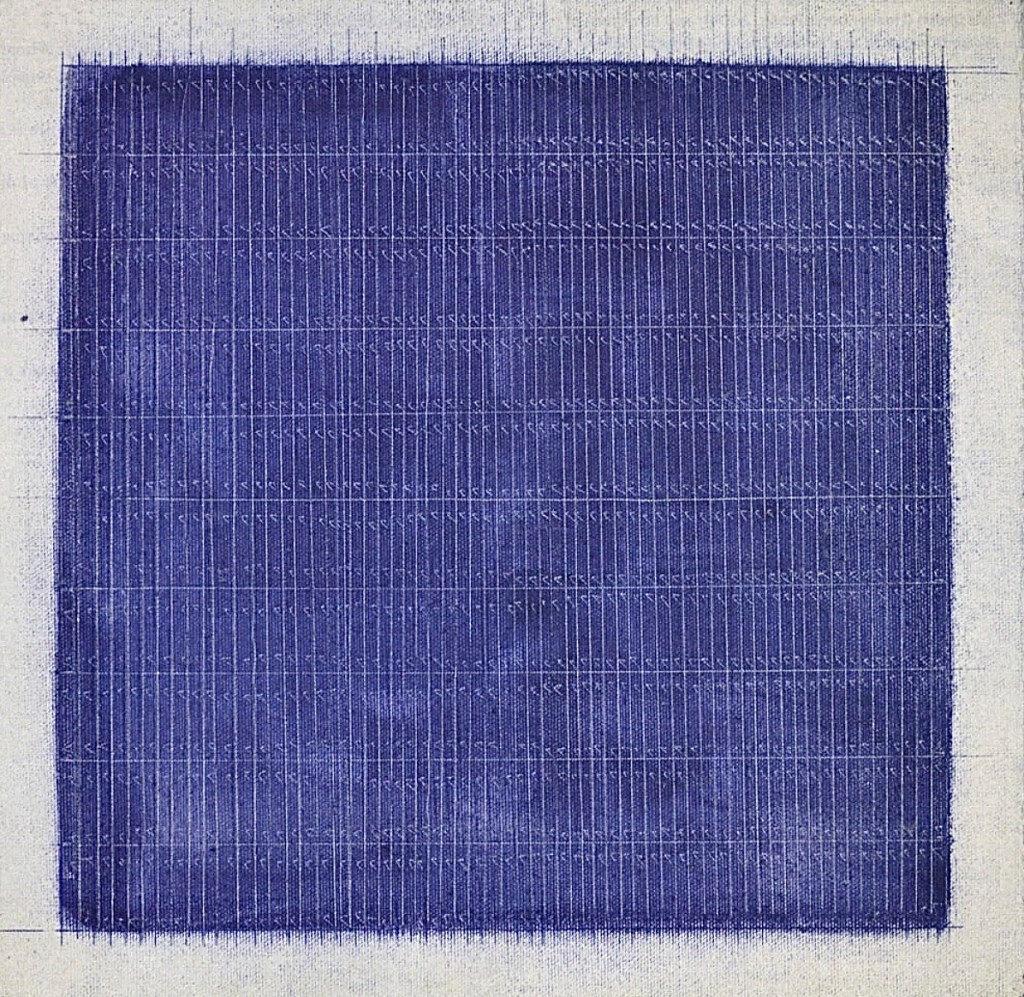
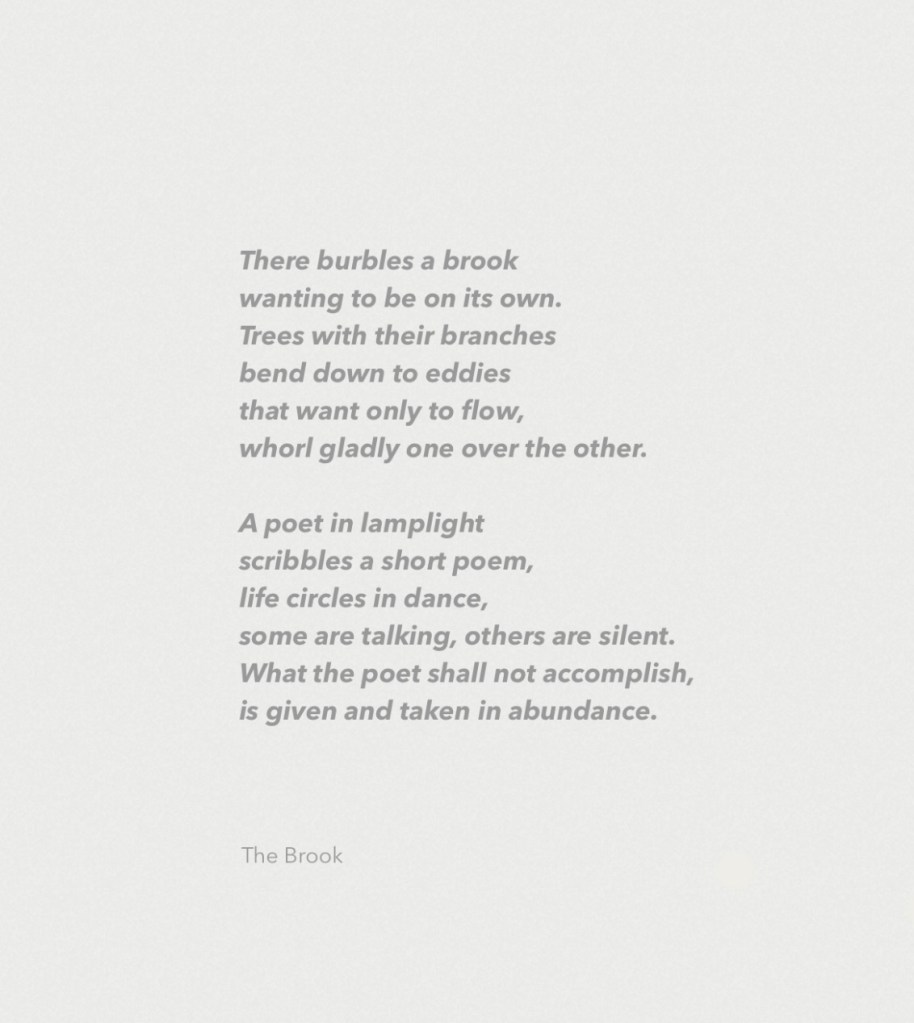
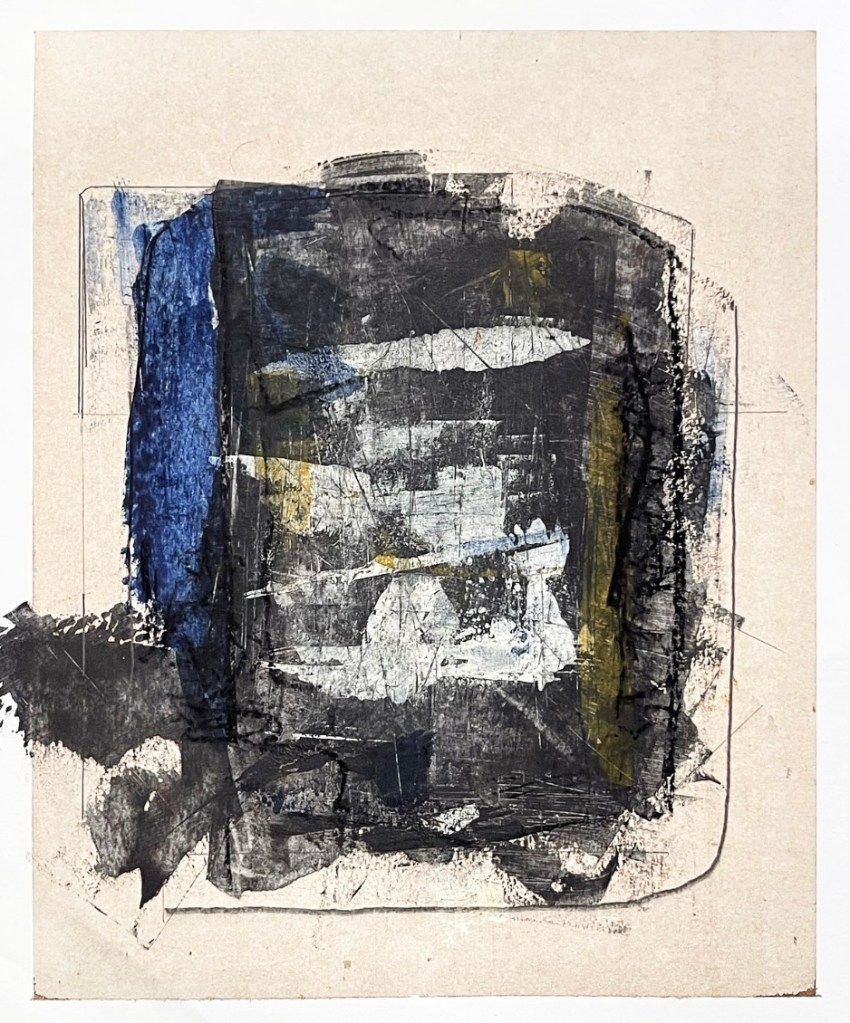
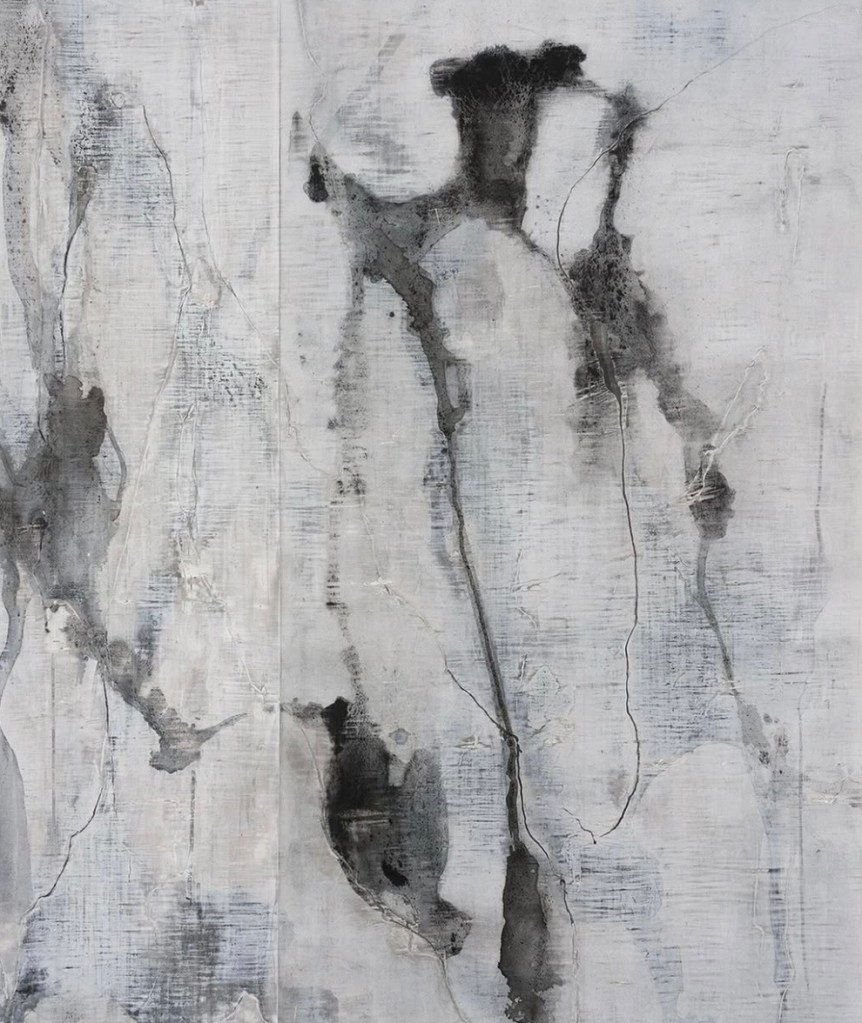
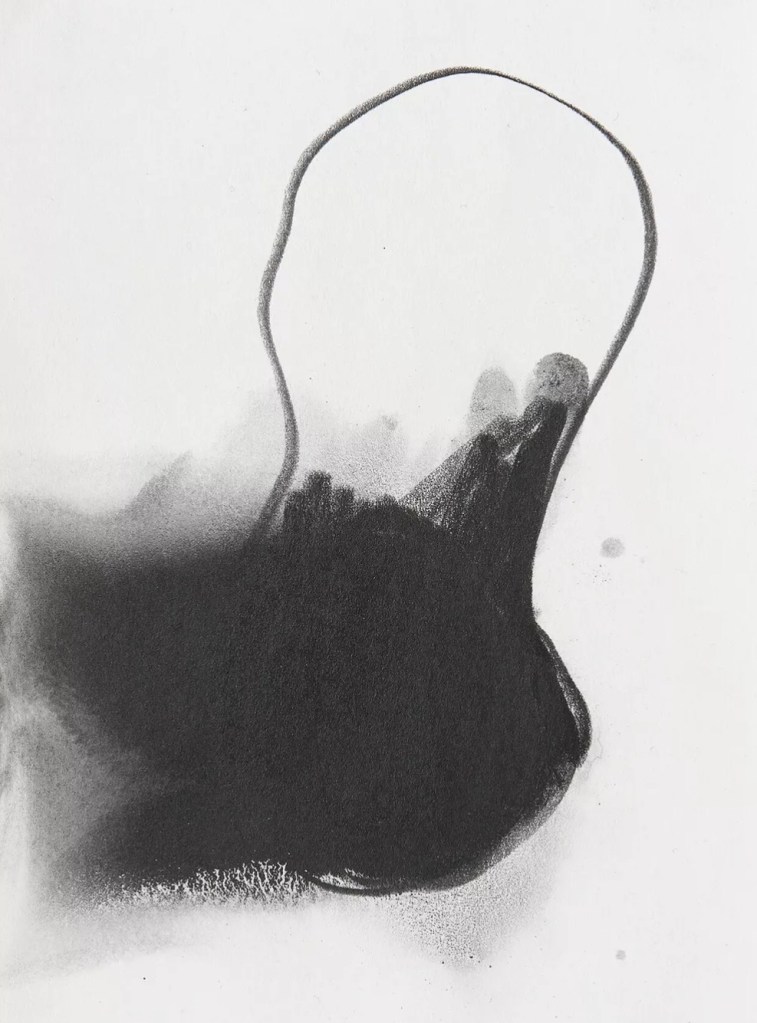
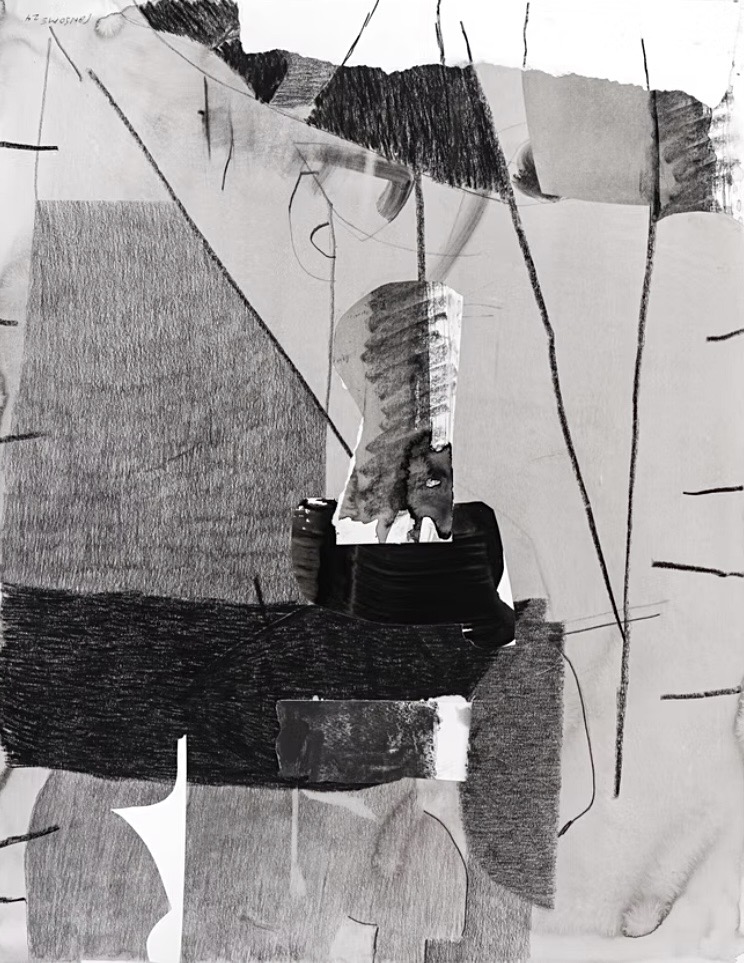
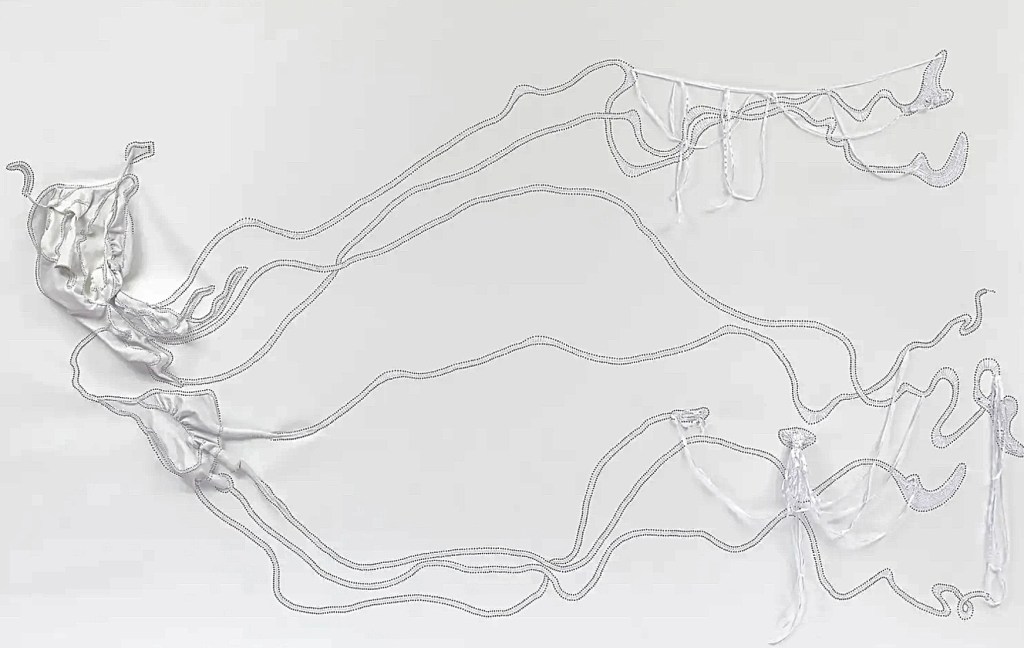
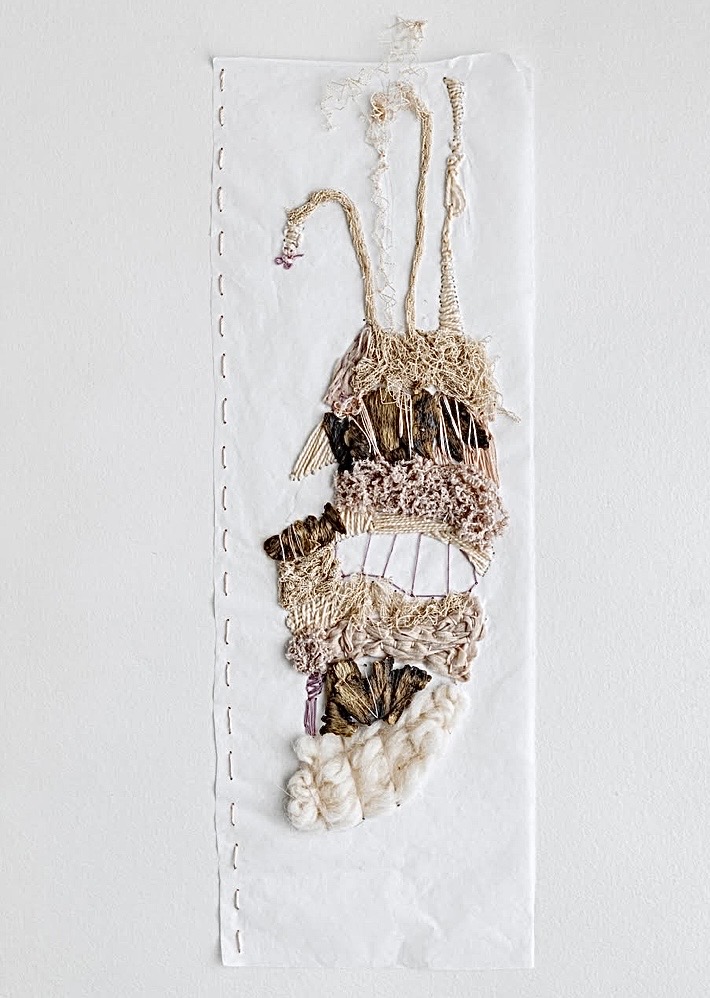
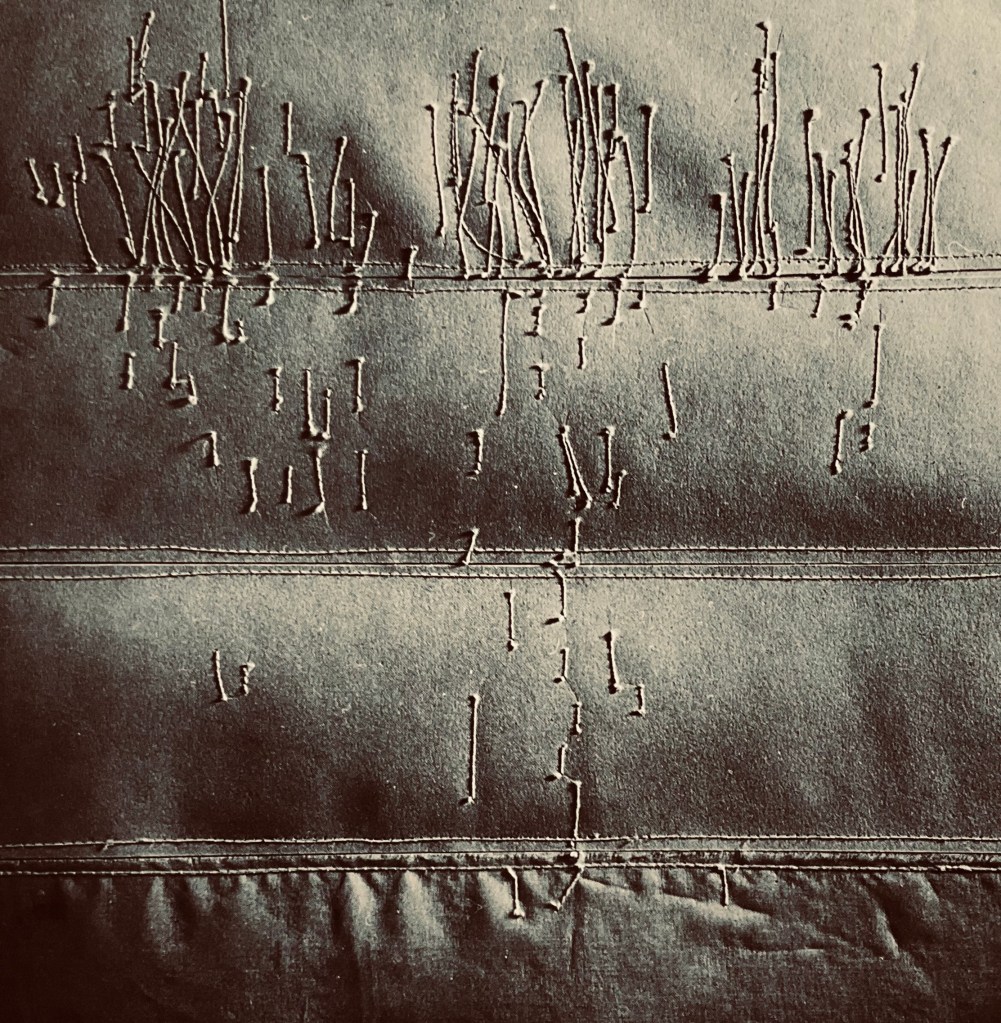
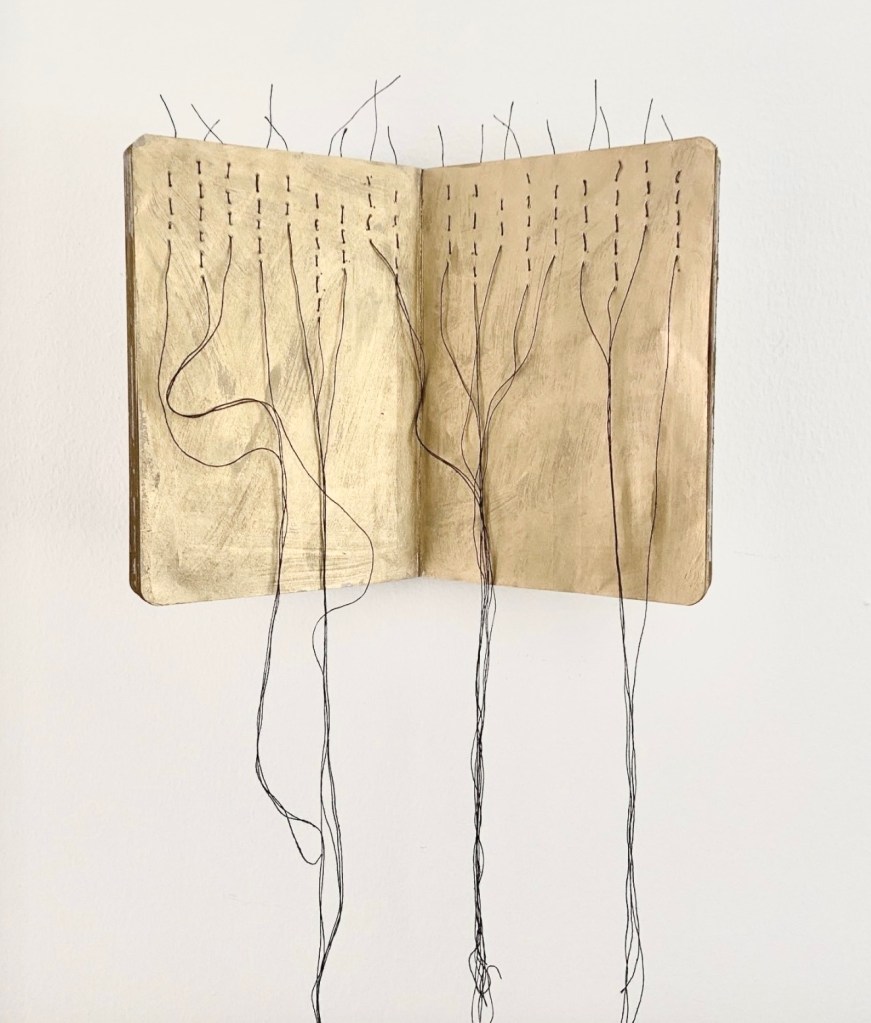
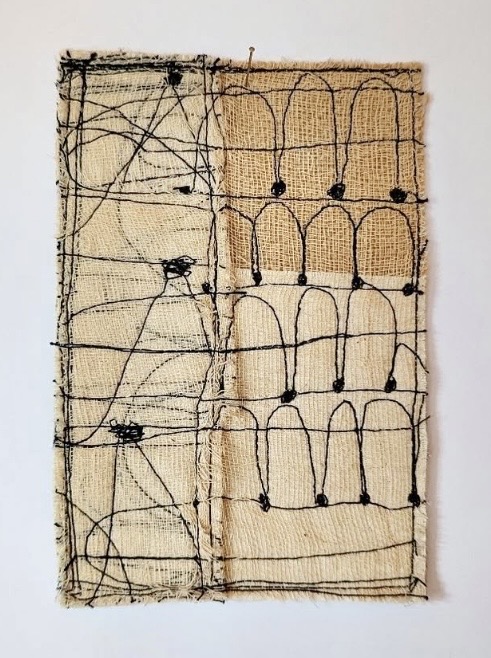
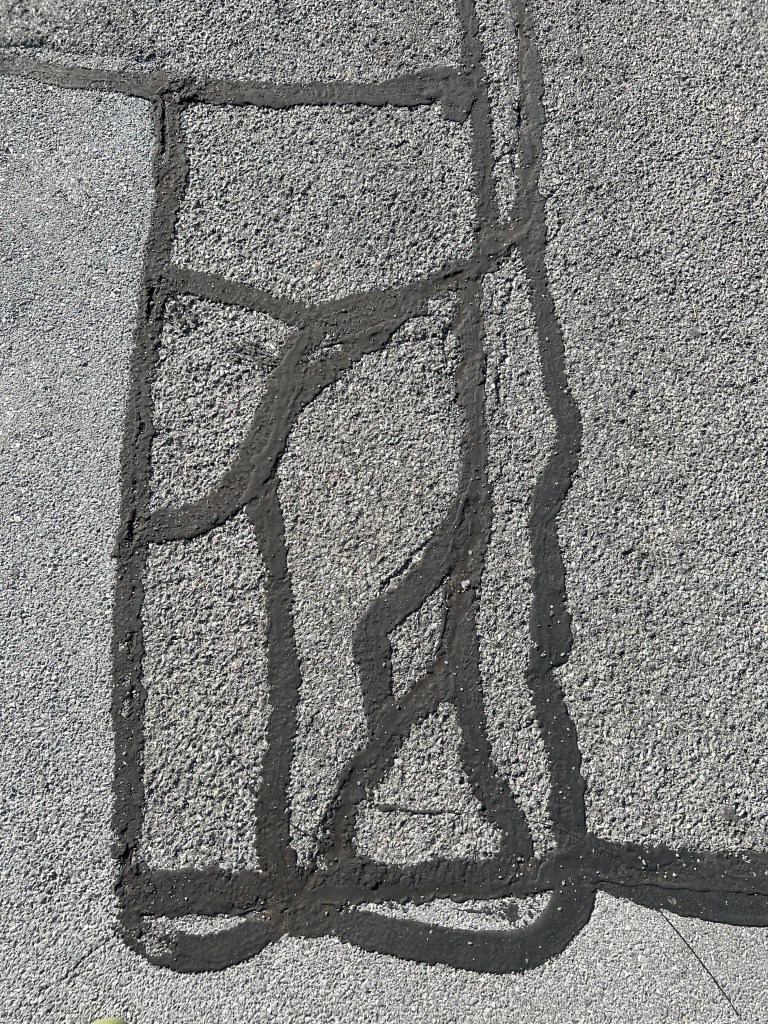
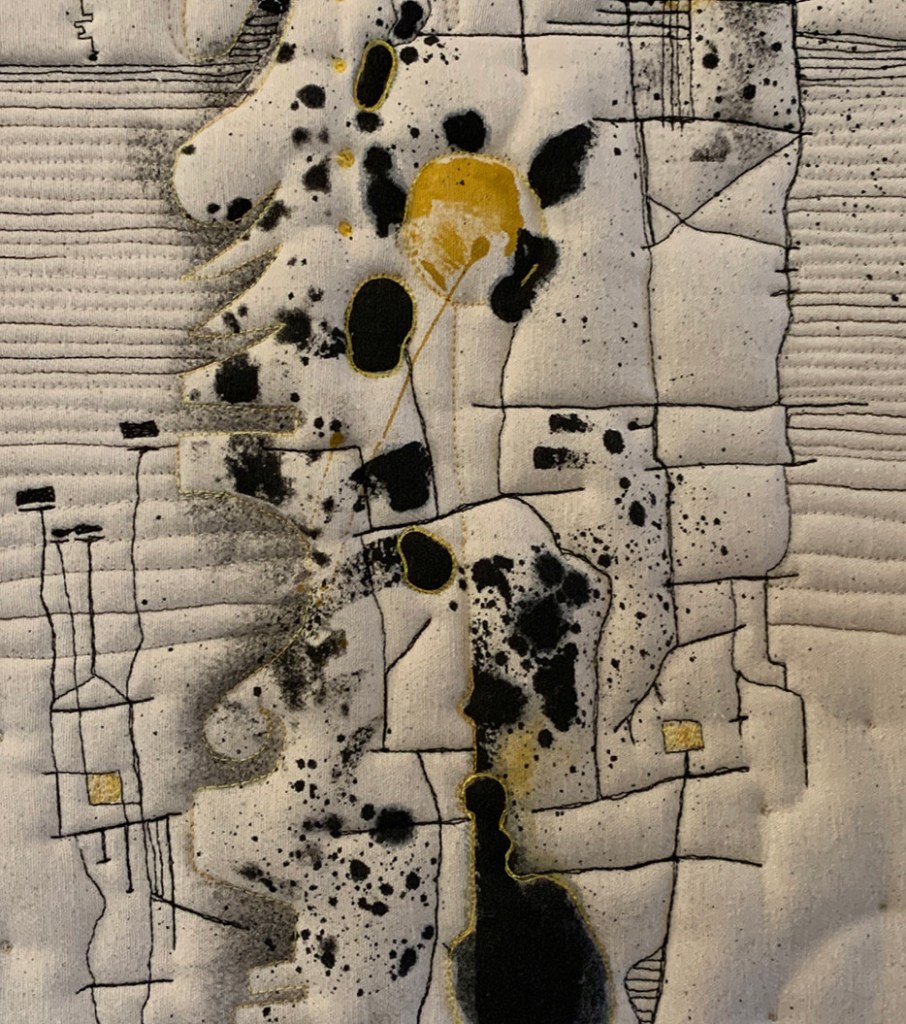
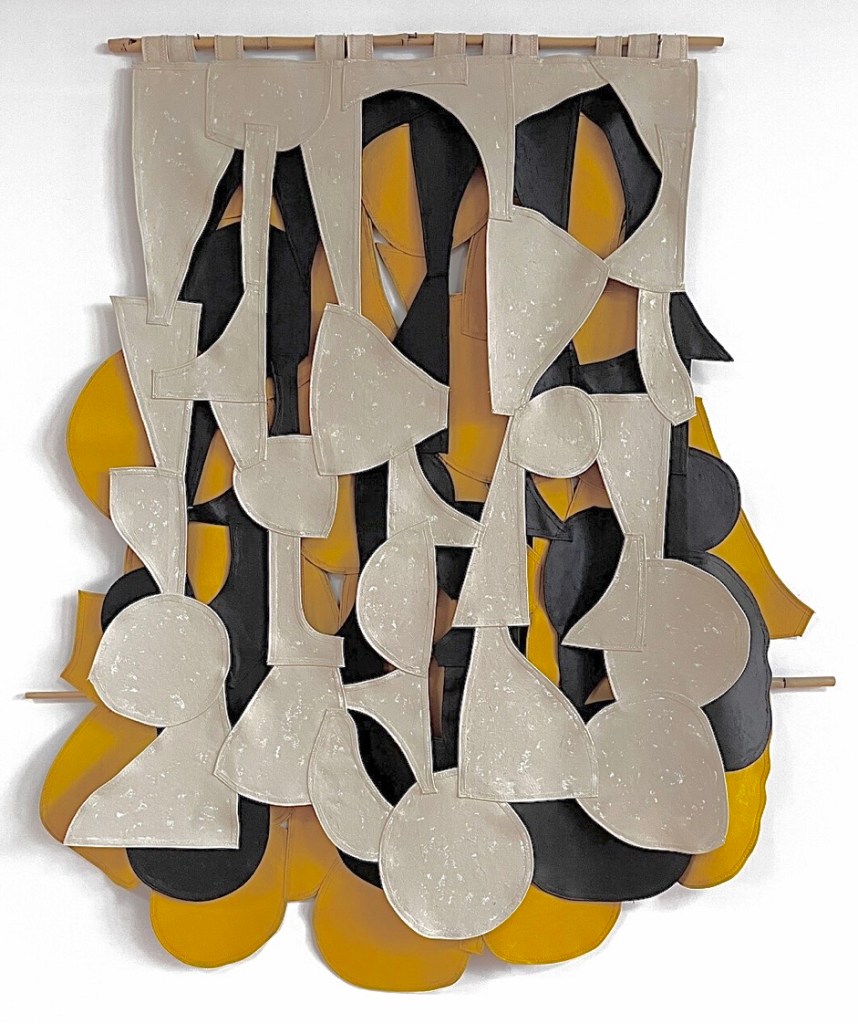
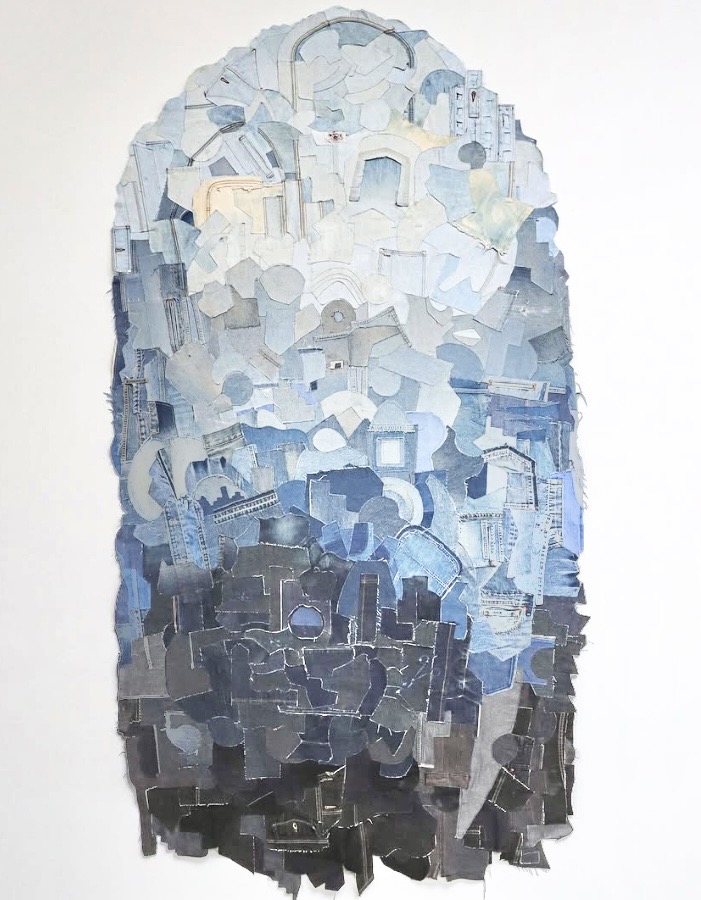
Mark-Making by Cara Dahl.
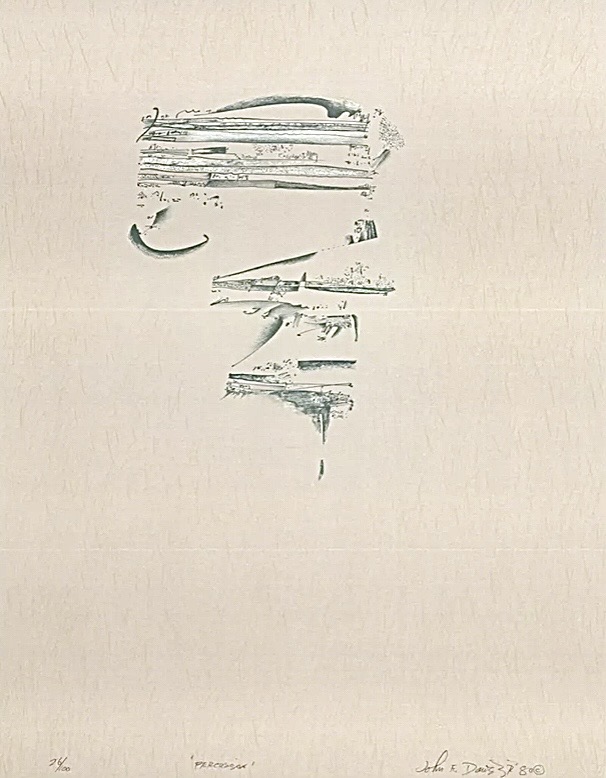
Gesturalism on textiles. Proprioception marked on the weave of staff paper. Abstraction held within a woven matrix.
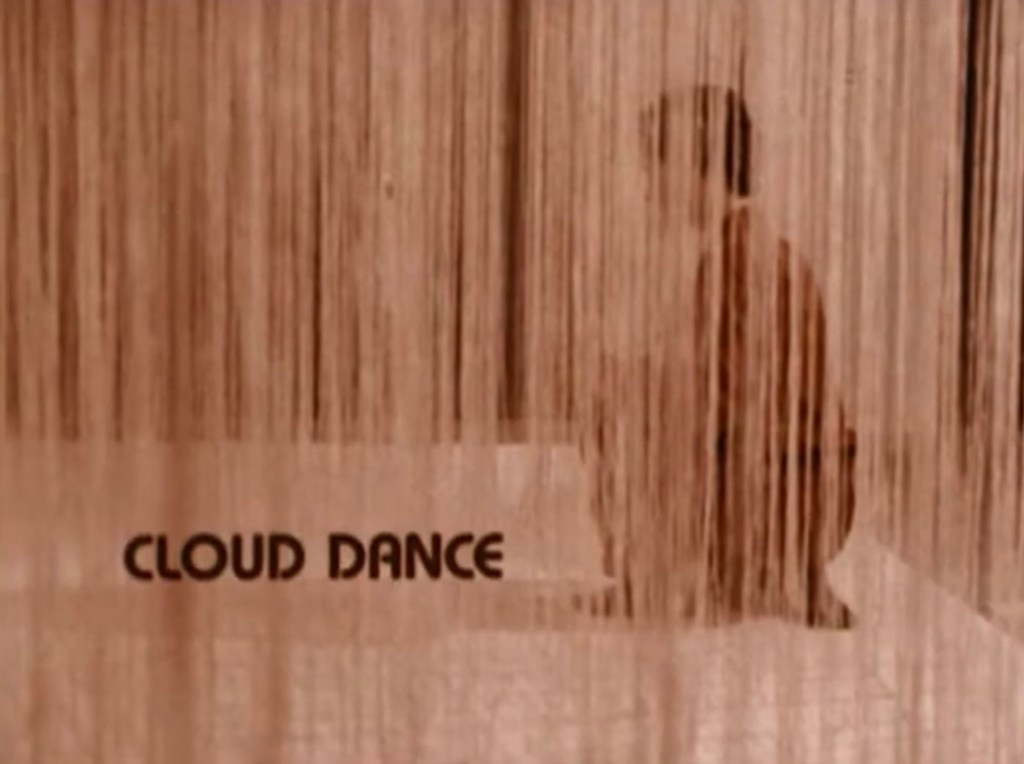
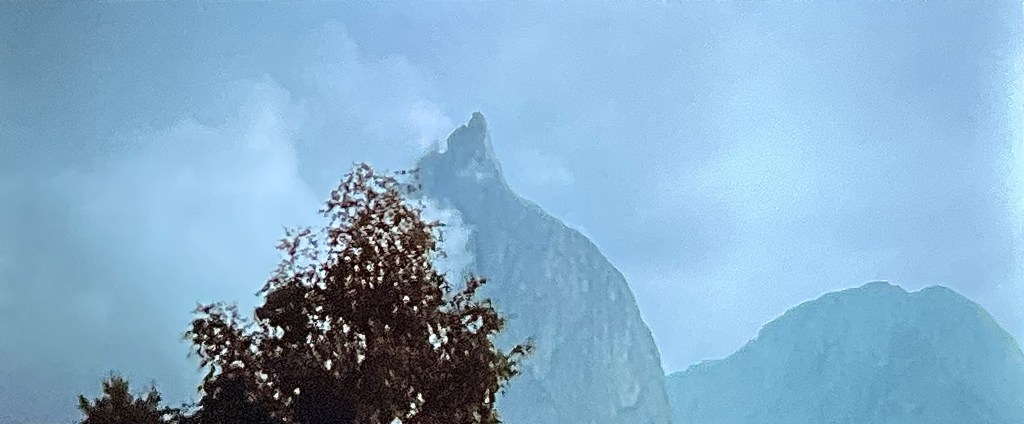
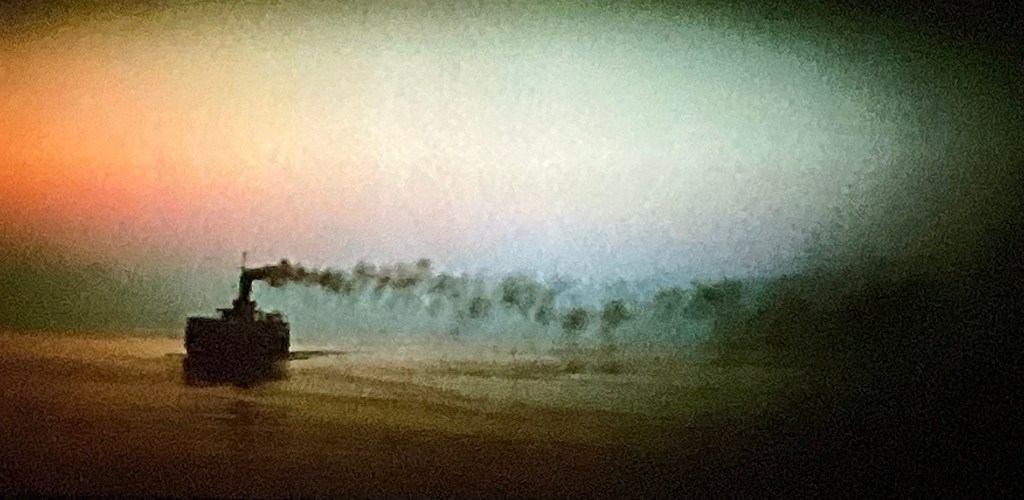
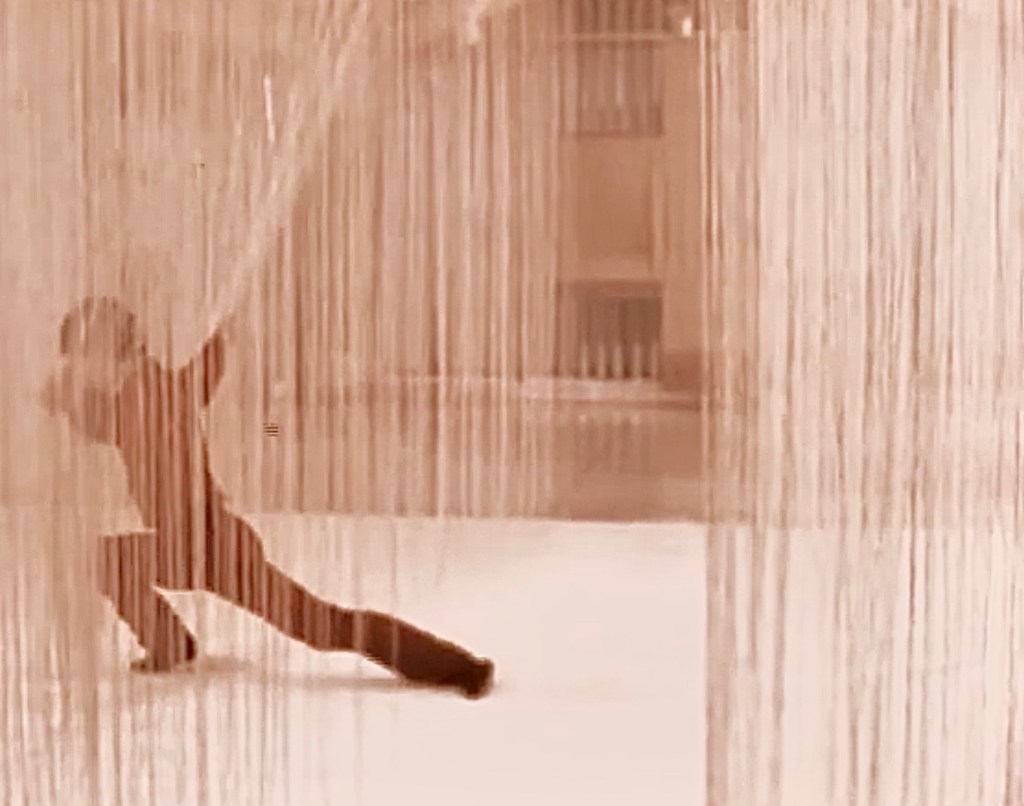
More than one of these can be contemplated in a multimedia project like Cloud Dance. The 1979 film by Robyn Brentano and Andrew Horn captured the choreography of Andy de Groat. His poignant solo dance traced motions of introspection. Developer of unique gesturism like sustained whirling or marchlike gait, De Groat was filmed moving through cruciform spaces within the long nap of an inverted rug hung by ceiling brace. At times he captured the nap strands to create diagonal patterns in the otherwise symmetrical matrix of fiber.
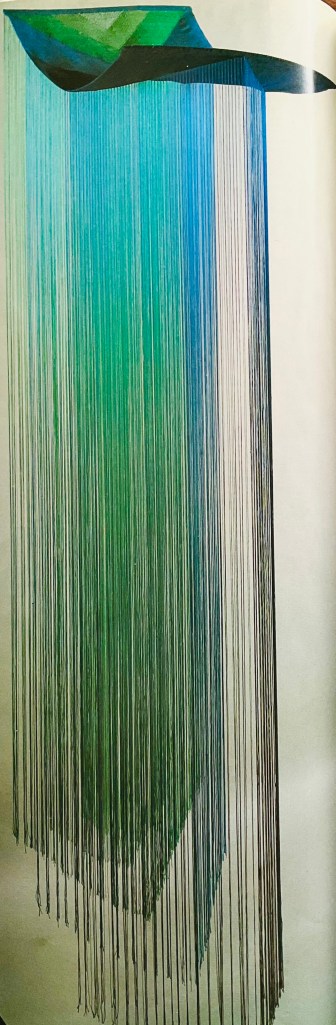
This was the type of space-filling gravity rug we first noticed by Swiss artist Moik Schiele in 1975. In 1977 US weaver Lenore Tawney responded, she experimented with her take on inverted rugs including Four-Armed Cloud in sisal palette used for de Groat’s performance on film. The pattern of the embroidery presented opportunities for dancer to be semi-obscured or to reposition the grid-based atmosphere. In addition to dance and set the film contained stream-of-consciousness poetry by Einstein On The Beach librettist Christopher Knowles, read off-camera by Arby Ovanessian over a violin piece by Michael Galasso.
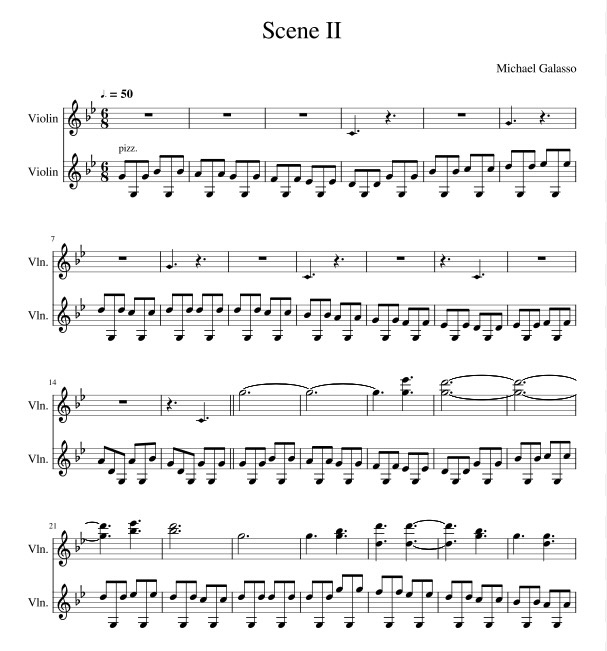
During these years Galasso composed a number of violin works for performance art and theater. Village Voice critic Tom Johnson reviewed a 1976 concert by the violinist at 112 Greene St: “Galasso works in a perpetual-motion idiom with steady streams of fast notes.” This compositional style is challenging. “His fast non-stop bowing patterns and his difficult cascading lines fit nicely on the instrument, but they demand the same kind of total smoothness and control that we have come to expect in first-rate Paganini performances.” Many of the compositions were collected in a 1983 ECM album Scenes that included Scene II’s distinct melody line of pensivity.
*
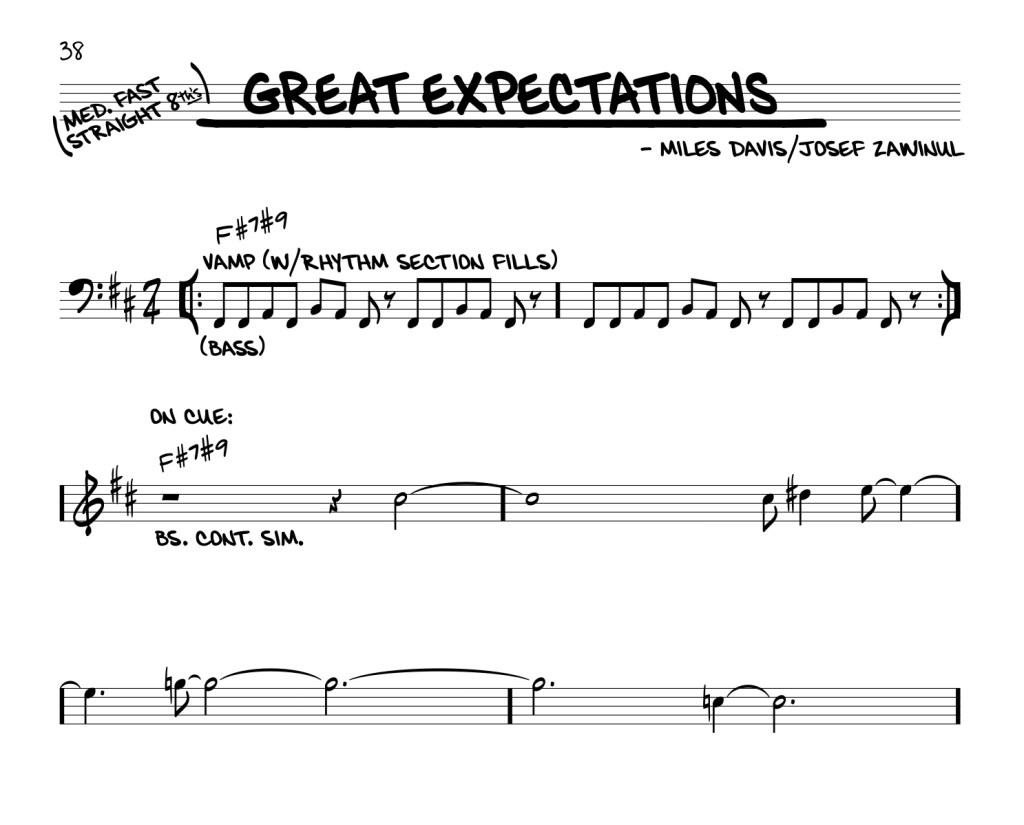
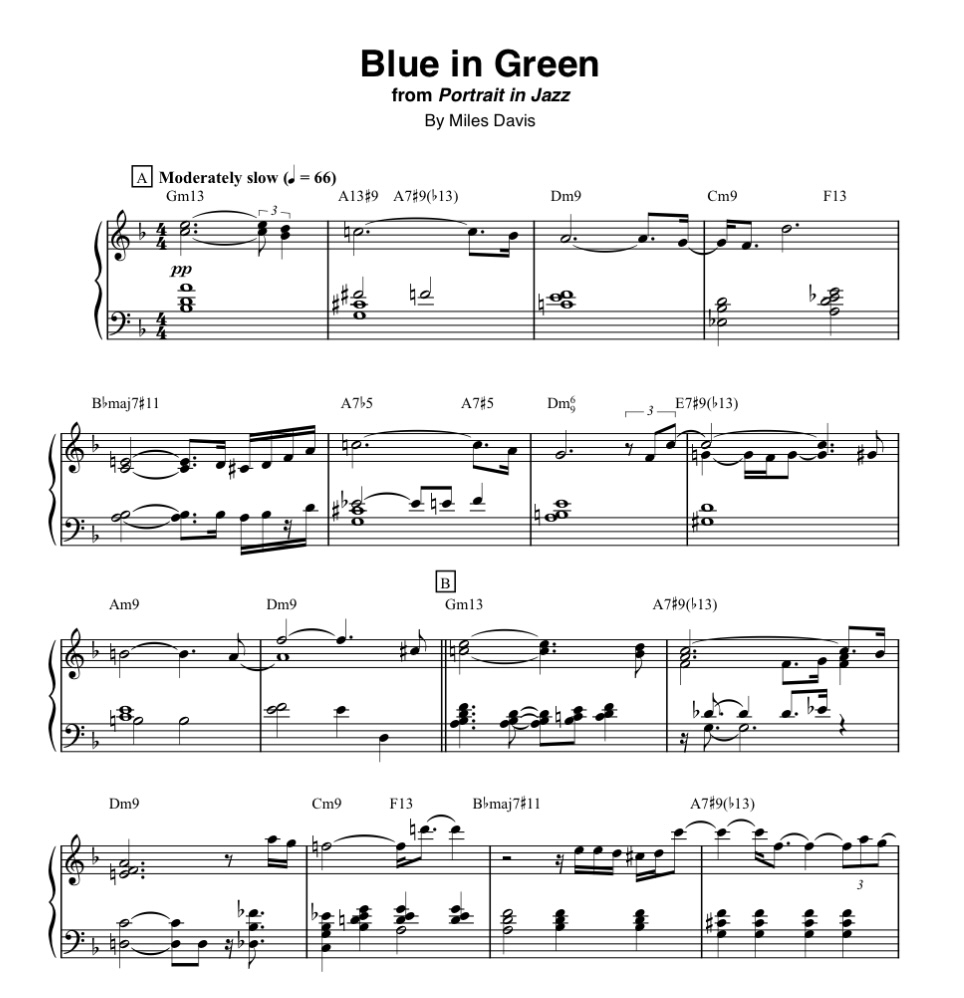
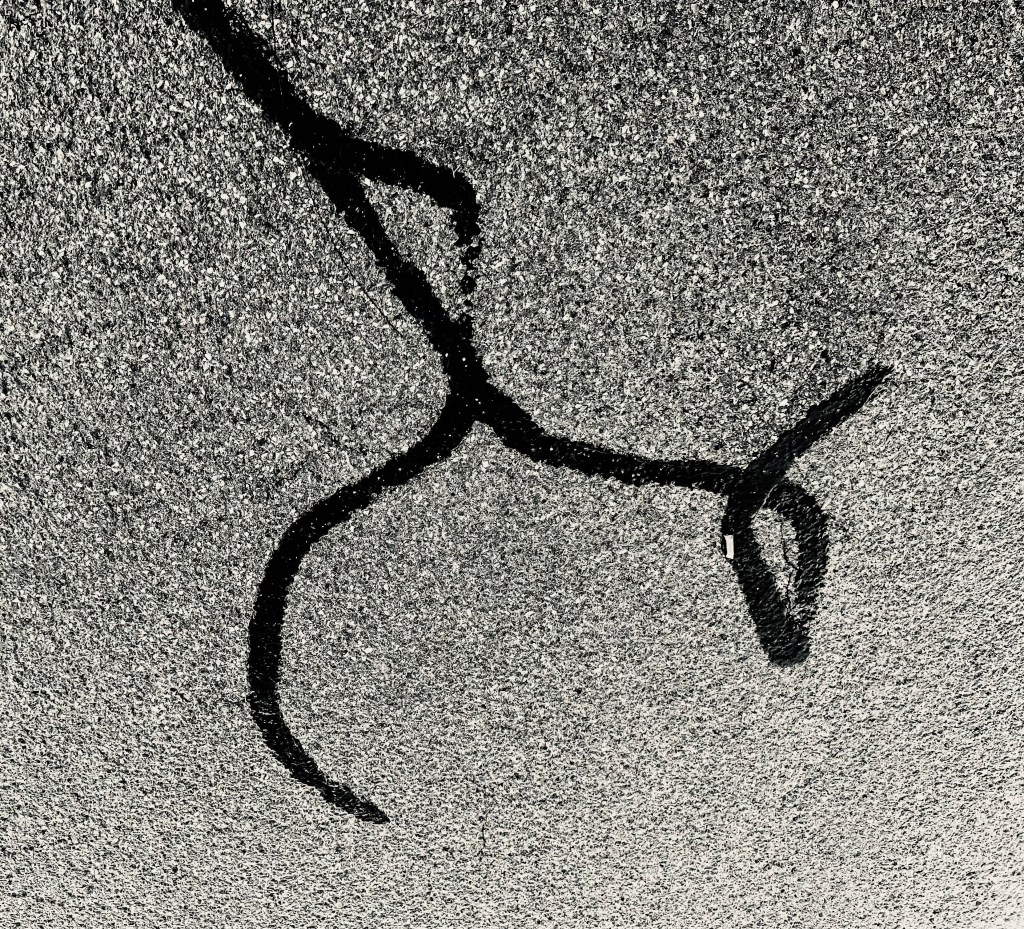
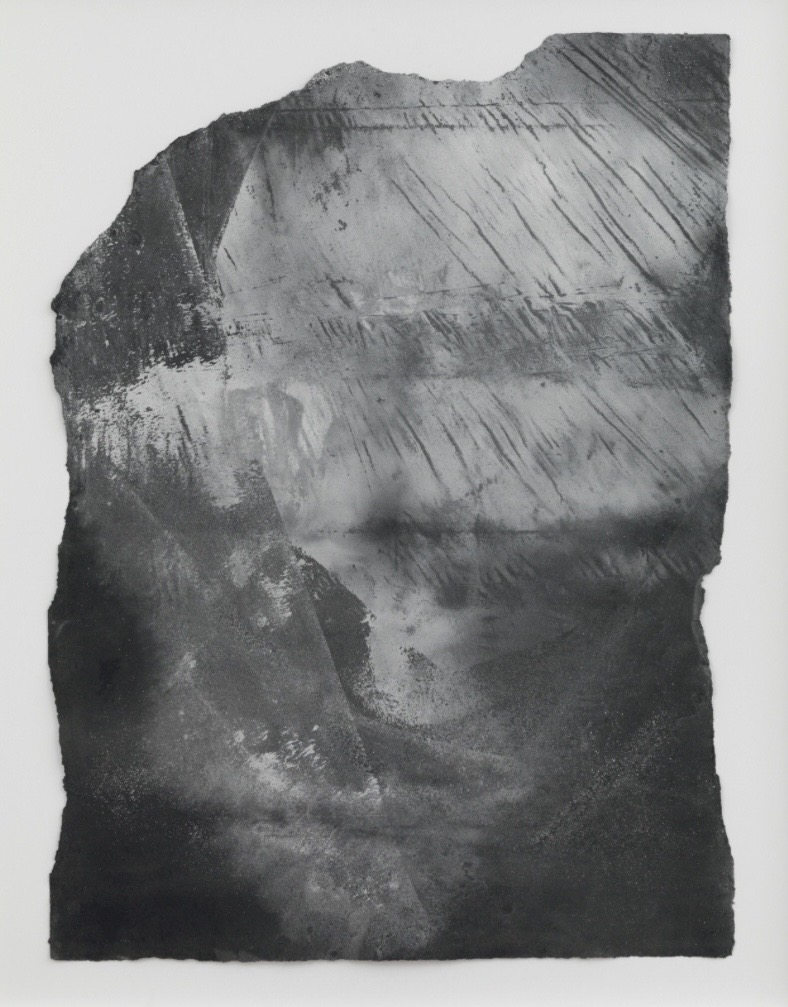
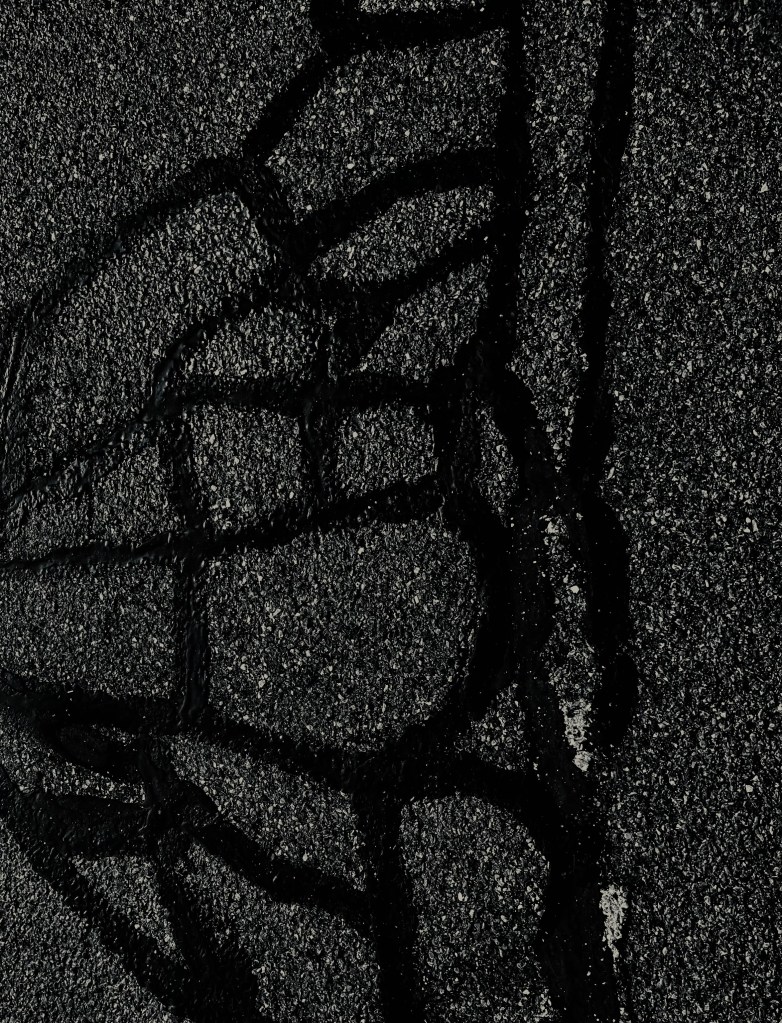
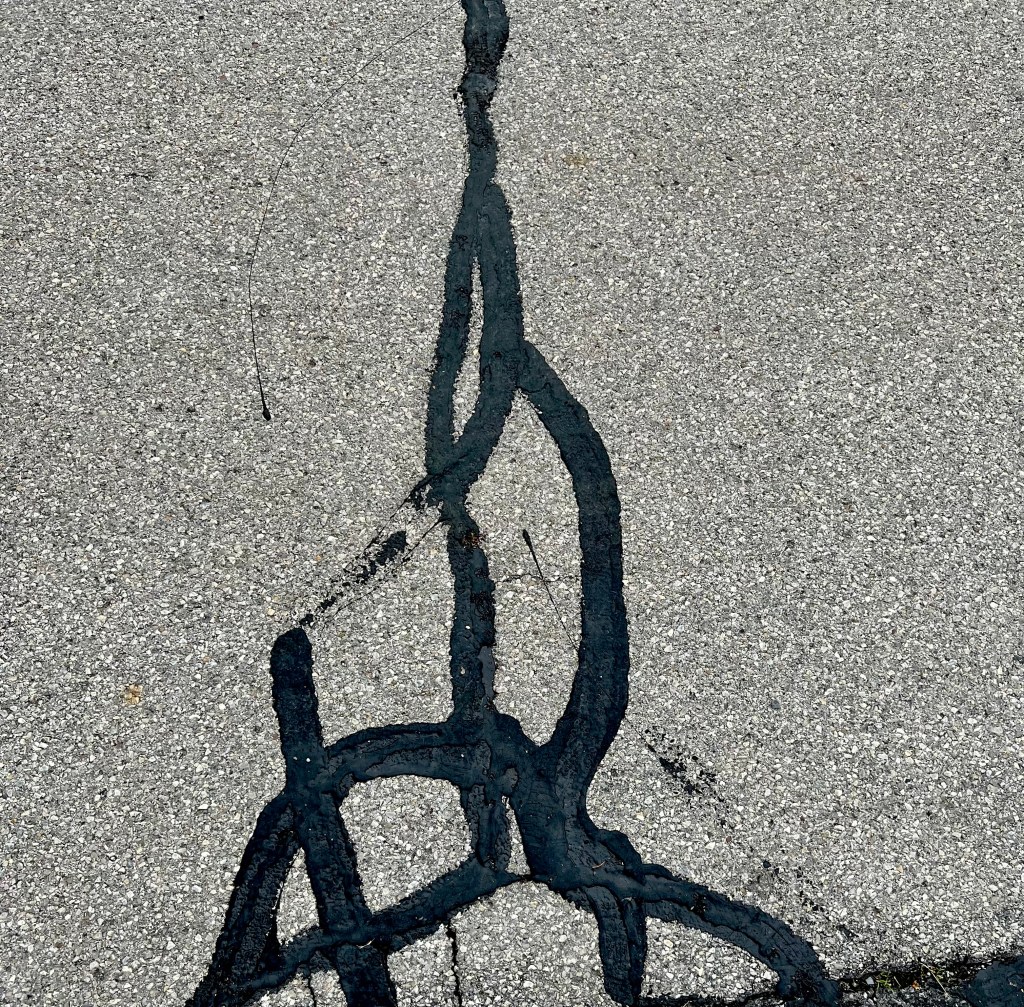
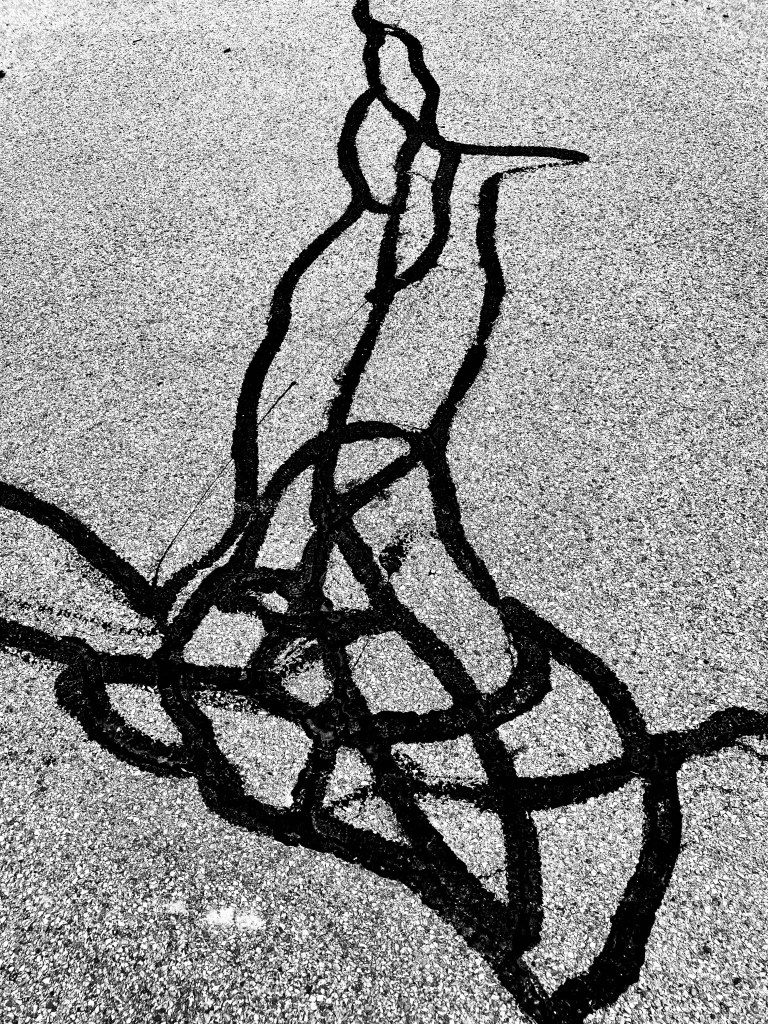
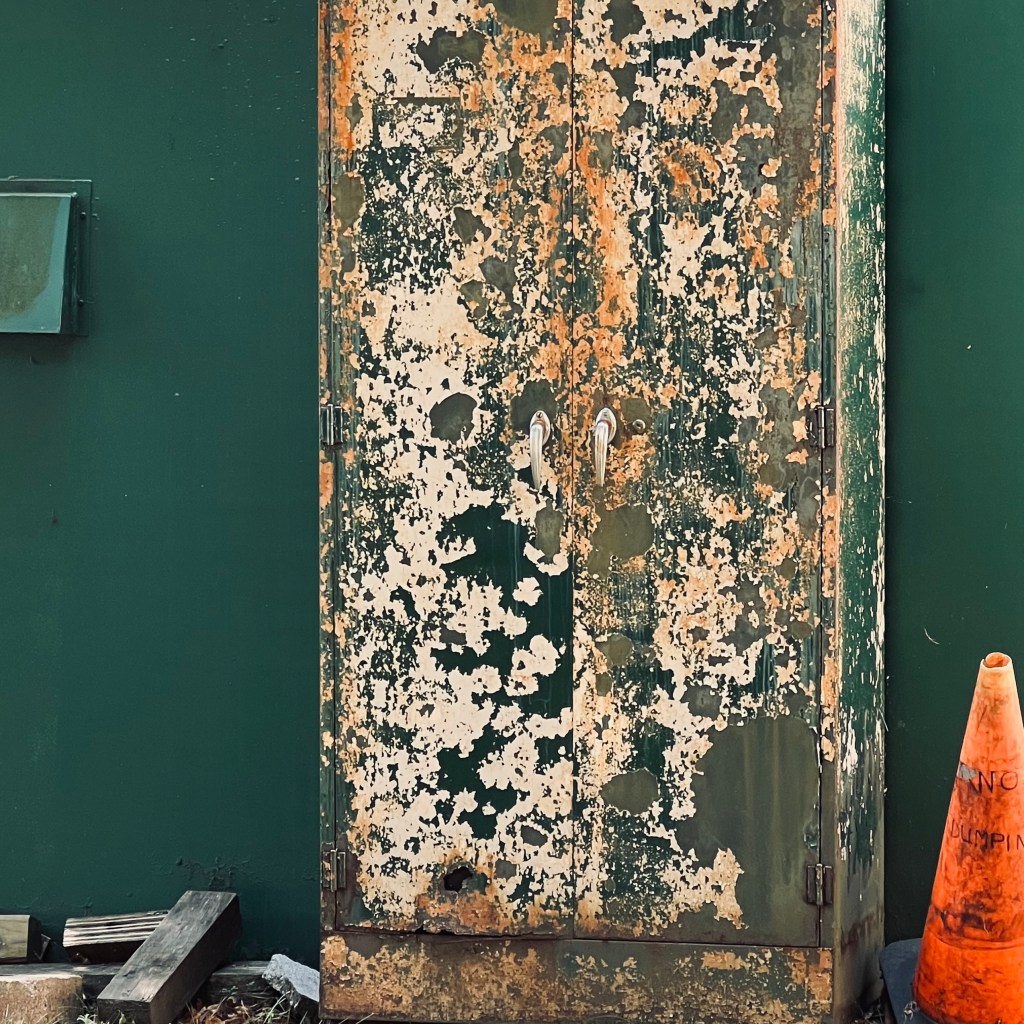
Musical pensivity came contemporaeously from Miles Davis in Great Expectations, whereby the trailing lines of melody thread in and out from a mood poem of unique weave. The textural composition presented an overall field in lieu of more expected chord-progression triggers for solos. Recorded in the 1969 Brew sessions, made public in a 1974 album, Great Expectations recalls the contemplativeness of Davis’ earlier Blue In Green as well as the post-War industrial decay of Galasso. These sorts of timbral explorations have been paralleled in other mediums. Patterns of macadam deterioration are subject matter for Asta Aglu, University of Greenland journalism major, pursuing the evocative qualities of Aaron Siskind’s road tar images. Matterism conveys in Daryl Burtnett’s photographic studies of erosion transferred to gestural paintings. Visual decay interweaves with classical beauty in Luchino Visconti’s Death In Venice.
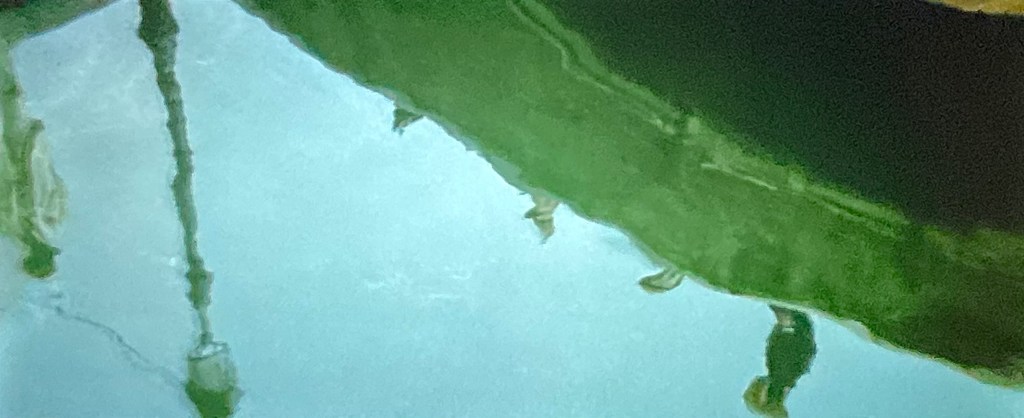
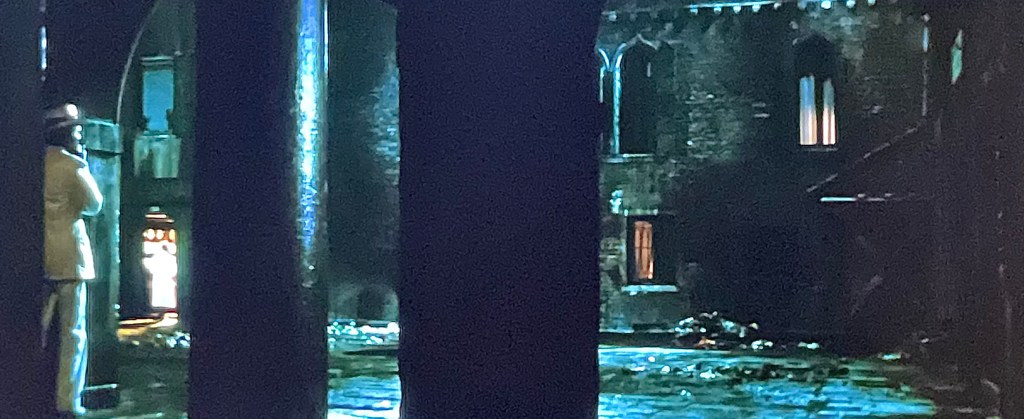
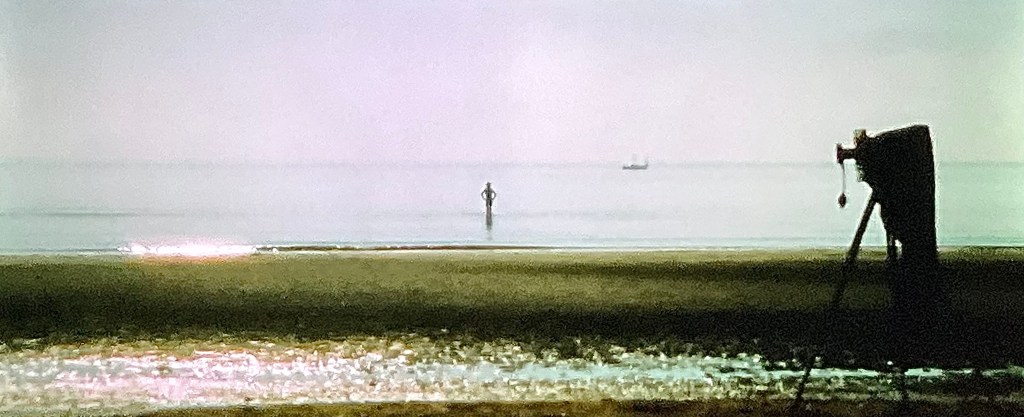
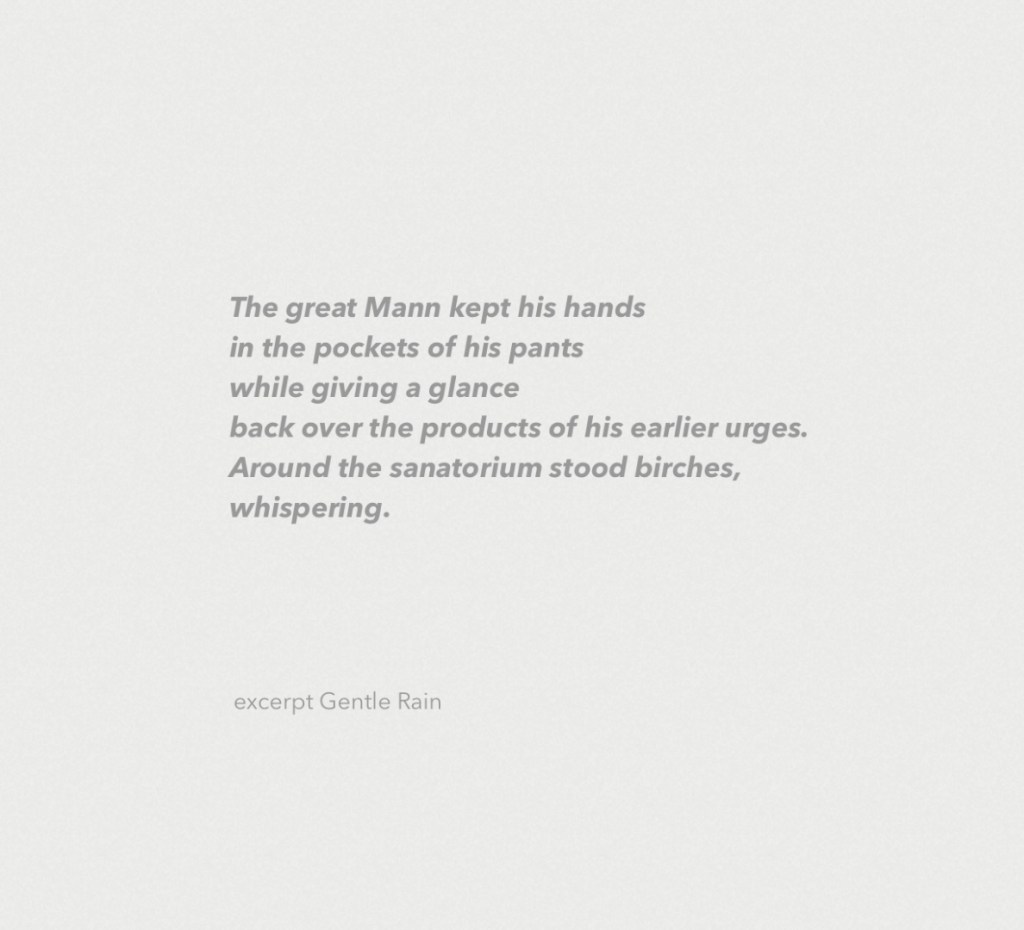
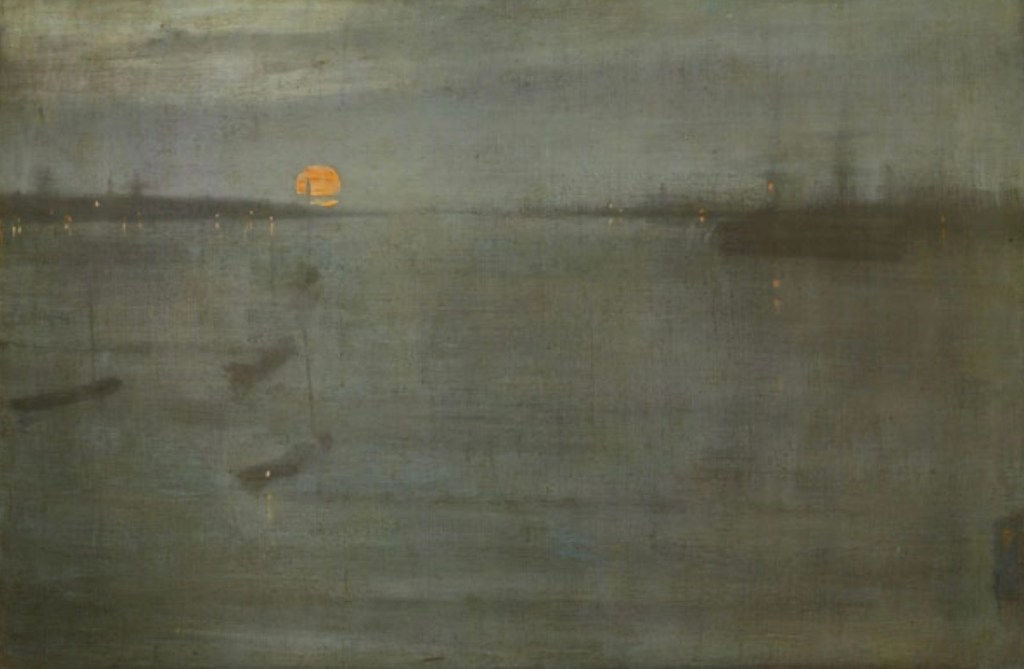
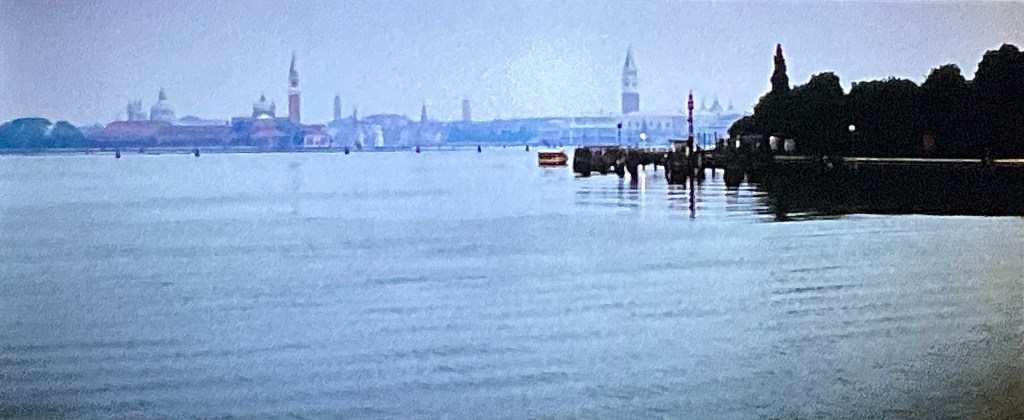
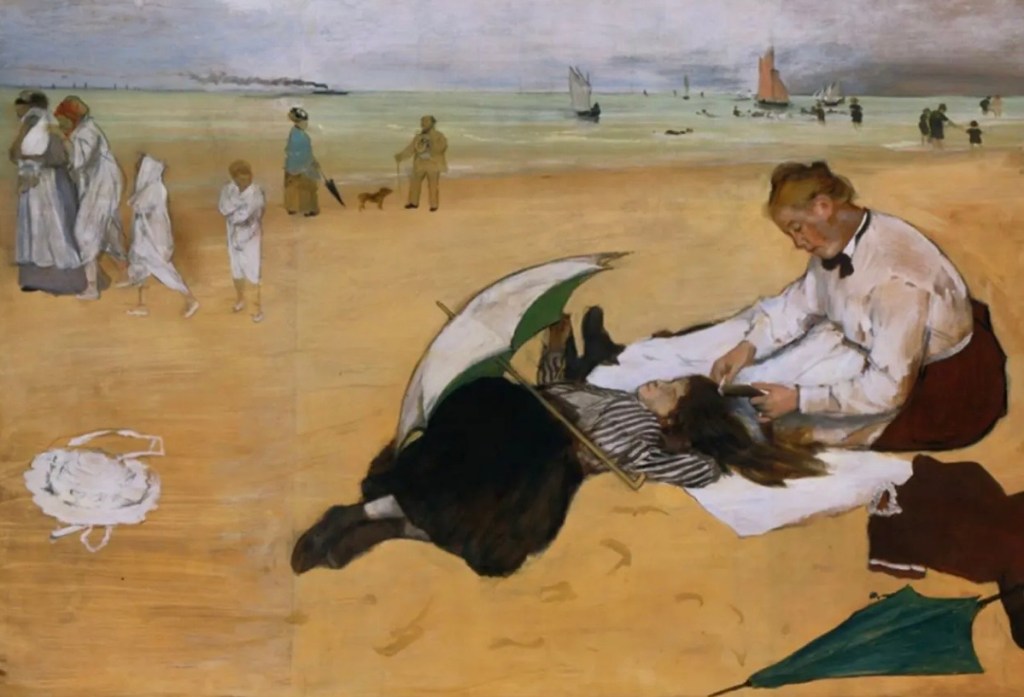
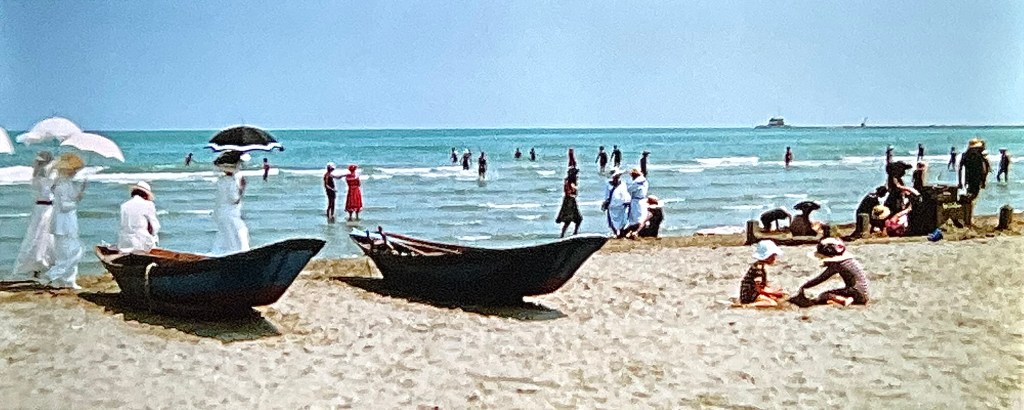
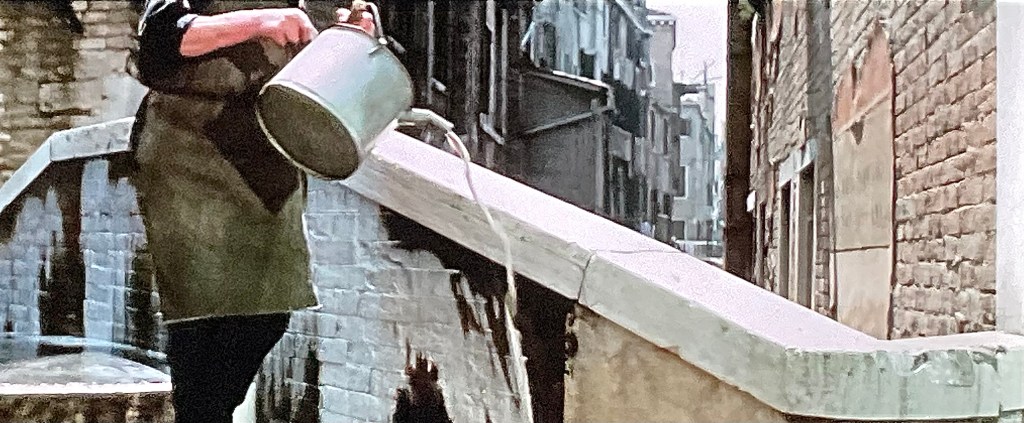
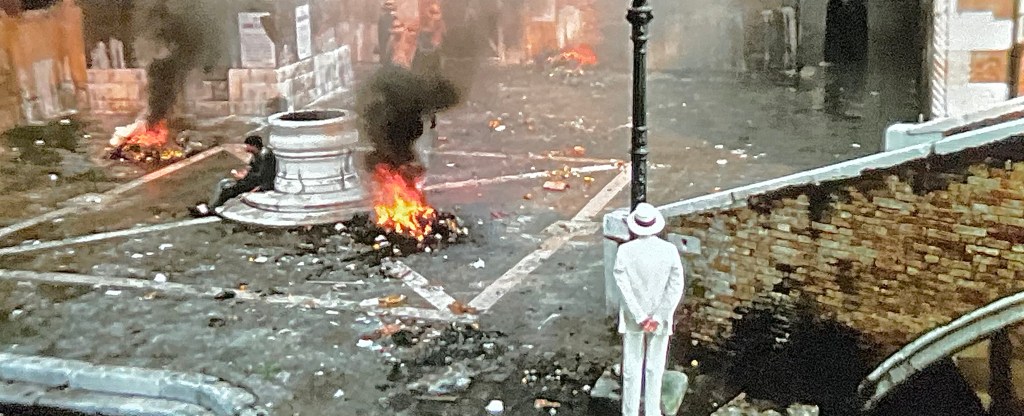
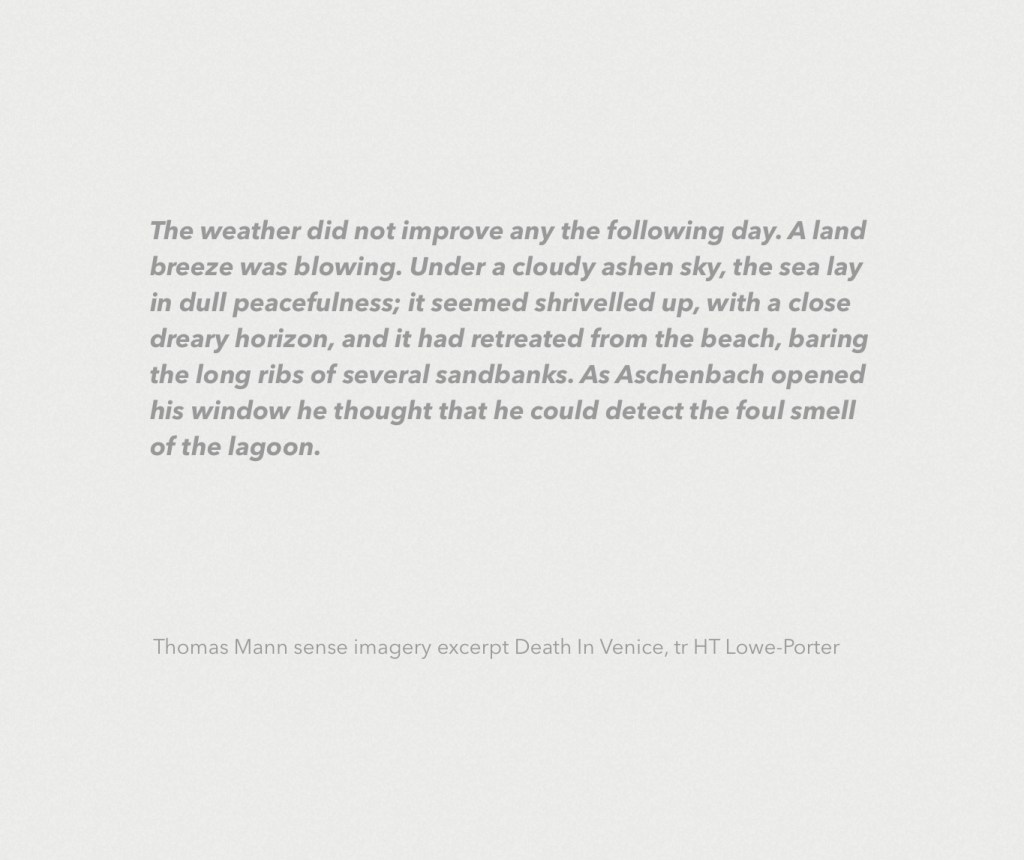
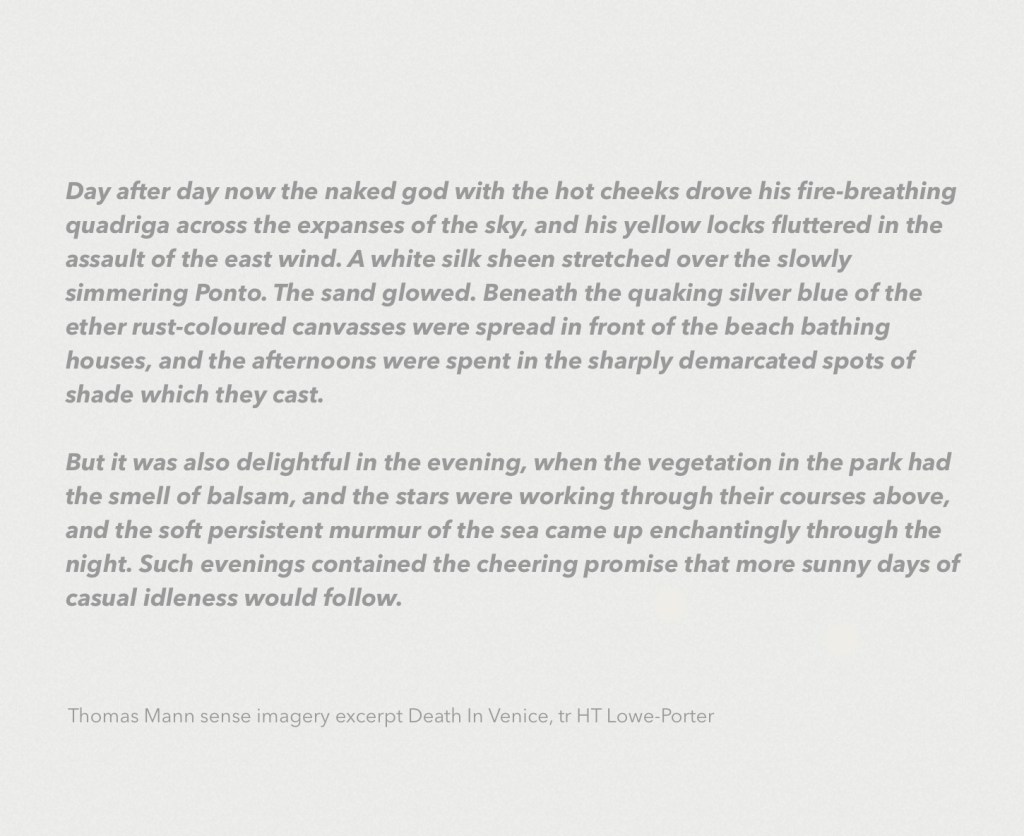
That 1971 filming of Mann’s 1912 novel centered aesthetics as process as well as content. It alternates beauty and decay in scenes of sublimity and illness. Its protagonist Aschenbach, suffering a cardiac condition, visits Venice for an attempted convalescence. He has febrile visions of being guided by a psychopomp through Venice’s stone passages. The usher, as much resembling Hermes youth statuary of Hellenist culture as a kouros ideal, triggers memories of the patient’s productive years while presaging images of pandemic-emptied alleys and plaza garbage fires. Historic resort, cholera outbreak. Achievement, lifecycle. Beauty, decay. Smoky, watery, shadowy abstractions interlace with figurative passages familiar from paintings. Tableaux remind of the Venice observed by Whistler, Manet, Turner. Atmosphere stands as transition, in art, in mortality. The director chose the protagonist to be a romantic-era composer so mise-en-scène is timed to Mahler’s fifth symphony adagietto, a ravishing accent on transience.
*
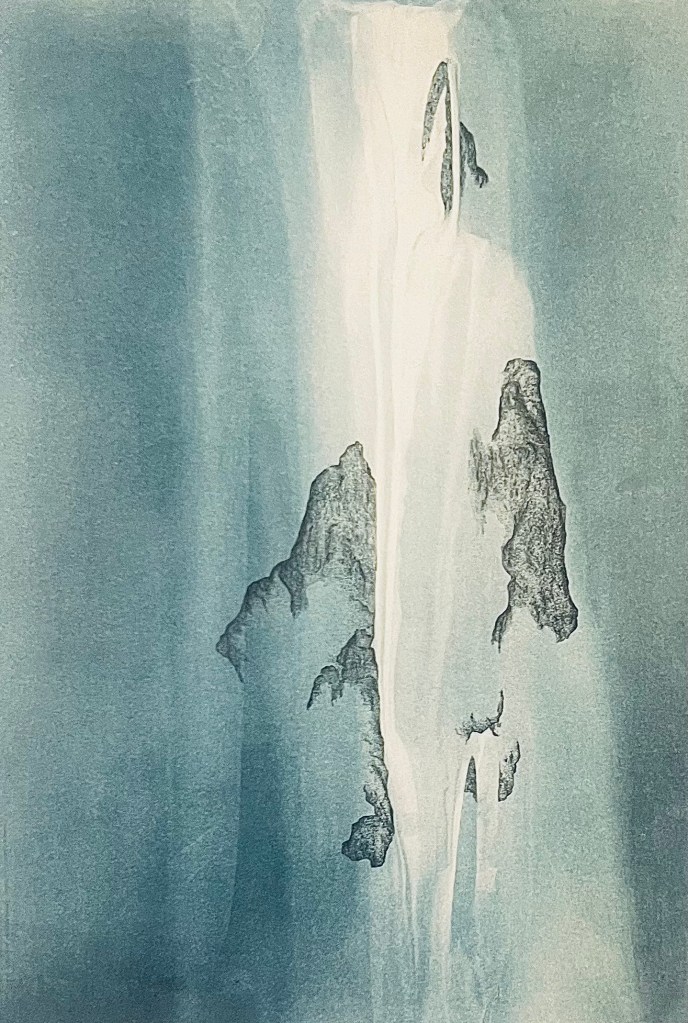
Textured gesturality caught on audio tape, on celluloid, on the floorboards— such mark-making has counterparts in visual arts. Particularly on cloth, a common ground for gestures in a number of mediums.
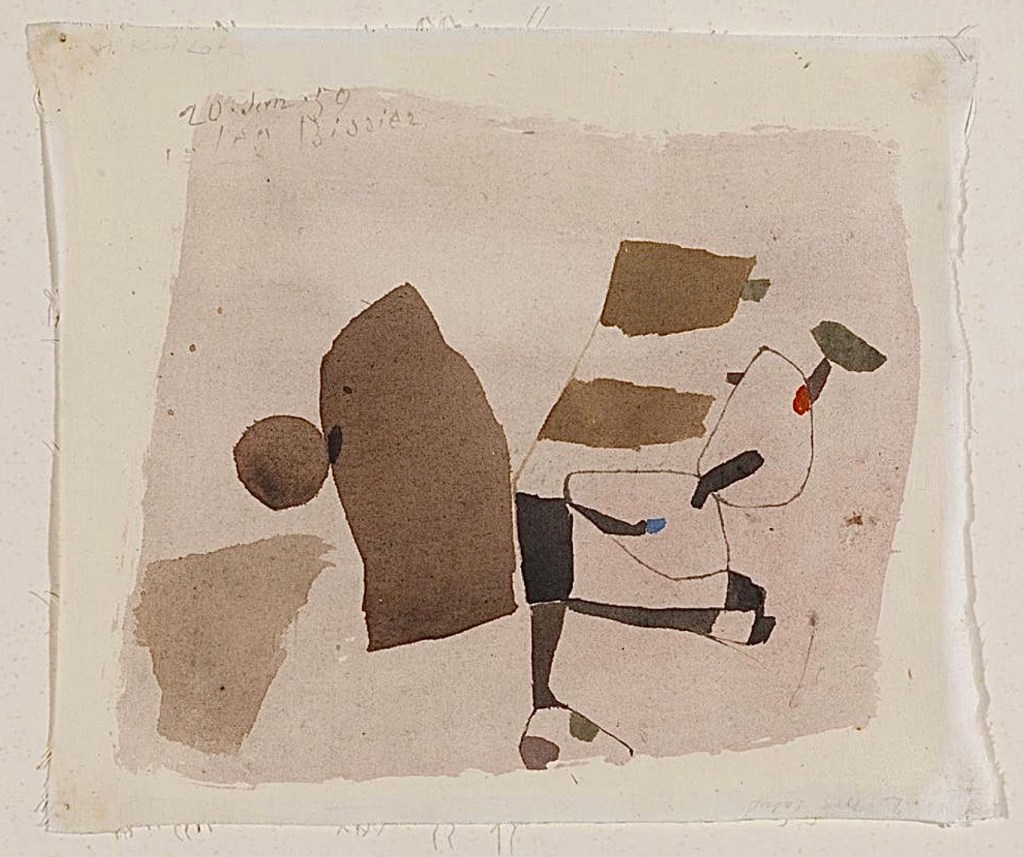
Julius Bissier had a particular approach to textile substrate for his temperas. Uncoated fabrics, household linen or shirting batiste, was soaked, wrung, ironed to damp dry for a network of fine wrinkles used compositionally. The surface would be prepped with chalk in poppyseed oil, then two coats of acrylic. The irregular rectangle would be thumbtacked to a board to begin the gesturist compositions.
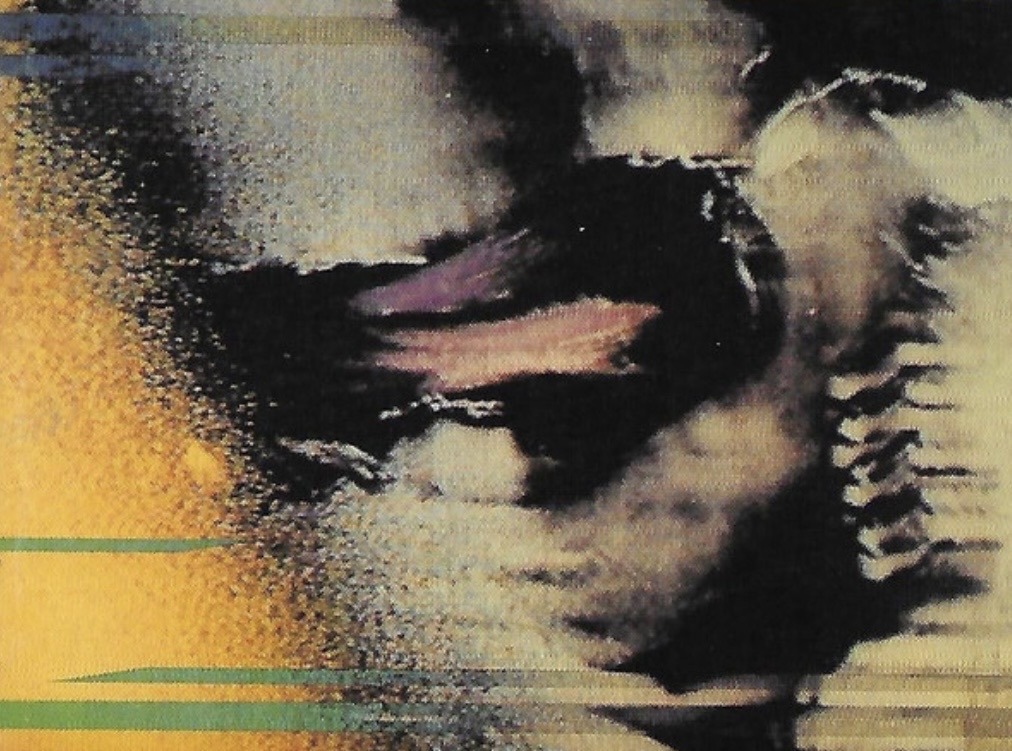
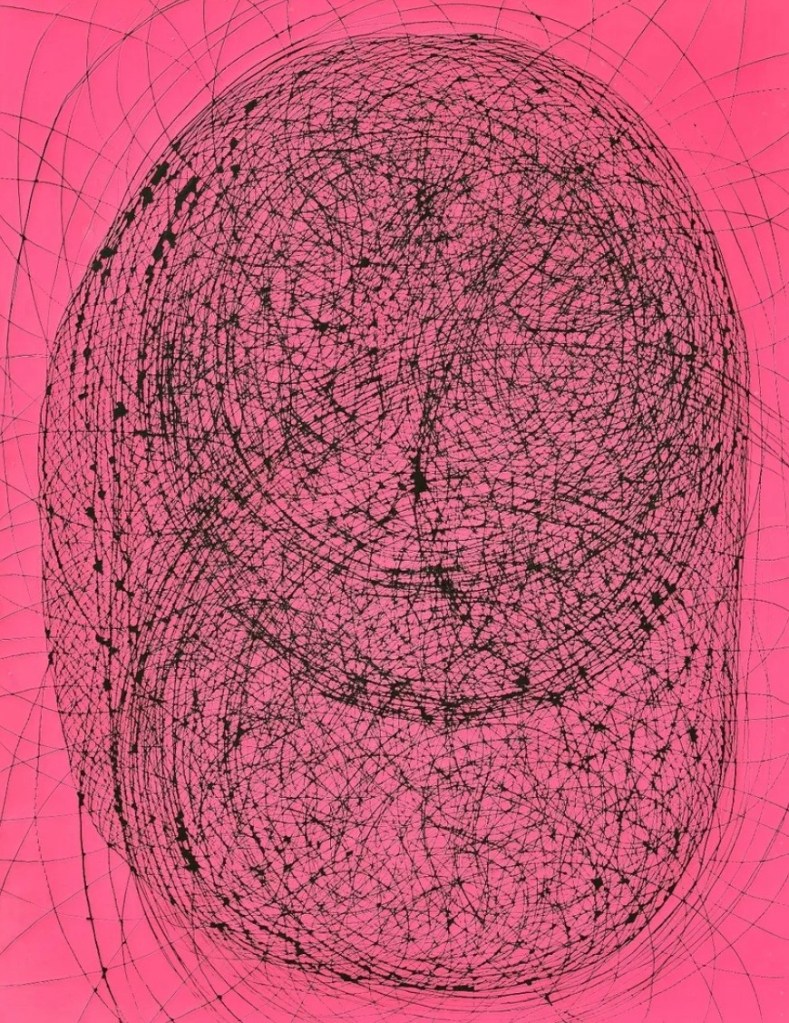
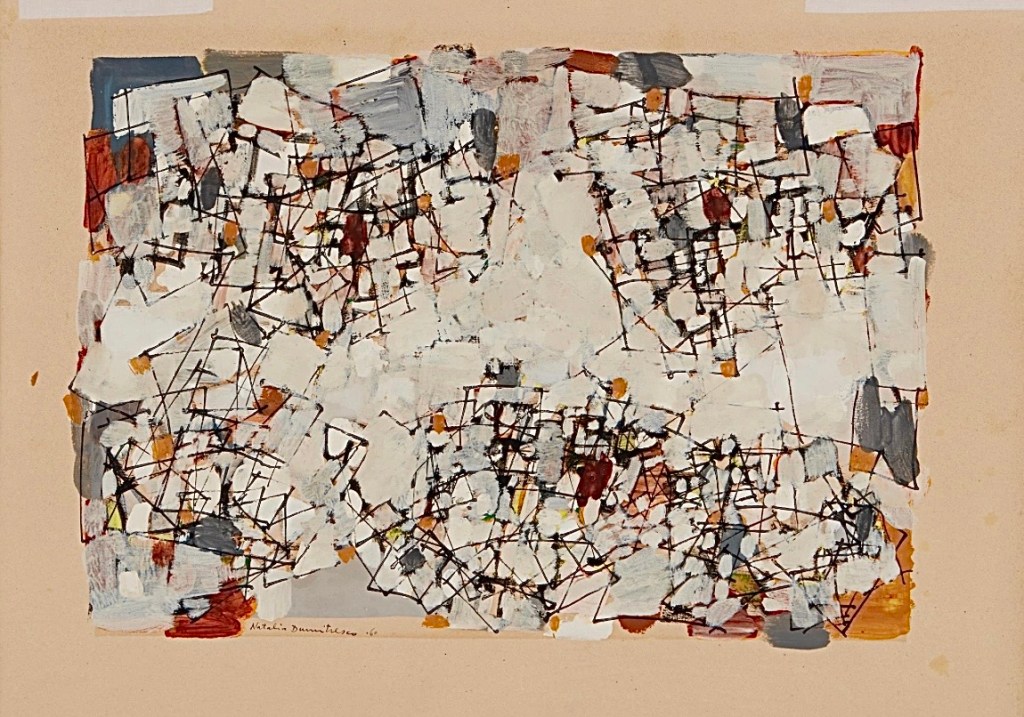
Other emulsions on textiles, other textures. The distinguishable mark-making of Lindsey Harald Wong, Malaysia as distinct from the webbed marks by Natalia Dumitresco, Romania and Tikashi Fukushima, Brazil; further distinct from the scraped marks by Lucio Muñoz, Spain. Also line width examples of, for instance, Young Mi Kim, South Korea using fine sgraffito; the wide, drier lines of Zilia Sanchez, Cuba conveying arm movements in a context of the distressed infrastructure of Havana and Manhattan; also Teruhisa Tajima, Japan in the Miles Davis cover Dark Magus.
Layered techniques can be seen in the works of Manabu Mabe, Brazil; Adam Taylor, UK; Alys Kuu, Spain. Combinations are observed in works by Sandra Cinto, Brazil; John Dowell, Pennsylvania; Kazuko Miyamoto, Japan.
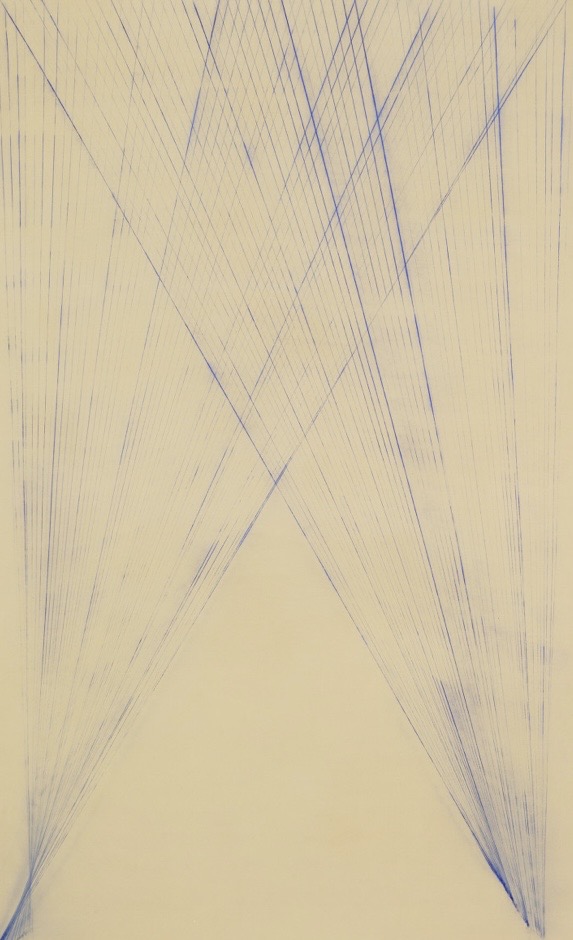
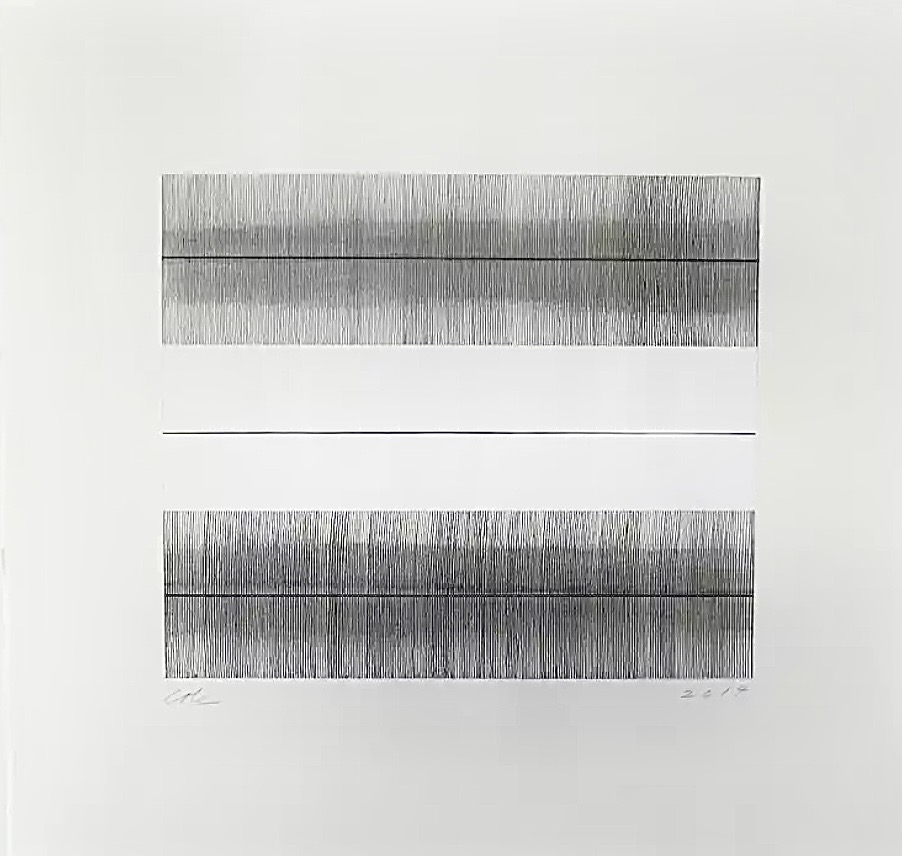
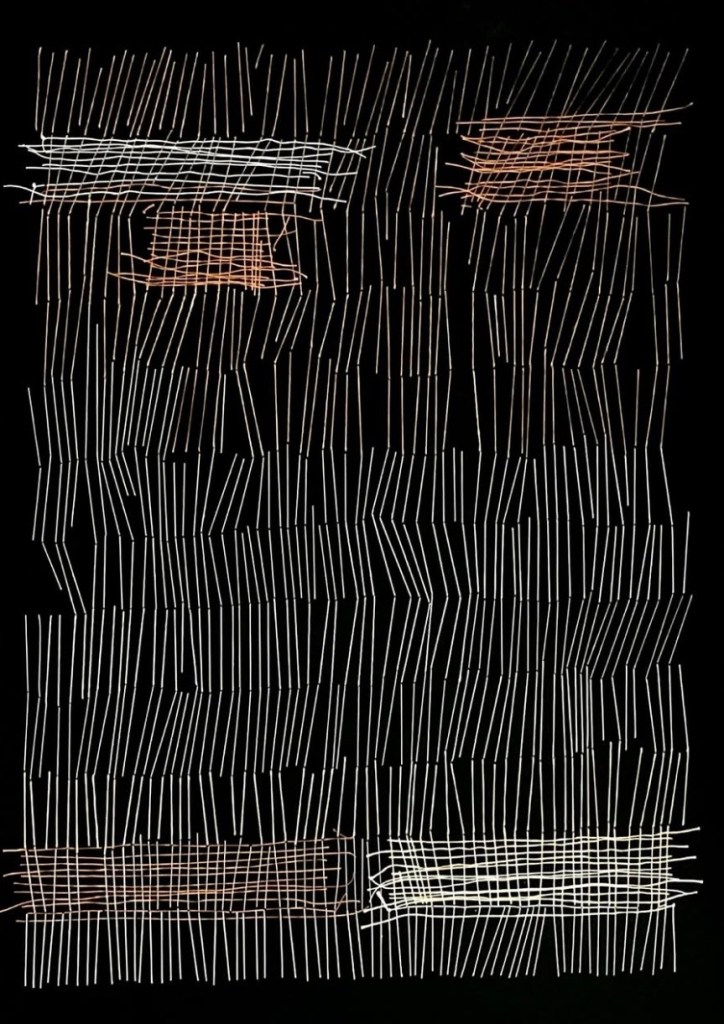
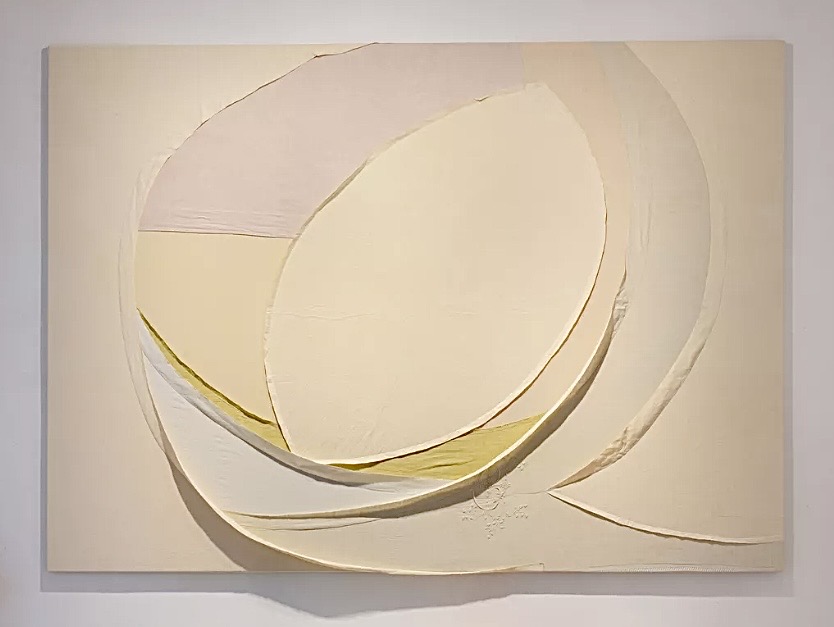
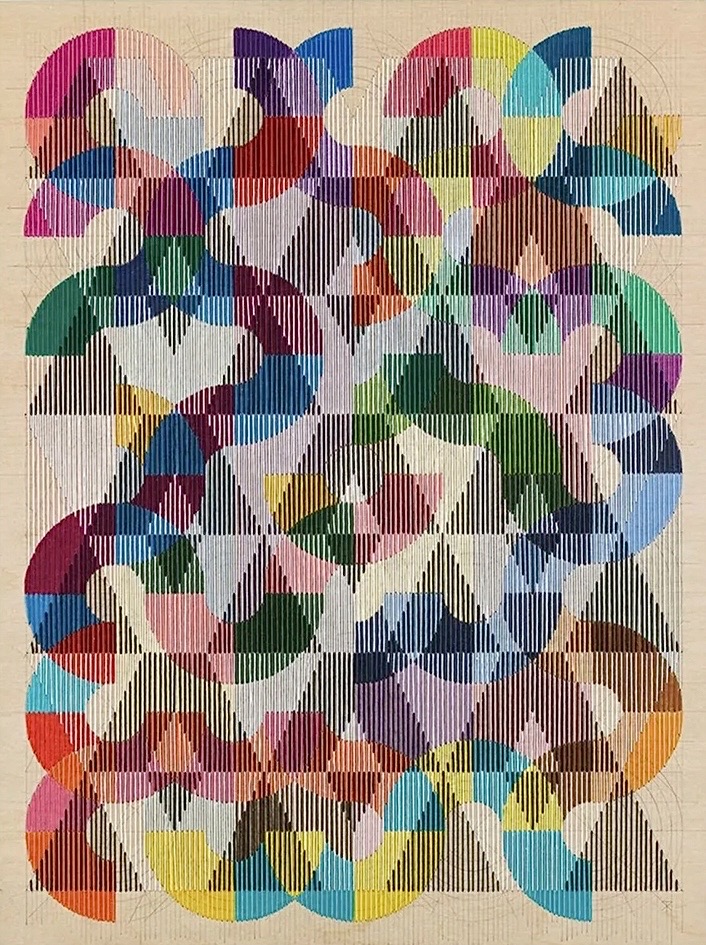
Amidst telegraphed wrist and arm movements in the foregoing artists come grid-based works that eschew mechanical means of production to instead convey a human touch within linear patterns. Moik Schiele, inverting the traditional rug form so that gravity could extend protracted naps rather than puddle them, created a volume of lines that could sway or vibrate according to air pressure. Optical vibration operated in the paintings of Max Cole, Arizona; Esther Podemski, Poland; Agnes Martin, New York.
Matterism offers haptic mark-making in the practices of Daryl Burtnett, Vermont using corundum; and Andrew Wapinski, Pennsylvania using suspensions in melting ice.
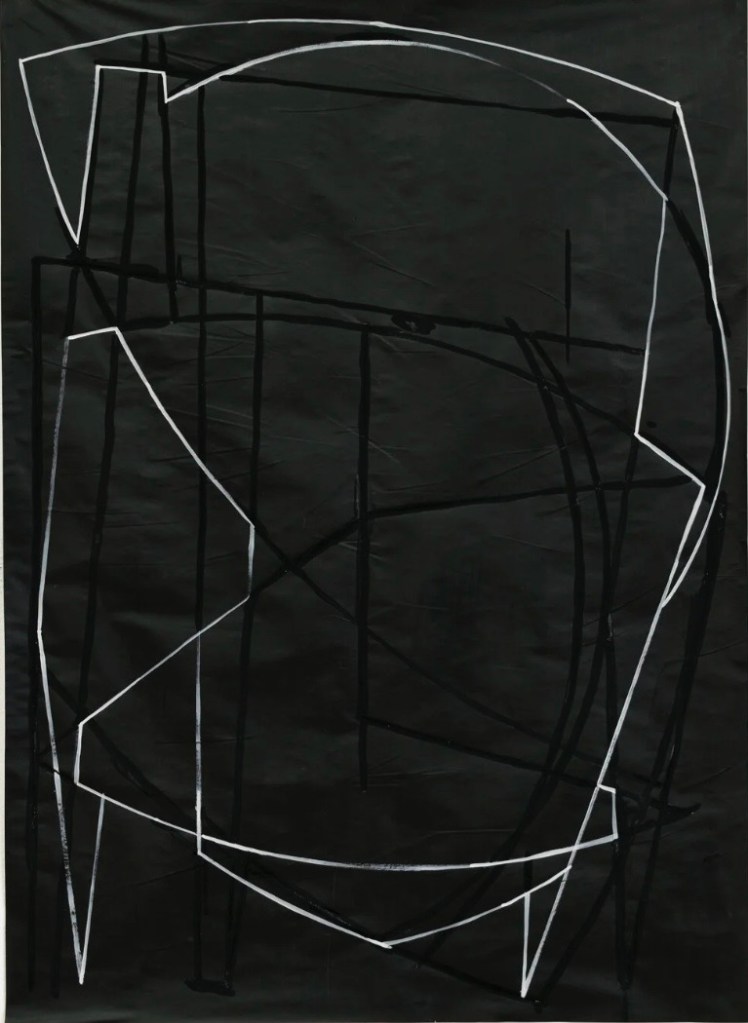
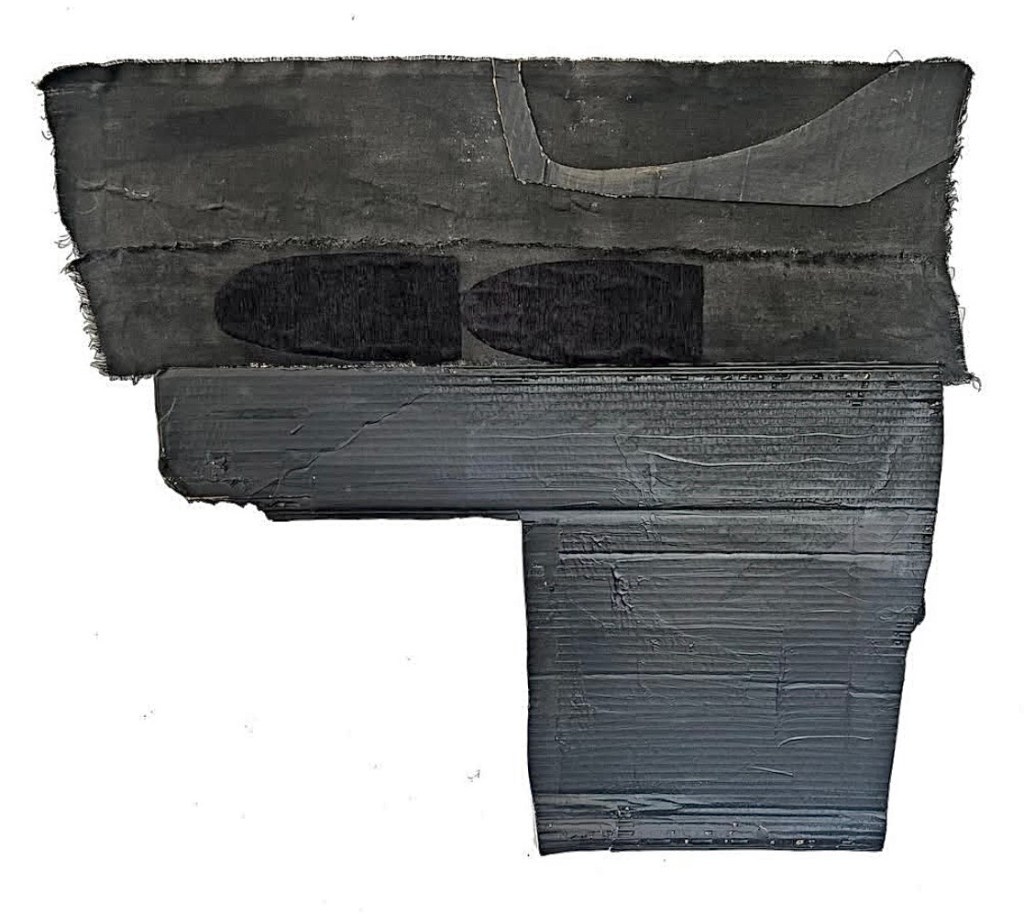
Demonstrating gestural varieties in grisaille compositions: Takesada Matsutani, Japan; Ransome, New York; Martha Tuttle, New York. Varieties of jet: Eileen Gray, France; Jen Aitken, UK.
*
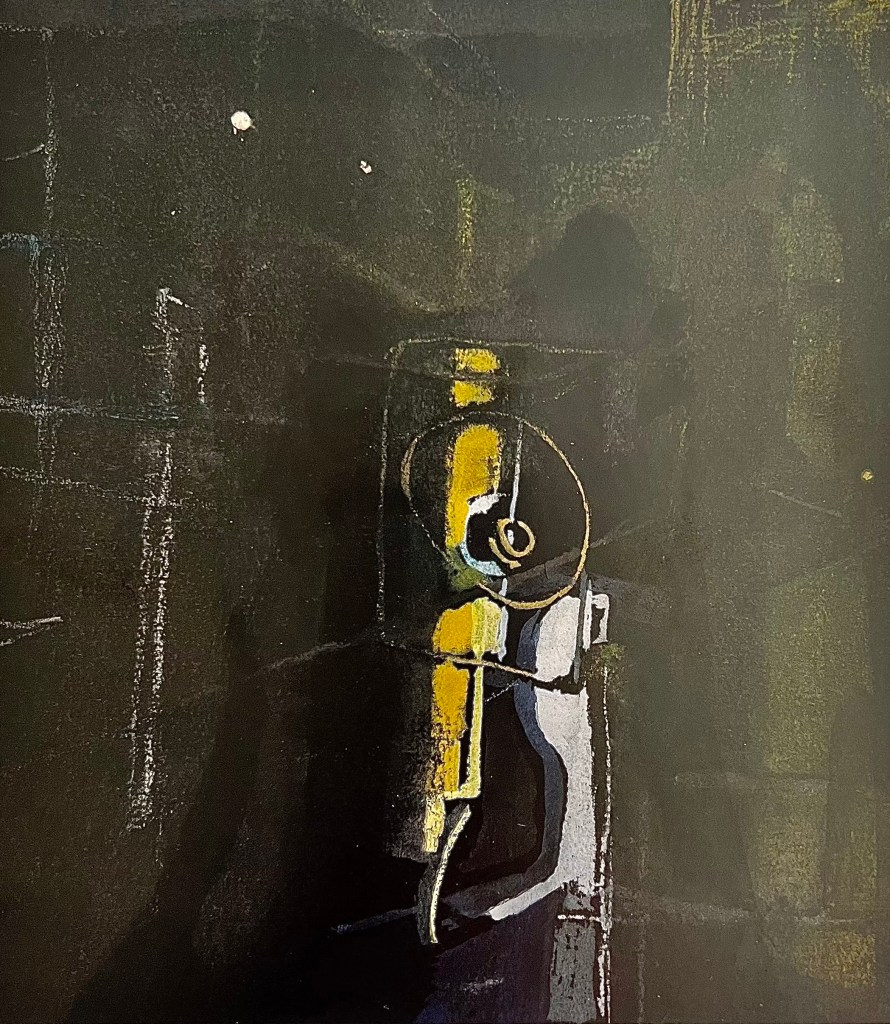
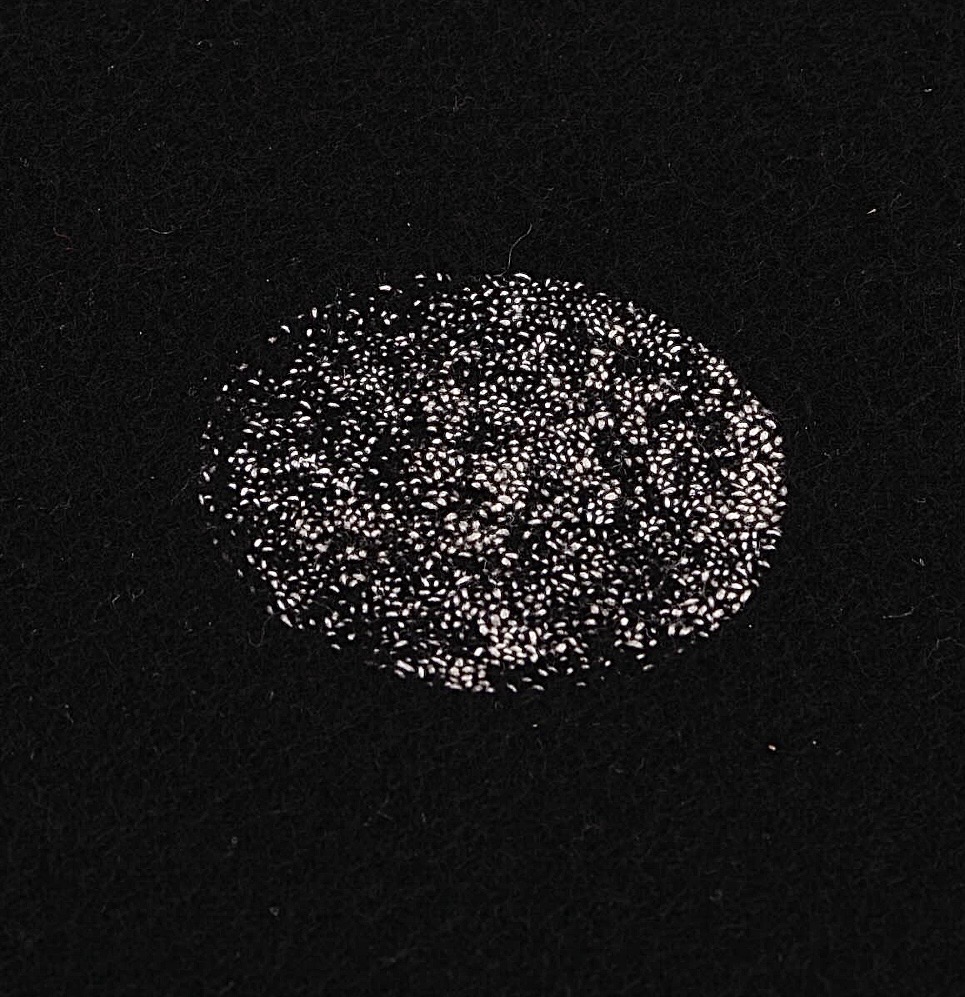
Black ground for mark-making with fiber can be seen in works by Frauke Bartsch, Germany; Richard McVetis, UK; Jason Kriegler, Mexico.
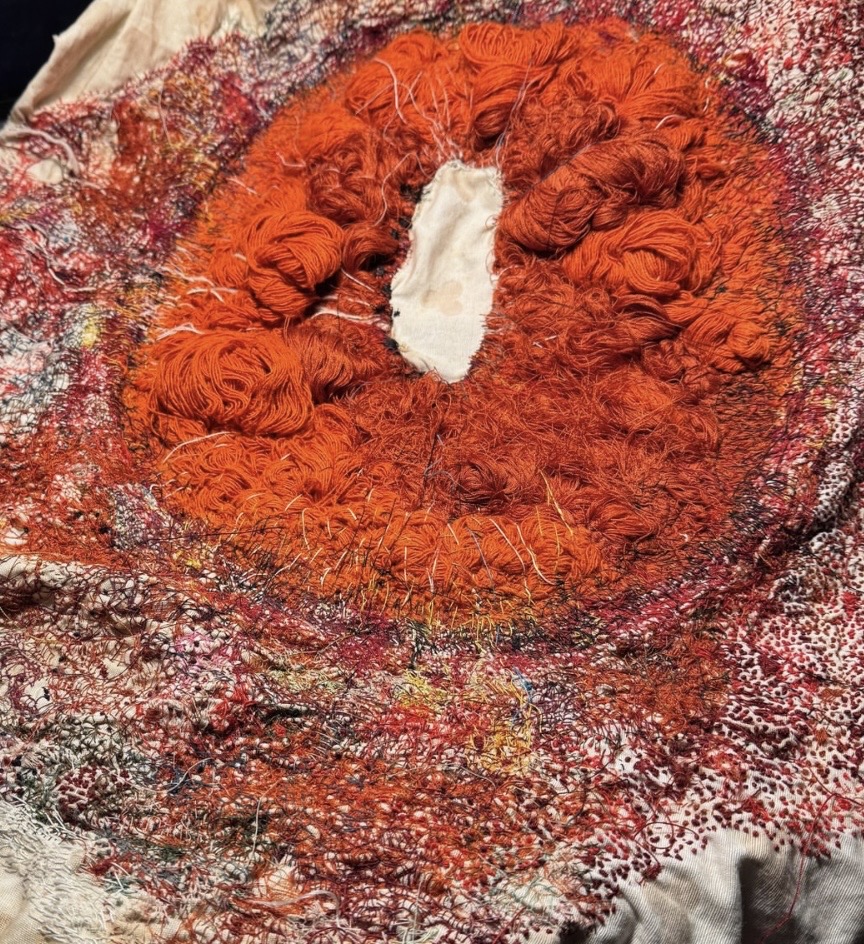
Bringing gesturality to the circular form are embroidery works by Adrien Vescovi, France; Junko Oki Japan. Varying the dimensionality of the plane in embroidered work are Carmen Mardonez, Chile; Nicholas Hlobo South Africa; Adeline Contreras, France. Asemic writing and pictographs of thread: Ana Frois, Portugal; Patricia Kelly, Ireland; Paula Kovarik, Tennessee.
Additional mark-making includes monochomatic composing from Harry Boom, Netherlands; shingling as embroidery technique from Raymond Saá, Louisiana and Andy Fovel, New York. Embroidery’s capacity for optic density from Tia Keobounpheng Finland.
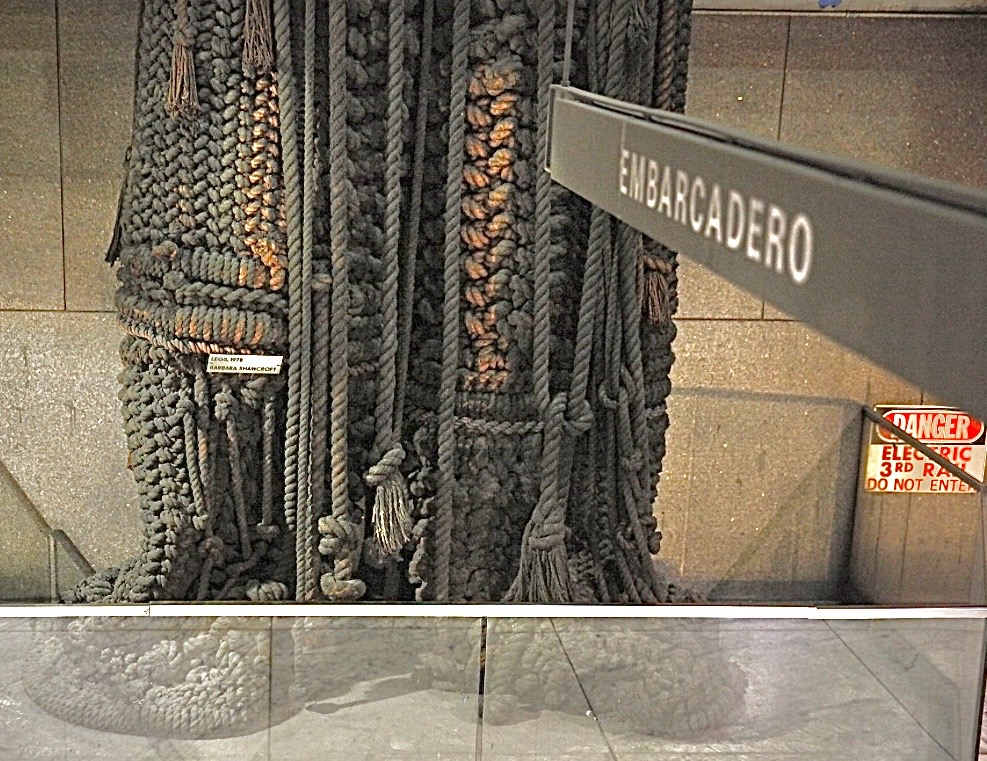
Before the rise of the cubicle, with its textiled, movable office partition, embroidered works had a run as interior architectural design. Large embroidered tapestries designed for the Ford Foundation by Sheila Hicks, engineered by architect Henri Tronquoy, were mounted in 1967. Several years later, Barbara Shawcroft created a rope pillar for a San Francisco train station. Aging effects from the dirt associated with brake particulates became an ongoing dilemma. The artist voiced her desire that the work be maintained in its golden rather than sullied palette. Some members of the public and critical press pushed for embracing entropic aesthetics of postWar, postHolocaust, postHiroshima haptics as justification to view accretion as a coproducer of public art. Accretion and deterioration as situational forces. Long debates ensued: original versus aged aesthetics; preservation best practices; varied rights of artist/commissioning body/public. Meanwhile the piece, loosened and elongated by allotted cleanings, continuously recollected grit. With debate seeming unresolvable over the decades, the work was decommissioned to Shawcroft.
*
The relation of pristine mark-making and fuzzier types continues to spark consideration. For quarter-century curators there is the survey exhibition titled Abstractionisms at the Museum of Contemporary Art at the University of São Paulo 2025-26. Reviewed by Luiz Armando Bagolin: “What emerges is a landscape full of fissures, where abstraction does not erase the world but unfolds it into other logics: optical, tactile, perceptual, affective. Instead of reaffirming the traditional divide between geometric and informal abstraction, the show exposes their porousness, their zones of contact and contamination.” In art, as in the environment, the informal, the gestural, the atmospheric remain; he notes them as a diffuse memory of presence.
Verse: Robert Walser translations by Ava Joensen.
Prose excerpts: Thomas Mann translations by HT Porter-Lowe
Cover image: Annelie Krantz, Sweden

